
Black locust gall midge
Obolodiplosis robiniae
Description
How to identify
The black locust gall midge Obolodiplosis robiniae is a small dipteran insect belonging to the family Cecidomyiidae. It is an invasive pest specifically targeting the black locust tree.
Adult midges are tiny, fragile flies, measuring only a few millimeters in length. Their appearance is inconspicuous, making them difficult to detect without careful observation.
The life cycle involves the female laying eggs in the crevices of newly expanding leaf tissues. Upon hatching, the larvae immediately begin feeding, triggering a physiological reaction in the leaf.
The larvae, which are typically orange or yellowish, are responsible for the formation of the distinctive leaf galls that serve as both their protective housing and primary food source.
This species is capable of completing multiple generations during a single growing season, which allows its population to build up rapidly in areas with suitable host trees.
What it damages
The primary host for this pest is the black locust tree Robinia pseudoacacia. The damage is most visible during the spring and summer months when the foliage is most active.
The feeding activity of the larvae disrupts the normal development of the leaf lamina, resulting in the formation of galls that prevent proper photosynthesis in the affected areas.
Severe infestations cause premature yellowing of the leaves and premature leaf drop, which puts significant physiological stress on the tree during the peak of the growing season.
While the tree rarely dies from gall midge damage alone, the overall aesthetic quality is greatly reduced, making this a major issue for ornamental plantings in parks and cities.
Reduced photosynthetic capacity leads to decreased energy storage for the tree, which can lead to poor winter survival and reduced growth rates in subsequent years.
Signs of infestation
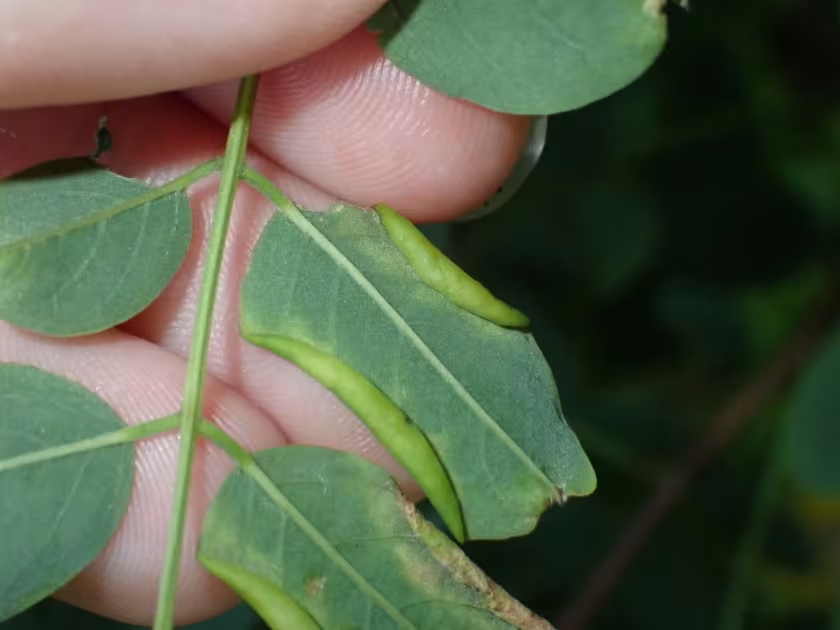
The most diagnostic sign of an infestation is the presence of numerous small, semi-spherical galls scattered across the surface of the locust leaves.
Initially, these galls are light green, blending in with the surrounding tissue, but they often turn reddish-brown as they mature, creating a spotted appearance on the tree foliage.
The leaf margins often exhibit curling or uneven deformation as the leaf tissues struggle to expand correctly due to the presence of the larvae inside the galls.
By observing the underside of the leaf, one can see small pit-like depressions corresponding to the raised galls on the top side, often containing the larva itself.
In cases of heavy infestation, the entire canopy may appear yellowed or scorched, particularly during mid-summer when the midge population peaks.
Control measures
Cultural control remains a key component of management: raking and destroying fallen leaves during autumn is essential to eliminate the pupal stages overwintering in the soil.
Chemical control is challenging because the larvae are protected inside the galls; therefore, systemic insecticides are generally more effective than contact-based products.
Biological control agents, including various species of parasitic wasps, often regulate midge populations in native or long-established ranges and should be preserved.
Monitoring using yellow sticky traps can help detect the first emergence of adults, providing a narrow window of opportunity for targeted treatment application.
Proper plant care, including adequate watering and fertilization, helps the trees remain resilient against the stress caused by the gall midge infestation.
Taxonomy
- Latin name
- Obolodiplosis robiniae
- Order
- Diptera (flies)
- Family
- Cecidomyiidae
- EPPO code
- OBOLRO
Discussion
No discussions yet — be the first.