
Cockatiel
Nymphicus hollandicus
Description
How to identify
The Cockatiel (Nymphicus hollandicus) is a small parrot species native to Australia, belonging to the cockatoo family. In the wild, they are known for their nomadic lifestyle, traveling in flocks across vast regions.
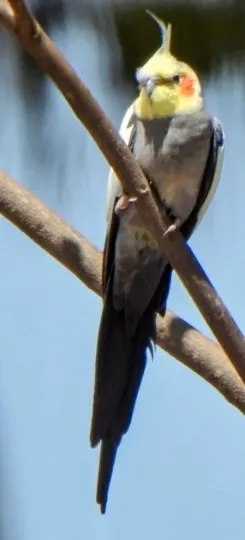
They are characterized by a prominent crest and a long tail. Their powerful, curved beak is specifically evolved for husking and consuming seeds, which makes them effective consumers of agricultural grain crops.
Taxonomically, they are classified under the order Psittaciformes. Their high social intelligence and flock behavior enable them to exploit food resources efficiently, often leading them to cultivated farmlands.
Adult birds typically measure around 30 to 33 cm in length. Their natural grey plumage provides excellent camouflage when feeding in stubble or dry fields, making them hard to spot from a distance.
As highly mobile birds, they can traverse large areas in a single day, which necessitates wide-scale monitoring of fields during the sensitive phases of plant development.
What it damages
Cockatiels cause significant damage to cereal crops and legumes by consuming seeds during the milk and dough stages. They target wheat, sorghum, millet, and sunflower seeds.
The birds use their beaks to strip seeds from the panicle or head. This leads to direct yield loss, as the grain is either consumed or stripped, leaving the plant empty and non-viable.
Beyond direct consumption, the weight of the flock landing on the plants causes mechanical breakage, leading to lodged crops and increased susceptibility to secondary infections.
Large flocks can devastate substantial portions of a field in a very short amount of time, especially in arid regions where natural food sources are currently limited.
Furthermore, their activity can contribute to the accidental dispersal of weed seeds, which may compromise the cleanliness of the field for the following seasons.
When it appears
The threat from Cockatiels is highly seasonal, peaking during the harvest or maturation stages of grain crops. Their arrival on farms coincides with the period when seeds become most nutritious.
In drier climates, the birds move toward irrigated agricultural zones as natural foraging areas become depleted, making them a recurring problem during drought years.
Feeding activity is most intense during the early morning and late afternoon hours, when the birds congregate in large numbers to feed before resting in nearby trees.
The lifecycle and breeding patterns of the species can lead to population spikes, which directly translate into increased pressure on local farmers during high-yield harvest years.
Effective management requires a seasonal approach, focusing on crop protection techniques precisely when the grain reaches the vulnerability threshold.
Signs of infestation
Signs of infestation include the presence of large, noisy flocks that suddenly flush from the field when disturbed. Their distinct, high-pitched calls are often the first sign of their presence.
Visual inspection of the crop reveals stripped grain heads, with husks or empty hulls left behind. This is a tell-tale sign of parrots foraging in the field.
The presence of feathers and droppings in the soil between rows confirms that the flock has been feeding in that specific location for an extended period.
Broken stalks and damaged grain heads, often appearing near the edges of fields first, are typical indicators of their foraging patterns.
The lack of seed development in otherwise healthy-looking plants often points to early-stage feeding, which can go unnoticed until the damage becomes widespread.
Control measures
Integrated bird management is essential, often utilizing acoustic deterrents such as propane cannons, ultrasonic devices, and playback of predator calls to keep flocks away.
Visual deterrents, including reflective tape, shiny objects, and hawk decoys, can be effective if rotated frequently to prevent the birds from habituating to them.
- Utilizing drones for real-time monitoring and scaring birds.
- Netting valuable or smaller experimental plots to exclude birds.
- Removing nearby nesting habitats to discourage congregation near fields.
- Scheduling early harvests to minimize the exposure window for the crop.
Combining mechanical protection methods with consistent field monitoring is the most reliable strategy to mitigate the risk posed by these nomadic avian pests.
Taxonomy
- Latin name
- Nymphicus hollandicus
- Family
- Cacatuidae
- EPPO code
- NYMKHO
Discussion
No discussions yet — be the first.