
Common backswimmer
Notonecta glauca
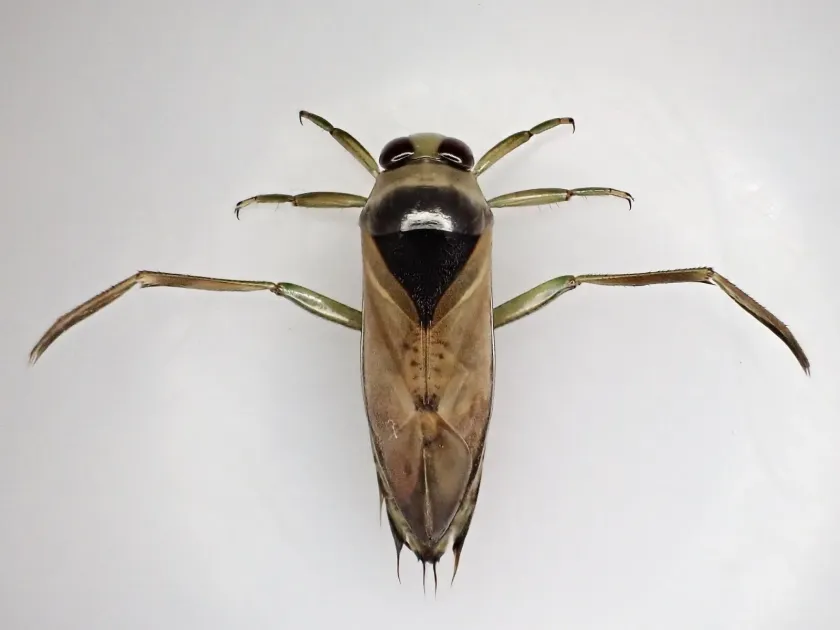
Description
How to identify
The common backswimmer (Notonecta glauca) belongs to the order Hemiptera and the family Notonectidae. It is a large aquatic insect, typically 14–16 mm long, featuring a keel-shaped abdomen and long, hair-fringed hind legs that function like oars.
The insect has a streamlined body shape, colored in yellowish-brown or grayish tones, which allows it to mimic the ripples on the water surface. A unique characteristic of this species is its habit of swimming upside down, earning it the nickname "water wasp".
Development involves incomplete metamorphosis. Females lay eggs on aquatic plants or submerged objects, from which nymphs emerge that look like miniature versions of the adults.
Adults are capable of active flight and move between water bodies during the night, facilitating the rapid colonization of new habitats. They are active predators that primarily live near the bottom, rising to the surface only to breathe.
This species inhabits stagnant or slow-moving water bodies, including ponds, irrigation channels, and even temporary water containers. Their high adaptability allows them to overwinter either as adults or as eggs.
What it damages
The common backswimmer causes significant damage in fish farms, where it actively preys on fish fry. A single insect can kill several fish larvae per day by injecting a toxic saliva that paralyzes the prey.
Although the backswimmer does not feed on plant tissues, its presence in fish ponds severely reduces farm productivity. It poses a serious threat to populations of valuable fish species during their early developmental stages.
For agricultural crops, the backswimmer is not a primary pest, but in nurseries growing aquatic plants or seedlings in hydroponic systems, it can indirectly interfere by damaging roots or stems while seeking shelter.
Its presence in ornamental ponds disrupts biological balance by killing not only fish fry but also beneficial aquatic invertebrates. Its bite is painful even for humans, so caution is required when working near infested waters.
Indirect damage stems from the fact that mass reproduction of backswimmers indicates an imbalance in the aquatic ecosystem, forcing farmers to resort to harsh disinfection measures that may harm other beneficial aquatic organisms.
Control measures
The primary control method is maintaining pond hygiene and regularly removing dense aquatic vegetation. Reducing the number of hiding spots makes the environment less attractive for egg-laying and hunting.
In fish farming, an effective measure is to create conditions that prevent insects from entering fry ponds. Installing fine-mesh screens on water intake channels significantly reduces the pest population.
Applying biological control methods, such as encouraging natural predators (specific waterfowl or large predatory fish resistant to backswimmer attacks), helps naturally limit their numbers.
In extreme cases, the use of bio-insecticides targeting aquatic insects is permissible, but strict environmental regulations for water bodies must be followed. Using chemical insecticides in water is generally not recommended due to high toxicity to fish.
- Draining ponds during the off-season to eliminate overwintering sites.
- Monitoring water bodies during the insect's peak flight activity.
- Removing excessive emergent and submerged vegetation.
Taxonomy
- Latin name
- Notonecta glauca
- Order
- Hemiptera (bugs, aphids, leafhoppers)
- Family
- Notonectidae
- EPPO code
- NOTNGL
Discussion
No discussions yet — be the first.