
Backswimmer
Notonecta
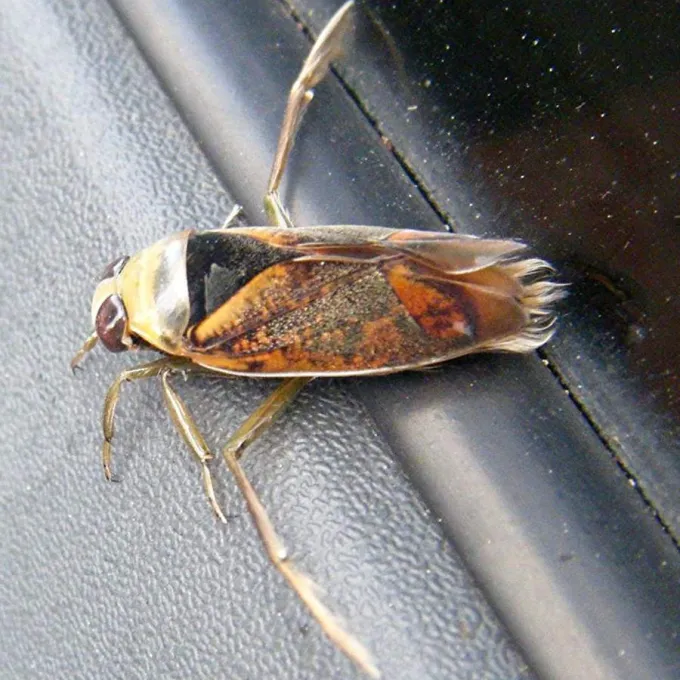
Description
How to identify
The backswimmer (Notonecta) is a genus of aquatic insects in the family Notonectidae. These insects are easily identified by their inverted swimming position, as they swim on their backs, and their keel-shaped bodies.
Adults typically measure up to 15 mm in length. Their hind legs are long and fringed with fine hairs, functioning efficiently as oars to propel them through the water column.
Classified under the order Hemiptera, they possess a strong, sharp rostrum (proboscis) used to pierce their prey and inject digestive enzymes to liquefy tissues.
Backswimmers are capable of flight, allowing them to migrate between water bodies, which is how they often colonize managed ponds and aquaculture tanks.
They are highly alert predators, reacting instantly to vibrations in the water, which makes them difficult to remove once established in a water environment.
What it damages
In aquaculture, backswimmers are considered serious pests because they are aggressive predators of fish fry and young fish larvae.
By piercing the skin of a fish, the backswimmer injects toxic saliva that paralyzes the prey, allowing the insect to feed on the liquefied internal contents.
The cumulative effect of a backswimmer infestation in fish hatcheries can lead to significant mortality rates among fry, causing heavy economic losses for producers.
Beyond direct predation, the wounds inflicted by backswimmers serve as entry points for secondary bacterial and fungal infections, further compromising the health of the fish stock.
High population densities in broodstock ponds can completely disrupt the breeding cycle, leading to poor output and compromised quality of fish stocks.
When it appears
Backswimmer activity typically begins in early spring as water temperatures rise, triggering their emergence from their winter dormancy phase.
The breeding season peaks during the summer months, when females deposit eggs on submerged aquatic vegetation, providing a stable environment for the nymphs to develop.
This peak activity period often coincides with the most sensitive growth stages of fish fry, creating a critical management window for pond operators.
As autumn approaches, adults prepare for wintering by seeking shelter in the bottom substrate or within dense debris located along the pond edges.
Warmer temperatures extending into late autumn can prolong their active period, requiring sustained vigilance throughout the aquaculture production cycle.
Signs of infestation
The most reliable sign of a backswimmer infestation is the visual observation of insects swimming upside down just below the surface of the pond water.
Disturbed water or sudden ripples will cause these insects to dive rapidly towards the bottom, where they hide among plants or debris.
Evidence of damage can be found by examining fish fry for small puncture wounds, which appear as darkened necrotic spots on the body surface.
Presence of egg clusters attached to the submerged stems of aquatic plants is a clear indicator that the population is actively breeding in the pond.
- Visual monitoring of the water surface during calm weather.
- Inspection of submerged plants for egg deposits.
- Close examination of fry samples for physical damage.
Control measures
The primary control strategy involves reducing the available habitat for the insects by clearing excessive aquatic vegetation from the ponds.
Mechanical filtration systems on water inlet pipes prevent the entry of flying adults from neighboring water sources into protected hatchery ponds.
Pond drainage and thorough disinfection during the off-season are essential to eliminate overwintering adults and larvae from the system.
In sensitive aquaculture settings, using fine-mesh netting can physically exclude backswimmers from areas where vulnerable fish fry are kept.
Chemical control is rarely recommended due to the potential toxicity to fish, so management relies heavily on biological and physical exclusion techniques.
Taxonomy
- Latin name
- Notonecta
- Order
- Hemiptera (bugs, aphids, leafhoppers)
- Family
- Notonectidae
- EPPO code
- NOTNSP
Discussion
No discussions yet — be the first.