
Noterus crassicornis
Noterus crassicornis
Description
How to identify
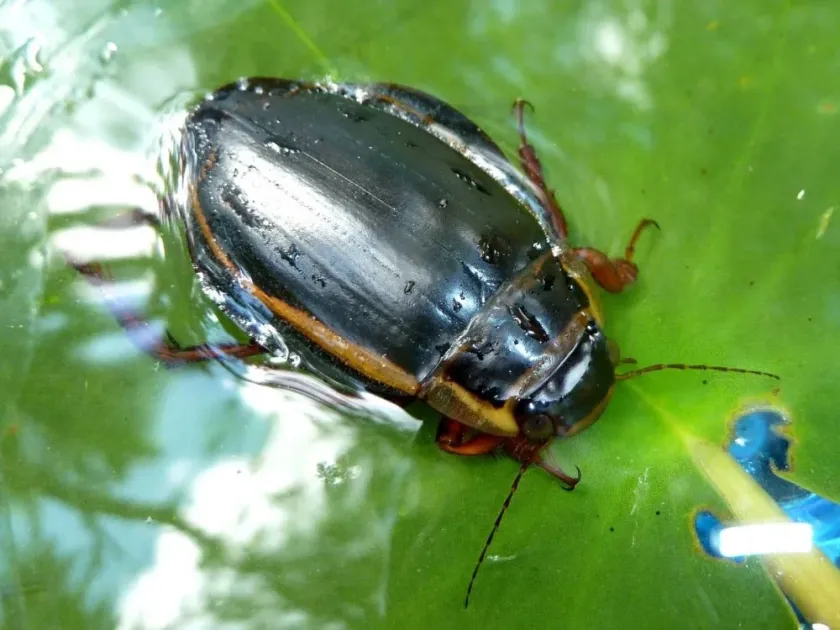
Noterus crassicornis is a species of aquatic beetle belonging to the family Noteridae within the order Coleoptera. This small beetle is characterized by its oval, highly convex body shape, typically measuring between 3.5 and 4.5 mm in length.
The coloration of the insect is generally yellowish-brown or reddish-brown, often featuring darker patches on the elytra. The head and pronotum are frequently lighter, which is a distinguishing trait for this particular species.
A notable morphological feature is the presence of thickened antennae and robust, powerful front legs, which are specialized for digging in bottom sediments and navigating through dense aquatic vegetation.
These beetles are adept swimmers and spend most of their time in the benthic zone of water bodies. They possess fully functional wings and are capable of active flight, especially at night, which allows for colonization of various habitats, including rice paddies and irrigation canals.
The larvae of Noterus crassicornis are also aquatic, residing within the water column or on the substrate. They possess an elongated body and well-developed mouthparts, enabling them to feed on small invertebrates or delicate tissues of aquatic plants.
What it damages
Noterus crassicornis primarily acts as a pest in rice paddies and nurseries where aquatic crops are grown. Both adults and larvae can cause injury to seedlings and young rice shoots by grazing on their tissues.
The damage stems from direct mechanical injury to the young roots and stems, which can weaken the plants and facilitate the entry of secondary pathogenic microorganisms into the plant tissues.
During the period of intensive growth, massive populations of these insects can significantly retard crop development, leading to sparse stands and a reduction in overall rice yields.
In addition to direct feeding damage, the presence of these beetles in irrigation systems can indicate an ecological imbalance, often correlated with excessive growth of undesirable aquatic vegetation.
While the species is not considered a catastrophic mass pest on a global scale, localized population outbreaks in stagnant waters require monitoring to prevent economic loss.
When it appears
The lifecycle of Noterus crassicornis is closely linked to the water temperature. In spring, as soon as the water temperature reaches optimal levels, overwintered adults begin their active reproductive phase.
Peak activity and the mass appearance of larvae occur during mid-summer, when higher water temperatures accelerate the insect's metabolism and promote rapid development across all growth stages.
In autumn, as temperatures drop, the activity of the beetles decreases significantly. Adults migrate to the silt or littoral zones to overwinter, surviving the cold period until the following spring.
The number of generations per season depends on the local climatic zone; in warmer regions with long growing seasons, the beetle may complete two generations within a single vegetative cycle.
Continuous monitoring of adult population density during the initial flooding of fields allows for the prediction of larval emergence, helping to minimize the risk of crop damage.
Signs of infestation
The primary sign of infestation is the appearance of mechanical feeding marks or "nicks" on the base of young rice stems that are submerged under the water layer.
During visual inspection of the water surface in calm conditions, adults can often be observed moving rapidly near the surface or diving into the deeper water upon disturbance.
Stunted growth and yellowing of leaf tips in young plants located in stagnant water zones serve as indirect indicators of larval activity in the root zone.
The presence of specific tunnels in the soft tissues of stems, detectable through microscopic analysis, confirms damage by aquatic coleopterans of this family.
An indirect signal is also a change in water turbidity and an increase in organic matter concentration, which creates an environment conducive to the feeding habits of the larvae.
Control measures
The primary control measure involves maintaining proper water management, such as controlled drainage of rice paddies, which disrupts the insect's lifecycle and removes its preferred habitat.
Agricultural practices include the thorough cleaning of irrigation canals to remove excess vegetation, which serves as a site for egg-laying and provides shelter from natural predators.
Biological control focuses on conserving populations of natural predators, including waterfowl and predatory fish, which actively consume larvae and adult beetles.
In cases where the population exceeds the economic threshold, the application of authorized insecticidal agents intended for water surface treatment may be used in accordance with local regulations.
An important component of protection is the use of high-quality seed material and timely fertilization to strengthen the crop's immune system and its regenerative capacity.
Taxonomy
- Latin name
- Noterus crassicornis
- Order
- Coleoptera (beetles)
- Family
- Noteridae
- EPPO code
- NTERCR
Discussion
No discussions yet — be the first.