
Noterus clavicornis
Noterus clavicornis
Description
How to identify
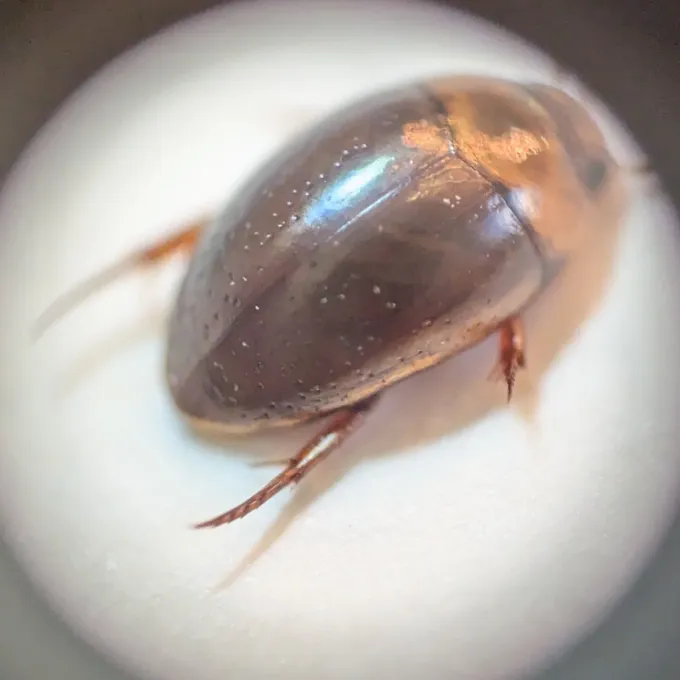
Noterus clavicornis is a species of aquatic beetle belonging to the family Noteridae. These small insects typically reach a length of 3.5 to 4.5 millimeters.
The body is characterized by a strong, oval, and convex shape. The coloration is generally yellowish-brown or reddish-brown, providing excellent camouflage among underwater vegetation.
The species is easily recognized by its distinctive club-shaped antennae, which give the beetle its common name and serve as an important taxonomic feature.
Larvae are aquatic and possess well-developed legs, allowing them to navigate efficiently within the mud or among the tangled roots of hydrophytes.
Adults are capable of flight, which enables them to colonize new aquatic environments, including ponds, irrigation channels, and specialized aquatic plant nurseries.
What it damages
The damage caused by Noterus clavicornis is primarily restricted to aquatic and semi-aquatic ornamental or commercial crops like rice or water lilies.
Larvae feed on delicate plant tissues, particularly the stems and base of young shoots, which can lead to reduced growth vigor and developmental stunting.
Adult beetles utilize their chewing mouthparts to consume leaf tissue, leaving behind ragged margins and holes that weaken the plant's structural integrity.
Mechanical injuries inflicted by these beetles create entry points for opportunistic bacterial and fungal pathogens, potentially causing rot in infected stems.
In high-density populations, the cumulative damage can result in the loss of aesthetic value for decorative plants or a noticeable decrease in yield for crop cultivation.
When it appears
The life cycle and activity of Noterus clavicornis are highly dependent on water temperature and the presence of abundant organic debris in the environment.
Emergence from overwintering sites occurs in early spring as water temperatures rise, triggering mating behaviors and subsequent egg-laying in the substrate.
The duration of the larval stage typically spans the warmest summer months, which provide optimal conditions for rapid development and high nutritional availability.
With the onset of autumn, as temperatures drop, the beetles reduce their metabolic activity and seek shelter in the bottom sediments to endure the winter.
The most active period for this pest is mid-summer, when the warm, nutrient-rich water supports maximum population growth and frequent insect movement.
Signs of infestation
The most visible signs of infestation are ragged leaf margins and small, irregularly shaped holes on submerged or floating plant leaves.
Close inspection of stems often reveals superficial grazing marks where beetles have scraped away the outer epidermis to feed on plant tissue.
The presence of these beetles is easily confirmed by using a fine-mesh aquatic net to sample the area around dense patches of vegetation.
Stunted growth or unexplained wilting of young shoots may indicate larval feeding damage concentrated at the base of the plant near the mud line.
Observing the water surface frequently can reveal the beetles' presence as they swim rapidly or surface briefly to replenish their air supply.
Control measures
Effective management begins with maintaining the hygiene of the aquatic environment, specifically by removing excess decaying organic matter that attracts the beetles.
Integrated pest management strategies should focus on preventing population build-up by modifying the habitat to be less suitable for larval development.
- Regular removal of silty deposits and detritus from pond bottoms.
- Installation of fine-mesh screens to prevent migration between water bodies.
- Encouraging natural aquatic predators that feed on insect larvae.
Chemical control is rarely required and should be approached with extreme caution, as many insecticides are highly toxic to the wider aquatic ecosystem.
Prevention through the careful inspection of new plant stock before introduction to the nursery ensures that the pest is not unintentionally imported.
Taxonomy
- Latin name
- Noterus clavicornis
- Order
- Coleoptera (beetles)
- Family
- Noteridae
- EPPO code
- NTERCA
Discussion
No discussions yet — be the first.