
Alkali bee
Nomia melanderi
Description
How to identify
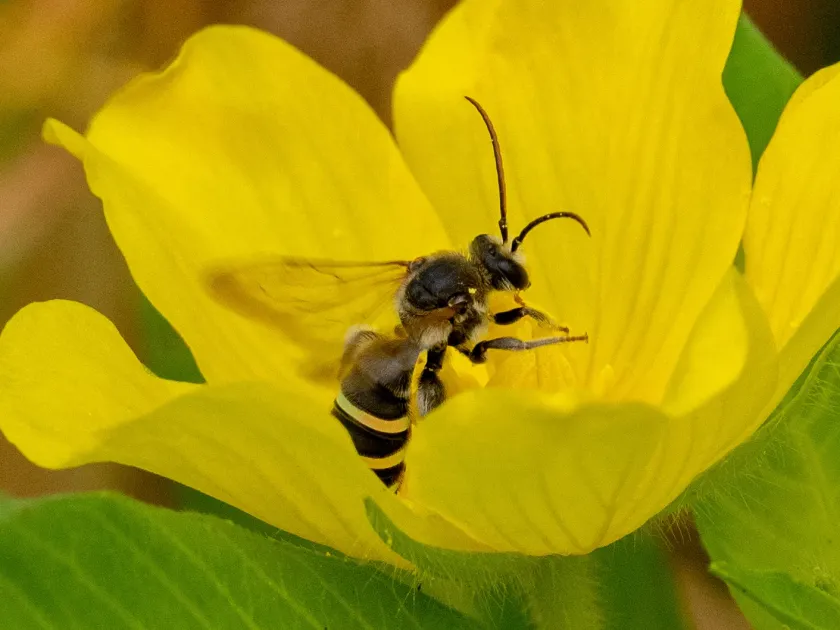
The alkali bee (Nomia melanderi) is a member of the Halictidae family, order Hymenoptera. It is easily recognized by the metallic, iridescent bands on its abdomen, giving it a distinctive appearance among other ground-nesting bees.
Adult bees typically measure between 10 and 12 mm in length. Females are equipped with specialized structures on their hind legs for pollen collection, whereas males possess noticeably longer antennae and yellow markings on the body.
These bees are solitary by nature but exhibit gregarious behavior, forming massive nesting aggregations in specific environmental conditions. They prefer moist, saline, or alkaline soil profiles to construct their tunnels.
The biological cycle is centered around the construction of vertical burrows that penetrate deep into the ground, providing a stable environment for brood development.
Colonies can persist in the same location for years, provided the soil moisture and chemical composition remain within the optimal range for the species.
What it damages
While the alkali bee is a highly valued pollinator for alfalfa crops, its nesting habits can occasionally cause logistical challenges for farmers operating on the same land.
The primary concern involves the structural disturbance of the soil caused by dense nesting aggregations, which can interfere with irrigation systems and soil stability.
In fields where seed production is not the objective, the extensive burrowing activity can lead to localized damage to plant root systems, impacting overall crop health.
The physical presence of thousands of holes can hinder machinery operations, making it difficult to maintain precise cultivation techniques during the season.
The economic damage is rarely related to consumption of plant tissues, but rather to the site selection of the bees that might conflict with infrastructure or crop management needs.
When it appears
The activity of adult alkali bees is strictly synchronized with the flowering period of alfalfa, typically occurring during the peak of the summer months.
In July and August, populations become highly visible as they emerge from their overwintering cells to mate and forage for nectar and pollen.
The species is univoltine, meaning it completes only one generation per year, which makes the population highly vulnerable to seasonal climate fluctuations.
By late autumn, the adult bees perish, and the next generation remains in the soil as prepupae, awaiting the temperature changes of the following spring to resume development.
Environmental factors, such as extreme flooding or prolonged winter drought, are the main natural regulators that keep the population levels in check.
Signs of infestation
The most prominent sign of an alkali bee colony is the presence of numerous small soil mounds, often described as mini-volcanoes, surrounding the burrow entrances.
High levels of airborne activity over a specific area of the field during warm, sunny days provide strong evidence of a nesting site in close proximity.
Accumulations of pollen around the entrance holes are common, as bees frequently shed their floral loads while entering the deep subterranean tunnels.
Vegetation directly above the nesting area may exhibit signs of stress or reduced growth due to the mechanical disruption of the root zone by the dense network of tunnels.
Large tracts of exposed, sparsely vegetated soil in saline patches are classic indicators of potential nesting habitat for this bee species.
Control measures
Management strategies focus on soil modification and physical disturbance to discourage nesting in areas where the bees are considered a nuisance.
Deep tillage at the end of the season is the most effective method for disrupting nesting tunnels and destroying the developing brood before the next cycle begins.
Altering the soil salinity or moisture levels through improved drainage or land levelling can make an area less attractive for future colonization.
The use of broad-spectrum insecticides is highly discouraged, as the alkali bee is a critical pollinator for the agricultural sector and is protected in many jurisdictions.
- Mechanical cultivation of soil in late autumn to disrupt overwintering sites.
- Adjusting irrigation patterns to prevent localized soil moisture buildup.
- Establishment of dedicated refuge areas to relocate colonies away from high-traffic zones.
Taxonomy
- Latin name
- Nomia melanderi
- Order
- Hymenoptera
- Family
- Halictidae
- EPPO code
- NOMIME
Discussion
No discussions yet — be the first.