
Halictus bees
Halictus
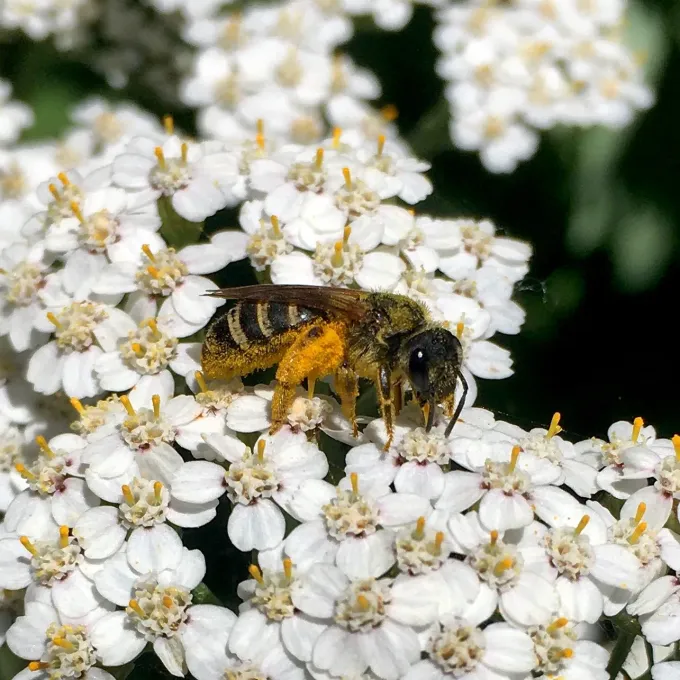
Description
How to identify
Halictus is a genus of bees belonging to the family Halictidae, commonly known as sweat bees, often found nesting in sandy or loamy soils.
They typically appear as small bees, often characterized by a metallic body sheen that can be green, copper, or black in color.
Adult bees range from 4 to 10 millimeters in length, making them easily overlooked in the garden environment.
These insects mostly live a solitary or communal lifestyle, excavating deep, intricate burrows directly into the ground.
It is crucial to distinguish these bees from true agricultural pests, as most species in this genus serve as vital pollinators for various flowering plants.
What it damages
Halictus bees are not primary agricultural pests, as they do not feed on plant foliage, fruits, or roots.
The primary concern regarding their presence is the physical disturbance of soil structure and root zones caused by their nesting activity.
In rare instances, dense nesting clusters near young seedlings may lead to soil instability or localized root dehydration.
They rarely cause significant economic damage to crops and are generally recognized as beneficial or neutral members of the ecosystem.
Intervention should only be considered if the nesting population reaches critical levels in sensitive areas like manicured turf or formal gardens.
When it appears
Their activity begins in early spring as the topsoil warms up, coinciding with the flowering of early nectar sources.
Peak activity for adult bees typically occurs during May and June, which is the prime season for burrow construction and egg-laying.
Throughout the summer, these insects continue their life cycle, with multiple generations emerging depending on local climatic conditions.
As summer draws to a close, their outdoor activity diminishes as they prepare for overwintering within their subterranean tunnels.
Fertilized females spend the winter deep underground, emerging the following season to restart the reproductive cycle.
Signs of infestation
The main indicator of their presence is the appearance of small, circular holes in the ground, marking the entrances to their burrows.
Tiny mounds of loose, excavated soil are often found around these entrances, appearing as miniature craters in the dirt.
Active visitation of flower blooms during sunny hours is a hallmark of these insects, demonstrating their role as effective pollinators.
In cases of heavy infestation, the soil surface may appear pitted or uneven, which can interfere with standard garden maintenance.
Visual identification is straightforward due to their characteristic darting flight patterns just above the surface of the soil.
Control measures
Given their status as essential pollinators, the use of insecticides is strongly discouraged and typically considered counterproductive.
The most effective management strategy involves regular soil cultivation and mulching, which discourages bees from building nests in specific areas.
Maintaining a thick, healthy cover of grass or mulch creates an unfavorable environment for soil-nesting bees.
Preserving biodiversity and avoiding broad-spectrum pesticides is highly recommended to protect beneficial insect populations.
If necessary, mechanical barriers or adjusting soil moisture levels can encourage the colony to relocate to less sensitive parts of the garden.
Taxonomy
- Latin name
- Halictus
- Order
- Hymenoptera
- Family
- Halictidae
- EPPO code
- HLICSP
Discussion
No discussions yet — be the first.