
Neomolgus
Neomolgus
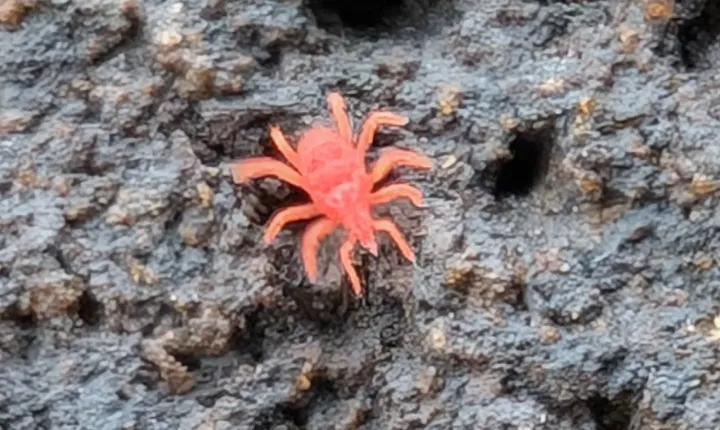
Description
How to identify
Neomolgus belongs to the family Bdellidae, commonly known in agronomy as snout mites. These predatory or herbivorous arachnids have a characteristic elongated body, often bright red or orange, making them highly visible on the surface of leaves and stems.
Adult individuals possess a long, specialized mouthpart adapted for piercing plant tissues or the cuticles of other small invertebrates. They move quite rapidly, allowing them to effectively disperse across the plant in search of favorable feeding conditions.
The cephalothorax and abdomen are fused into a single body covered by a dense cuticle. In some species, a specific pattern or spots can be observed on the dorsal side. The size of adult mites rarely exceeds 2–3 millimeters, but they become visually noticeable during mass reproduction.
The life cycle includes several stages: egg, larva, nymph, and adult. Unlike many other mites, members of this genus may exhibit both predatory tendencies and sap-feeding habits, placing them in the category of potential plant pests.
Reproduction occurs sexually, with females laying eggs primarily in sheltered locations such as bark crevices, leaf axils, or under leaf litter, which provides the clutches with protection from adverse weather conditions.
What it damages
The pest affects a wide range of crops, including ornamental shrubs, fruit trees, and certain vegetable crops. Colonies are frequently found on plants weakened by drought or improper watering regimes.
Mites feed on the contents of epidermal cells by piercing tissues with their stylet-like mouthparts. This results in the leakage of cell sap, disrupting physiological processes like photosynthesis and general plant metabolism.
Mass infestations pose the greatest danger, as thousands of individuals can simultaneously damage young shoots and buds. This leads to stunted growth, stem deformation, and premature leaf drop.
Damaged tissues often become entry points for secondary infections such as fungal diseases or bacterial rots. A weakened plant loses its immunity and becomes more susceptible to other types of pests.
Crop yields are significantly reduced, and ornamental plants lose their aesthetic value due to the appearance of necrotic spots and the drying of specific crown sections.
When it appears
Mite activity begins in early spring, as soon as stable positive temperatures are established. The peak of reproduction usually occurs during hot and dry summer months when air humidity is at its lowest.
In spring, pests concentrate on emerging buds where food is most accessible. As temperatures rise, the developmental speed of each generation increases, leading to an exponential growth of the population.
In autumn, with the onset of cooling, female activity decreases. Adult individuals move to overwinter in the topsoil or plant debris, where they can survive the winter period in a state of diapause.
If the winter season is characterized by mild temperatures, the survival rate of the population increases significantly, leading to earlier and more massive outbreaks in the following season.
Monitoring should begin from the moment the first leaves appear, using visual inspection of the underside of the leaves, where mites often hide from direct sunlight.
Signs of infestation
The first sign of infestation is the appearance of tiny light or yellowish dots on leaves, which eventually merge into large discolored patches.
Leaves may deform, curl, and become covered in thin webbing, although this is not an obligatory diagnostic sign for members of the Bdellidae family.
During a surface inspection of plants, one can observe fast-moving microscopic red dots. Another characteristic signal is general plant suppression and a lack of green mass growth.
In areas of mite aggregation, slight tissue browning is observed, which may progress into dry necrosis. Microscopic punctures sometimes appear on fruits, spoiling their appearance.
During severe infestations, the shedding of ovaries and buds may occur, which is a critical signal to initiate emergency protective measures.
Control measures
Combating Neomolgus requires a comprehensive approach combining agrotechnical methods and the use of pesticides. Regular removal of plant debris, which serves as a refuge for pests, is recommended.
- Implementation of crop rotation and weed removal.
- Regular watering to increase humidity around plants.
- Application of acaricides when the economic threshold of damage is exceeded.
- Use of biological control agents (entomophages).
- Preventive treatment of planting material.
Chemical protection should focus on the use of selective acaricides that effectively target mites while having minimal impact on beneficial pollinators.
It is important to rotate products with different modes of action to prevent the development of resistant pest populations, which often happens when the same active ingredient is used frequently.
Biological control methods involve the use of predatory mites, such as phytoseiids, which can successfully compete with Neomolgus and limit its population density in natural conditions.
Taxonomy
- Latin name
- Neomolgus
- Order
- Mites
- Family
- Bdellidae
- EPPO code
- NEMGSP
Discussion
No discussions yet — be the first.