
Bdellid mite
Bdellodes lapidaria
Description
How to identify
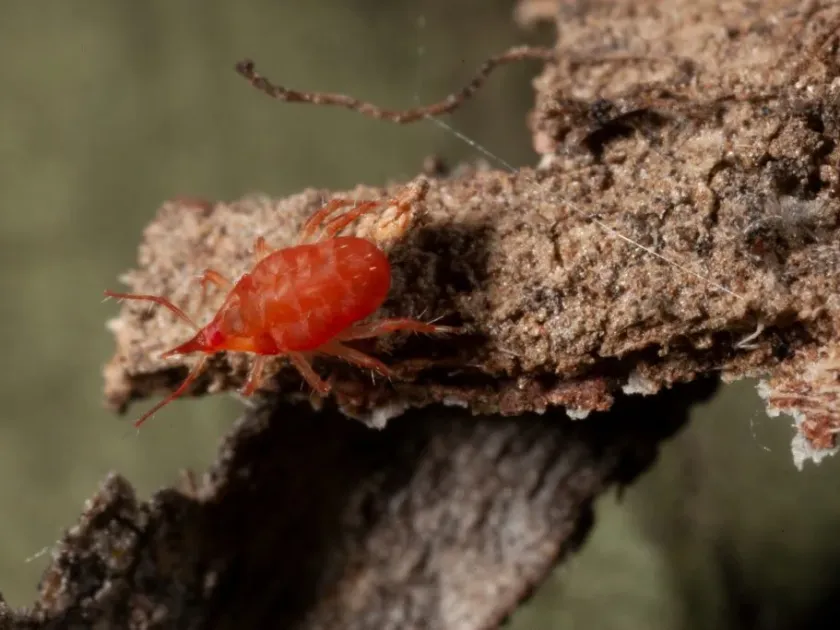
The bdellid mite, scientifically known as Bdellodes lapidaria, belongs to the family Bdellidae within the order Trombidiformes. These small, agile arthropods are easily recognized by their elongated bodies, which often exhibit a vibrant red or orange coloration.
Their mouthparts are specialized for predatory behavior, featuring elongated palps equipped with sensory hairs. These structures allow them to effectively detect, capture, and restrain small prey within complex soil environments or dense plant debris.
Unlike phytophagous mites that feed on plant tissues, Bdellodes lapidaria is an active predator. Its physiology is perfectly adapted for rapid movement, which is essential for successfully hunting small soil-dwelling invertebrates.
The life cycle of this species includes the egg stage, larvae, several nymphal stages, and the adult stage. In favorable temperature conditions, development occurs rapidly, enabling the population to maintain high density throughout the crop growing season.
The distribution and success of this species are closely tied to substrate moisture. They are sensitive to desiccation and prefer humid microclimates, which makes them highly dependent on the quality of soil management and the presence of organic matter.
What it damages
It is crucial to emphasize that Bdellodes lapidaria does not cause direct damage to agricultural crops. In fact, it is considered a highly beneficial species within the agroecosystem due to its predatory nature.
The primary diet of this mite consists of smaller soil pests, such as various types of nematodes, oribatid mites, and small insect larvae. By regulating the populations of these harmful organisms, the mite plays a vital role in root system protection.
When synthetic pesticides are used excessively, the population of Bdellodes lapidaria can be significantly diminished. This loss often triggers a secondary outbreak of the very pests the mite was previously controlling, leading to decreased yields.
The "damage" in this context is the loss of the predatory species itself rather than any harm caused to the plants. Therefore, protecting this mite is an essential component of modern sustainable agronomic practices.
Farmers should view this mite as a natural biological control agent. Encouraging its presence leads to a more resilient and balanced field environment that requires fewer external chemical inputs.
When it appears
The activity level of Bdellodes lapidaria is largely determined by environmental variables, primarily soil temperature and moisture levels. As soil warms in the spring, adult mites emerge from diapause and move toward the surface to begin hunting.
The peak of their reproductive activity generally occurs during mid-summer. Favorable thermal conditions accelerate their metabolism, allowing them to expand their population rapidly across the fields if prey remains available.
As autumn approaches and temperatures drop, the activity of the mites gradually decreases. They migrate into deeper soil layers or dense crop residues to overwinter and protect themselves from freezing temperatures.
Mulching practices significantly enhance the habitat quality for these mites. By protecting the soil surface from extreme heat and maintaining humidity, mulch allows the population to thrive for a longer duration of the year.
Understanding these seasonal patterns helps agronomists plan field operations more effectively, ensuring that mechanical or chemical treatments do not disrupt the life cycle of these beneficial predators at critical stages.
Signs of infestation
Since Bdellodes lapidaria is a beneficial predator, there are no signs of "infestation" or damage related to it. Observing these mites in the field is a sign of a healthy, biologically active soil profile.
Detection is best performed through soil sampling and close inspection under magnification. Finding vibrant, active red mites in the root zone is a positive indicator that natural pest control is functioning effectively.
Conversely, a noticeable lack of these predators in environments where they are historically present may indicate poor soil health. Often, this is a consequence of repeated, intensive use of broad-spectrum chemical treatments.
If farmers observe an increase in nematode-related root damage, it may indirectly suggest that the predatory pressure from Bdellodes lapidaria and other natural enemies has been significantly reduced.
Regular monitoring of soil biota provides insights into the success of biological control strategies. Maintaining these predatory populations is a key metric for evaluating the sustainability of an agricultural plot.
Control measures
There is no reason to control Bdellodes lapidaria, as it is a beneficial organism. The management strategy should focus on conservation and creating favorable conditions for its survival.
- Eliminate the use of broad-spectrum systemic insecticides that harm non-target predators.
- Increase the use of organic amendments to boost the soil food web.
- Preserve surface crop residues to provide necessary shelter and moisture.
- Adopt minimum or no-till practices to keep the soil structure intact.
If plant protection products are necessary for controlling specific pests, select narrow-spectrum biological agents that are safe for predatory mites and other beneficial arthropods.
Integrated Pest Management (IPM) relies on the synergistic relationship between crops and their natural defenders. Preserving Bdellodes lapidaria is a strategic move toward natural, cost-effective pest suppression.
Taxonomy
- Latin name
- Bdellodes lapidaria
- Order
- Mites
- Family
- Bdellidae
- EPPO code
- BDLLLA
Discussion
No discussions yet — be the first.