
Neolasioptera
Neolasioptera
Description
How to identify
Neolasioptera is a genus of insects in the Cecidomyiidae family, commonly known as gall midges within the order Diptera. These are delicate, small insects that are difficult to spot in their adult winged form.
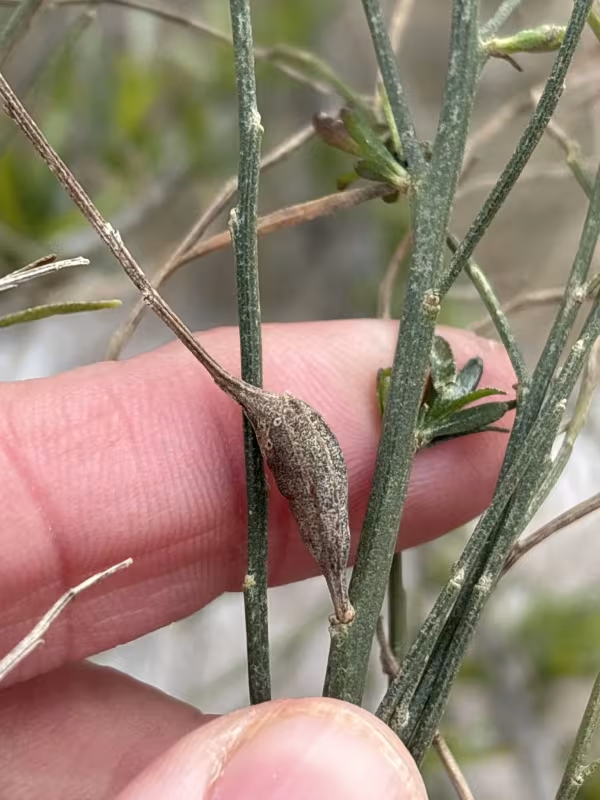
The primary way to identify the presence of Neolasioptera is through the observation of galls, which are abnormal growths or swellings on the host plant's stems, leaves, or petioles.
The larvae, which live inside these galls, are small, legless, and typically yellowish or pinkish in color. They secrete compounds that force the host plant to create these structures, providing the larvae with both food and shelter.
The adults have a very short lifespan, focusing entirely on mating and laying eggs. They use their specialized ovipositors to pierce plant tissue and deposit eggs safely inside.
As a diverse genus, many species of Neolasioptera are highly specialized, meaning each species tends to target a specific host plant, making them persistent pests in specific agricultural sectors.
What it damages
Neolasioptera species attack a wide variety of plants, including significant agricultural, ornamental, and wild species. The damage is primarily localized to stems and succulent parts of the plant.
In sunflower cultivation, these midges are known to cause significant harm by creating galls at the base of the stem, which disrupts the transport of water and nutrients throughout the plant.
Vegetable crops such as tomatoes and peppers are also susceptible. Infestation causes localized stunted growth and can lead to weakened stems that are prone to breakage under stress.
By interfering with the plant's vascular system, Neolasioptera reduces overall plant vigor, which directly impacts yield quality and quantity, often leading to smaller or underdeveloped fruits.
Galls caused by these insects often act as entry points for secondary infections, including fungal pathogens and various rots that can devastate the already weakened plant tissue.
When it appears
The seasonal activity of Neolasioptera is highly dependent on environmental conditions and the phenological stages of their host plants, with peak emergence usually occurring in spring.
These insects often complete multiple generations within a single growing season, provided that temperatures are warm and humidity levels are suitable for larval development.
During the summer months, the formation of galls is most intense as the larvae feed and grow. This is when the visual symptoms become most apparent to farmers and agronomists.
Winter survival is typically achieved through the larval or pupal stages, residing inside the galls or in plant debris that remains in the field after the harvest is concluded.
Fluctuations in weather play a major role in population dynamics. Dry heat can limit the success of adult emergence, while moderate rainfall typically supports higher population densities.
Signs of infestation
The most prominent sign of an infestation is the appearance of characteristic galls—hard, often irregular swellings on stems or leaf bases that shouldn't be there under normal growth.
Inside these galls, one can find larval chambers if they are carefully opened. The presence of larvae confirms that the plant is currently under active attack by the midge.
Affected plants often display signs of general decline, including distorted growth patterns, reduced height, and leaf yellowing above the point of the infestation.
Stem structural integrity is often compromised. In severe cases, the galls cause the stems to become brittle, leading to lodging during windy weather or due to the weight of the crop.
- Swollen or gall-like growths on plant stems.
- Distorted or stunted growth of shoots.
- Reduced vigor and yellowing of the foliage.
- Structural weakness leading to plant lodging.
Control measures
Managing Neolasioptera is challenging due to the fact that larvae are protected within plant tissues, making surface-applied insecticides largely ineffective against them once the gall has formed.
Cultural control measures are the most effective management strategy. This includes the thorough removal and deep plowing of crop residues to destroy the overwintering sites of the larvae.
Crop rotation is essential. By avoiding the planting of susceptible crops in the same field for multiple consecutive years, the buildup of local pest populations can be significantly disrupted.
Systemic insecticides may be used if applied at the precise timing of adult emergence, preventing the females from depositing their eggs in the first place.
Field scouting is vital for early detection. Identifying the first galls and removing the affected plants can help stop the spread of the midge across larger areas of the crop.
Taxonomy
- Latin name
- Neolasioptera
- Order
- Diptera (flies)
- Family
- Cecidomyiidae
- EPPO code
- NEORSP
Discussion
No discussions yet — be the first.