
Neochlamisus cribripennis leaf beetle
Neochlamisus cribripennis
Description
How to identify
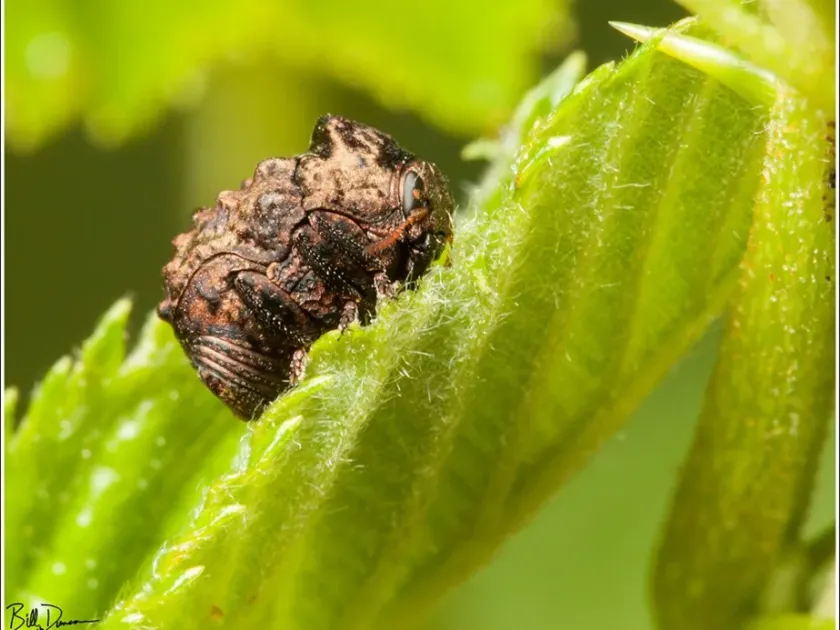
Neochlamisus cribripennis is a species of leaf beetle belonging to the family Chrysomelidae and order Coleoptera. Adult beetles are characterized by their compact, stout, and highly convex bodies, often resembling droppings, which provides excellent camouflage against predators.
The coloration of the beetles ranges from dark brown to blackish, and their elytra (wing covers) exhibit distinct, deep punctures. Due to their small size and cryptic behavior, these insects are frequently overlooked by growers during routine field inspections.
The larvae of this species are particularly notable for their habit of carrying a protective covering made of their own excrement. This adaptation shields them from desiccation and makes them appear unattractive to potential avian and insect predators.
The life cycle involves complete metamorphosis, consisting of the egg, larval, pupal, and adult stages. The timing of each phase is strictly synchronized with the phenology of their host plants, ensuring that the next generation emerges just as new foliage becomes available.
This beetle is well-adapted to its environment, capable of completing its development rapidly during favorable summer temperatures. The overwintering strategy as adults or pupae ensures the survival of the population through harsh winter months in temperate climates.
What it damages
This pest primarily feeds on plants within the Rosaceae family. In agricultural settings, Neochlamisus cribripennis is known to cause economic damage to young shrubs, nursery stock, and various fruit-bearing woody species by consuming leaves and terminal growth.
Both adults and larvae are active feeders, chewing irregular holes through the leaf blades. This feeding pattern, often referred to as "shotholing," reduces the plant’s photosynthetic capacity and can cause significant foliage loss if the infestation is severe.
Young, succulent growth is most vulnerable to attack. Constant pressure from the beetles can result in stunted development of new shoots, which compromises the long-term health and vigor of the affected plants, particularly in nursery environments.
Heavy infestations lead to early leaf drop and potential branch dieback, especially if the plants are already under stress from drought or nutrient deficiency. Furthermore, the feeding wounds serve as entry points for various bacterial and fungal pathogens.
Economic damage is most pronounced in ornamental and fruit tree nurseries, where the aesthetic quality and growth rate are crucial. Protecting young plants from early-season feeding is essential for maintaining production standards and profitability.
Signs of infestation
The most diagnostic sign of an infestation is the presence of numerous small, irregular holes across the leaves, creating a characteristic skeletal or mesh-like appearance. As the season progresses, these damaged areas often show signs of necrosis.
When inspecting foliage, look for the small, dark, granular cases that larvae carry. These structures are often found on the undersides of leaves or along the veins. Finding these cases is a definitive sign of active colonization.
Beetles themselves may be observed feeding, but they often drop to the ground when disturbed, remaining motionless for several minutes. This behavior makes them difficult to count unless specific monitoring methods like beating trays are used.
Yellowing or marginal scorching of the leaves surrounding the feeding sites can also indicate sustained pressure from the pest. In severe cases, the entire canopy of a plant might appear sparse or withered due to excessive loss of photosynthetic tissue.
Growers should focus their monitoring efforts during the spring and early summer when adult emergence peaks. Identifying the infestation early is critical, as larval populations can expand rapidly if left unchecked during the rapid growth phase of the host.
Control measures
Integrated Pest Management (IPM) is the most effective approach to handling Neochlamisus cribripennis. This starts with cultural practices such as removing weeds that serve as alternative hosts and clearing away leaf litter where adults might overwinter.
Biological control options, including the use of microbial insecticides like those based on Bacillus thuringiensis, can be highly effective against younger larval stages. These methods preserve beneficial insect populations in the field.
Chemical intervention should be reserved for periods of high pest density. When necessary, use systemic or contact insecticides approved for the target crop. Always follow label rates and application timings to maximize efficacy while minimizing environmental impact.
Monitoring using pheromone or light traps can help determine the exact timing for treatment, allowing for more precise and fewer applications of insecticides. This strategy reduces costs and limits the development of resistance within the pest population.
- Maintain proper plant spacing to reduce microclimate humidity.
- Encourage native predators like ladybugs and predatory mites.
- Prune and destroy heavily infested branches during the dormant season.
- Ensure adequate irrigation to improve host plant resilience against damage.
Taxonomy
- Latin name
- Neochlamisus cribripennis
- Order
- Coleoptera (beetles)
- Family
- Chrysomelidae
- EPPO code
- NEOSCR
Discussion
No discussions yet — be the first.