
Willow sawfly
Nematus salicis
Description
How to identify
The willow sawfly (Nematus salicis) belongs to the Hymenoptera order and the Tenthredinidae family. Adults are small, wasp-like insects with distinct yellow coloration, typically measuring up to 10 mm in length.
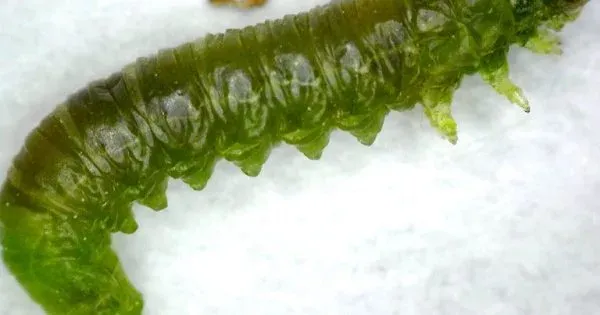
The larvae, often called false caterpillars, are bright yellowish-green with dark spots along their sides. They are highly active and frequently feed in social groups on the underside of leaves.
The life cycle involves four stages: egg, larva, pupa, and adult. They typically overwinter as prepupae inside durable, dark-colored cocoons located within the soil beneath the host plant.
Adults emerge in spring to mate and lay eggs. The female uses her saw-like ovipositor to insert eggs into the leaf tissue, which often results in small, visible swellings on the leaves.
Depending on local climate conditions, the willow sawfly can complete one to three generations per year, leading to potential outbreaks during warm summer months.
What it damages
The primary hosts for this pest are members of the Salix genus (willows). In some instances, they may also target poplar species found in close proximity.
Larvae are the primary cause of damage. Upon hatching, they begin by skeletonizing the leaf tissue and eventually consume entire leaves, leaving only the midribs intact.
Heavy infestations can lead to complete defoliation of the tree. This process drastically reduces the tree's photosynthetic capability and stresses the plant significantly.
Repeated defoliation over several years can result in branch dieback and an increased vulnerability to secondary pests, such as wood-boring insects and pathogens.
In nursery settings, a significant willow sawfly attack can stunt plant growth and reduce the market value of the ornamental trees.
Signs of infestation
Visible signs of infestation include irregular holes in the leaves, which expand rapidly as the larvae grow larger and increase their consumption rates.
A tell-tale sign is the presence of dark, granular frass (excrement) scattered on the leaves and branches below the feeding sites, often accompanied by the larvae themselves.
Premature leaf drop is a common symptom of severe infestations, as the tree attempts to cope with the physiological stress caused by the loss of foliage.
Careful observation of the undersides of the leaves during the early spring will reveal groups of larvae or the small, raised areas where eggs have been deposited.
- Skeletonized leaf patches.
- Visible yellowish larvae with dark spots.
- Accumulation of insect frass.
- Noticeable thinning of the canopy.
Control measures
Cultural control measures, such as deep cultivation of the soil around the base of trees in autumn, are highly effective at disrupting the pupal stage and reducing future populations.
For smaller trees, manual removal of larvae or dislodging them with a strong jet of water can effectively manage low-level infestations without chemicals.
Biological control options, specifically bacterial-based insecticides like Bacillus thuringiensis, target young larvae while sparing beneficial insects and pollinators.
Chemical intervention should be reserved for severe outbreaks. Always select systemic or contact insecticides approved for residential or ornamental use and apply them during the early morning.
Monitoring is crucial; treat as soon as the first signs of hatching are observed to ensure the most effective control and prevent the larvae from reaching maturity.
Taxonomy
- Latin name
- Nematus salicis
- Order
- Hymenoptera
- Family
- Tenthredinidae
- EPPO code
- NEMASA
Discussion
No discussions yet — be the first.