
Apple-plantain aphid
Nearctaphis sensoriata
Description
How to identify
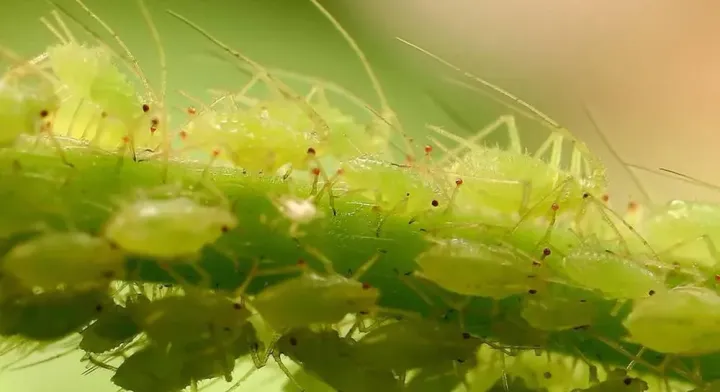
The apple-plantain aphid (Nearctaphis sensoriata) is a member of the family Aphididae, order Hemiptera. It is a distinct species known for its specific host-alternating life cycle.
The adult aphid is small, often dark in color. It exhibits polymorphism, existing in both winged forms for migration and wingless forms for feeding on specific hosts during the season.
Taxonomically, it is classified based on the structure of its antennae and sensorial organs, which are crucial for distinguishing this species from other related aphids infesting fruit trees.
The life cycle involves an egg stage, which serves as the overwintering mechanism. These eggs are laid by the sexual generation of the aphids in protected areas on the bark of apple trees.
Its biological success is attributed to its high reproductive rate during the spring and its ability to switch hosts to avoid seasonal environmental stresses.
What it damages
The primary host for this pest is the apple tree. During the summer, the aphid migrates to plantain (Plantago spp.), which serves as a temporary reservoir for the population.
Aphids feed by piercing plant tissues with their stylets and extracting sap. This process removes vital nutrients and disrupts the metabolic functions of the tree.
Heavy infestations lead to the curling and deformation of leaves, which significantly reduces the leaf surface area available for photosynthesis.
The damage extends to fruits, which can become misshapen or stunted, leading to reduced crop yields and quality, causing economic losses for orchardists.
Furthermore, the sugary secretions left by the aphids serve as a substrate for sooty mold, which blocks sunlight from the leaves and impairs the tree's overall vigor.
When it appears
Activity begins in early spring as the aphid eggs hatch simultaneously with the bud burst of apple trees. This is the critical window for initial monitoring and intervention.
As temperatures rise in late spring or early summer, the winged aphids migrate from the apple trees to the alternate host, the plantain.
The population on apple trees decreases during the peak of summer. However, a return migration occurs in the autumn, during which the aphids settle back on apple trees.
The timing of these seasonal events is closely linked to weather patterns. Warm, dry springs are typically associated with higher aphid population densities.
The autumn generation is essential for the species' survival, as it focuses on sexual reproduction and the subsequent deposition of eggs for winter.
Signs of infestation
The most visible sign of infestation is the tight curling and wrinkling of new apple leaves, often accompanied by yellowing or chlorosis.
Careful inspection of the undersides of damaged leaves usually reveals dense colonies of small, dark-colored aphids gathered in clusters.
The presence of sticky, shiny honeydew on the leaves and branches is a clear indicator of aphid presence, often attracting ants that protect the aphid colonies.
Stunted growth or twisting of the apical shoots is a classic symptom, indicating that the aphids are actively feeding on the most succulent parts of the tree.
The growth of black sooty mold on the foliage is a secondary sign that suggests the aphid colony has been present on the plant for an extended period.
Control measures
Cultural control is highly effective; removing plantain weeds from the orchard floor and surrounding areas helps disrupt the aphid's host-alternating life cycle.
Dormant season sprays, such as horticultural oils, can be applied to apple tree trunks and branches to suffocate the overwintering eggs before they hatch.
In cases of heavy infestation, systemic insecticides are the preferred choice, as they are absorbed by the plant and target the sap-feeding pests directly.
Encouraging biological control by fostering natural predators such as ladybugs, lacewings, and hoverflies is an essential component of integrated pest management (IPM).
Regular scouting of the orchard is necessary. Pruning away and disposing of the first infested shoots can significantly slow the spread of the colony within the tree.
Taxonomy
- Latin name
- Nearctaphis sensoriata
- Order
- Hemiptera (bugs, aphids, leafhoppers)
- Family
- Aphididae
- EPPO code
- NEARSE
Discussion
No discussions yet — be the first.