
Hawthorn-carrot aphid
Nearctaphis crataegifoliae
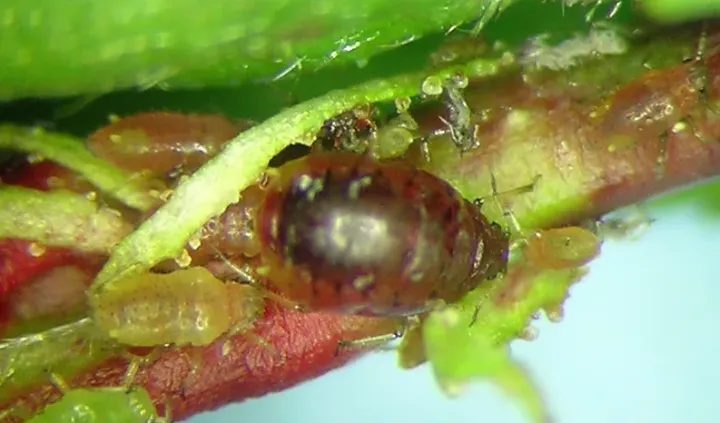
Description
How to identify
The hawthorn-carrot aphid (Nearctaphis crataegifoliae) is a species of aphid in the family Aphididae. It is characterized by a complex lifecycle involving migration between primary and secondary host plants.
Adult aphids are relatively small, with body shapes ranging from globular to elongated. Depending on the generation, they can appear in shades of green, yellow, or pinkish-gray, often covered in a thin, waxy, powdery bloom.
The morphological features include specialized siphunculi (cornicles) on the dorsal side of the abdomen. Winged females have dark pigmentation on the head and thorax, which aids in identification during the migratory stages.
Nymphs are smaller versions of the adults and often cluster in dense groups on the undersides of leaves, making them difficult to detect without careful inspection.
Expert identification often requires a magnifying lens to observe the specific antennal structure and the patterns of the abdominal segments.
What it damages
This aphid species is a significant pest that primarily damages hawthorn trees (Crataegus) and cultivated carrots (Daucus carota).
On hawthorn, the damage is concentrated on young leaves and shoots, which become severely curled, stunted, and distorted, often exhibiting reddish or purplish galls.
On carrots, the aphids feed by piercing and sucking plant sap, causing the foliage to curl and yellow. This leads to impaired plant development and reduced photosynthetic capacity.
The impact on carrot crops includes deformed root vegetables and a significant reduction in overall yield and quality, making them less marketable.
Furthermore, this aphid serves as a vector for various plant viruses, adding a secondary layer of damage beyond direct sap feeding.
When it appears
The lifecycle begins in the spring when eggs, which overwinter in the bark crevices of hawthorn trees, hatch into stem mothers.
By early summer, winged forms are produced. These individuals migrate from the hawthorn trees to secondary hosts, typically carrots and other Apiaceae family members.
During the summer months, several generations of aphids reproduce parthenogenetically on carrot crops, leading to rapid population growth during warm, dry weather conditions.
As autumn approaches, the aphids produce sexual generations that fly back to their primary host, the hawthorn, to mate and deposit eggs for overwintering.
The timing of these migrations is highly sensitive to environmental triggers, including photoperiod and local temperature fluctuations.
Signs of infestation
Early symptoms include the appearance of localized leaf curling and unusual reddish discoloration on hawthorn foliage during the spring.
On carrots, the foliage may look shriveled or stunted. The presence of curled leaflets that reveal dense colonies of aphids upon inspection is a definitive diagnostic sign.
Honey-dew, a sticky substance secreted by the aphids, often covers the leaves and promotes the growth of sooty mold, which appears as a black, dusty layer.
An increased presence of ants on the plant parts is a common secondary sign, as ants farm the aphids to consume the sweet honeydew they excrete.
Severe infestations cause a noticeable decline in plant vigor, with yellowing and premature leaf senescence observed across the crop field.
Control measures
Cultural control includes keeping fields free of wild weeds from the Apiaceae family, which may act as a bridge for aphid movement into crops.
Strategic planting should aim to maintain a physical distance between hawthorn hedges or trees and carrot fields to disrupt the migration cycle.
Chemical control involving systemic insecticides is effective when applied upon the first signs of infestation, ensuring thorough coverage of the leaf underside.
- Encouraging natural predators such as lady beetles, lacewings, and syrphid flies.
- Using horticultural oils during the dormant season to suffocate overwintering aphid eggs on tree bark.
- Applying insecticidal soaps for localized outbreaks to minimize environmental impact on beneficial insects.
Integrated pest management (IPM) practices, including regular monitoring and field sanitation, remain the most effective long-term strategy for managing this pest.
Taxonomy
- Latin name
- Nearctaphis crataegifoliae
- Order
- Hemiptera (bugs, aphids, leafhoppers)
- Family
- Aphididae
- EPPO code
- NEARCR
Discussion
No discussions yet — be the first.