
Oak spot aphid
Myzocallis walshii
Description
How to identify
Myzocallis walshii, commonly known as the oak spot aphid, is a member of the Aphididae family within the order Hemiptera. These small insects are characterized by distinct dark markings on their bodies, which aid in their identification.
The population consists of both winged and wingless forms, with the winged adults being particularly adept at dispersing across different parts of the canopy or to neighboring trees.
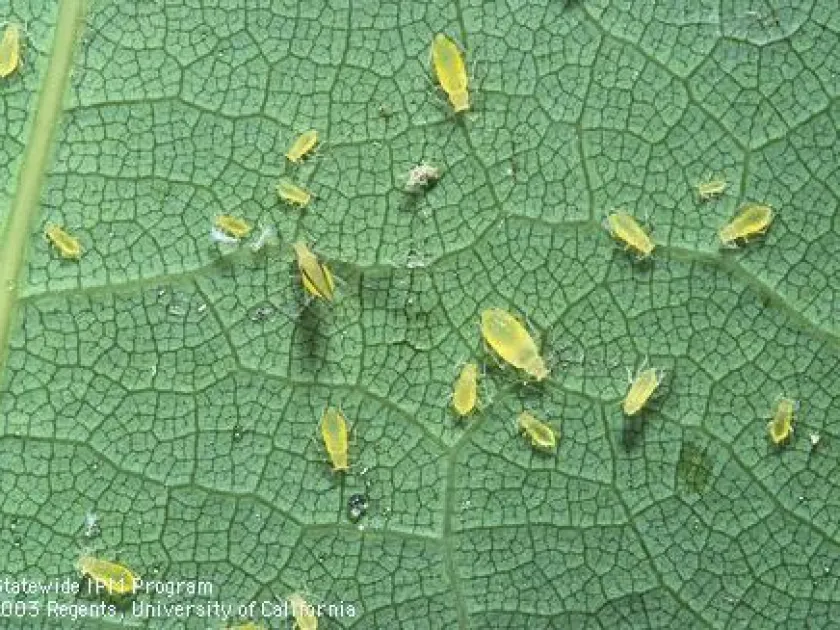
Their bodies typically exhibit a yellowish-green hue, providing excellent camouflage against the foliage of host trees, especially when they reside on the underside of leaves.
Like other aphids, they undergo complex life cycles involving both asexual reproduction during the spring and summer and sexual reproduction in the autumn.
They are known for excreting honeydew, a sugary substance that serves as a vital clue for detecting their presence during routine tree health assessments.
What it damages
The primary hosts for Myzocallis walshii are species within the Quercus (oak) genus, where they extract sap directly from the leaf tissues.
Feeding occurs predominantly on the undersides of leaves, which allows the aphids to remain protected from environmental elements and many direct-contact predators.
Continuous feeding drains the plant's resources, potentially leading to reduced vigor, stunted shoot growth, and overall decline in young or stressed oak trees.
The excretion of honeydew promotes the growth of sooty mold, a fungus that can block sunlight and reduce the photosynthetic capacity of the oak leaves.
In nursery or plantation settings, heavy infestations can lead to premature leaf drop, which impairs the tree's ability to store energy for the winter dormancy.
When it appears
The life cycle of the oak spot aphid is synchronized with the phenological stages of the oak tree, beginning with egg hatching as buds swell in the spring.
Throughout the late spring and early summer, several generations are produced, leading to a rapid buildup of the aphid population within the canopy.
Environmental conditions such as temperature and humidity significantly influence the speed of development, with warmer conditions often accelerating the life cycle.
In late autumn, the aphids shift toward the production of sexual forms, which mate and deposit overwintering eggs in the crevices of the oak tree bark.
This cycle ensures that the species survives the winter and is ready to colonize the fresh, succulent growth as soon as the next spring begins.
Signs of infestation
The most visible sign of an infestation is the presence of sticky honeydew covering the leaves, which often darkens over time due to sooty mold colonization.
Leaves may show symptoms of chlorosis, curling, or distortion as a direct result of the aphids' toxic saliva injected during the feeding process.
A careful inspection of the lower leaf surfaces will reveal clusters of these small, yellow-green insects accompanied by their cast-off white skins.
Increased ant activity on the tree trunks and branches is a strong indicator of aphid presence, as ants often farm these insects for their sugary honeydew.
In cases of severe infestation, the cumulative effect of feeding and fungus growth causes visible yellowing and premature leaf fall during the peak summer months.
Control measures
Early detection through regular monitoring is the most effective way to manage Myzocallis walshii populations before they reach economic damage thresholds.
Biological control agents, such as lady beetles, lacewings, and syrphid fly larvae, are natural predators that can keep aphid populations in check if left undisturbed.
For chemical control, systemic insecticides are generally preferred as they are absorbed by the tree and provide long-lasting protection against sucking pests.
Cultural practices, including proper tree fertilization and maintaining tree health, can improve the oak's resilience and its ability to withstand aphid feeding stress.
Implementing physical barriers like sticky bands on tree trunks can successfully disrupt ant activity, thereby leaving the aphids exposed to their natural enemies.
Taxonomy
- Latin name
- Myzocallis walshii
- Order
- Hemiptera (bugs, aphids, leafhoppers)
- Family
- Aphididae
- EPPO code
- MYZCWA
Discussion
No discussions yet — be the first.