
Myrica aphid
Myzocallis myricae
Description
How to identify
The Myrica aphid (Myzocallis myricae) belongs to the order Hemiptera and the family Aphididae. It is a highly specialized species that primarily colonizes plants of the Myricaceae family, often known as bayberries.
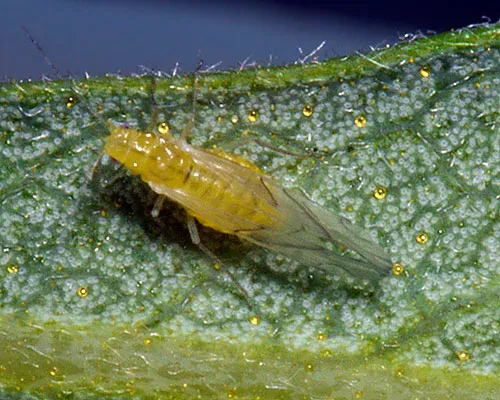
These insects are typically small and pale in color, ranging from yellowish to light green. This cryptic coloration makes them difficult to detect on the underside of leaves during the early stages of infestation.
The life cycle is complex and involves both wingless forms, which remain on the host plant to feed and reproduce, and winged forms that facilitate the spread of the colony to nearby plants.
Overwintering occurs in the egg stage, with eggs deposited in bark crevices or near bud scales. This strategy ensures the survival of the population through harsh winter temperatures.
Entomologists identify this species by examining microscopic features such as the structure of the siphunculi, the chaetotaxy of the body, and the specific wing venation patterns characteristic of the genus Myzocallis.
What it damages
The Myrica aphid causes significant physiological stress to its host plants by extracting phloem sap. This feeding process depletes the plant of essential nutrients and carbohydrates needed for growth.
Persistent infestations lead to the curling, yellowing, and premature senescence of leaves. In young specimens, this can stunt development and compromise the plant's ability to prepare for winter dormancy.
Like many aphid species, Myzocallis myricae secretes honeydew, a sugary byproduct. This substance coats the foliage, providing an ideal substrate for the growth of sooty mold, which inhibits photosynthesis.
Beyond direct feeding damage, the aphid acts as a potential vector for plant viruses. The probing and feeding behavior introduces pathogens directly into the plant's vascular system, causing further decline.
Heavy infestations reduce the overall vigor and aesthetic appeal of ornamental plantings, often making the affected plants more susceptible to subsequent attacks by secondary pests and diseases.
Signs of infestation
The earliest sign of an infestation is often the curling or distortion of new leaves at the tips of shoots. Close inspection of the leaf underside usually reveals the presence of small aphid colonies.
A shiny, sticky residue on the leaves is a hallmark sign of aphid activity. This honeydew often attracts ants, which farm the aphids and protect them from predators, making the infestation harder to manage.
The development of a black, powdery coating on the leaves—sooty mold—confirms that the infestation has been present for a significant duration and that honeydew levels are high.
Chlorosis, or yellowing of the leaf tissue, indicates significant sap loss. If the infestation is severe, the affected leaves may drop prematurely, leaving the plant sparse and weakened.
Shed skins, known as exuviae, can often be found on the leaves or stems, signaling active growth and reproduction of the aphid population within the host canopy.
Control measures
Effective management requires a combination of monitoring, cultural practices, and, when necessary, targeted chemical interventions to minimize the impact of the pest on host plants.
Biological control is highly effective for aphid management. Encouraging natural predators like lady beetles, lacewings, and hoverflies can help keep aphid populations below damaging levels naturally.
Systemic insecticides are recommended for severe infestations. These treatments are absorbed by the plant tissue, providing long-lasting protection against aphids that feed on the phloem sap.
Cultural practices, such as maintaining healthy soil moisture and nutrient levels, improve the plant’s natural resistance. Regular pruning of heavily infested shoots can also reduce the local population density.
- Early season monitoring to detect colonies before they spread.
- Horticultural oils or insecticidal soaps for contact control.
- Selective use of pesticides to protect beneficial insect populations.
Taxonomy
- Latin name
- Myzocallis myricae
- Order
- Hemiptera (bugs, aphids, leafhoppers)
- Family
- Aphididae
- EPPO code
- MYZCMY
Discussion
No discussions yet — be the first.