
Chestnut aphid
Myzocallis castanicola
Description
How to identify
The chestnut aphid Myzocallis castanicola is a small insect belonging to the family Aphididae, specialized in feeding on specific deciduous trees.
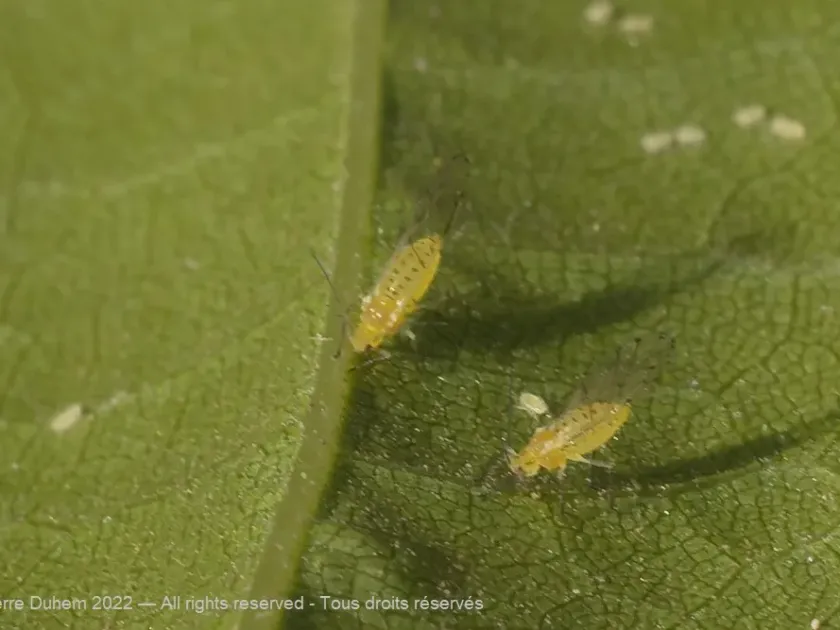
Adults are typically pale yellow or light green with characteristic dark markings on their abdomen, which provides camouflage against the leaf surface.
Both winged and wingless forms exist within a single population, allowing for both stationary feeding and colonization of new leaves and trees.
They are generally found on the underside of the leaves, feeding near the veins to easily access the vascular system of the host plant.
The nymphs are small and lack wings, progressing through several developmental stages before reaching adulthood and potential winged dispersal.
What it damages
The primary hosts of this pest are various species of chestnut, though they can also be found on oak trees in certain forest ecosystems.
By constantly sucking sap from the leaves, the aphids deprive the tree of essential nutrients required for healthy leaf development and annual growth.
The continuous removal of phloem sap results in chlorosis, leaf curl, and significantly weakened photosynthetic capacity of the entire crown.
Large infestations can lead to premature leaf drop, which stresses the tree and makes it more vulnerable to secondary infections or environmental stress.
In addition, the accumulation of sugary honeydew excreted by the aphids provides a medium for the growth of sooty mold, reducing aesthetic value.
When it appears
The life cycle begins in spring when overwintered eggs hatch, releasing the first generation of nymphs as leaf buds begin to open.
Throughout the summer, several generations of aphids follow, with populations increasing rapidly during warm and stable weather conditions.
Mid-summer is usually the peak period for aphid activity, where colonial growth on the leaves is most noticeable to observers.
As autumn approaches, the aphid produces eggs that are deposited in the protective crevices of the tree bark to survive the winter period.
Climatic factors such as heavy rainfall can wash away aphid colonies, acting as a natural regulator of their population density.
Signs of infestation
Visible signs of infestation include the presence of yellowish spots on the leaves and a general lack of vigor in the foliage's appearance.
The most distinctive indicator is the presence of sticky honeydew on the foliage and branches, which attracts ants and other insects.
Sooty mold growth, appearing as a black, velvety layer on the leaf surface, is a direct consequence of the honeydew excretion from the aphids.
Leaf curling or rolling is a common defense or stress response of the tree to the presence of large aphid colonies feeding on its tissues.
- Increased ant activity on the trunks of affected chestnut trees.
- Premature browning and senescence of the leaves.
- Thinning of the canopy due to foliage loss in severe cases.
Control measures
Chemical control involving systemic insecticides is effective when applied during the early stages of the population buildup in the spring.
Biological control methods focus on protecting and fostering natural predators such as lady beetles, lacewings, and parasitic wasps.
Horticultural oils or insecticidal soaps can be used as a safer alternative for spot-treating small trees or individual branches.
Proper garden sanitation, including the removal of heavily infested dead twigs during the dormant season, can help reduce the overwintering population.
Maintaining overall tree health through adequate irrigation and nutrient management makes the host less susceptible to severe aphid damage.
Taxonomy
- Latin name
- Myzocallis castanicola
- Order
- Hemiptera (bugs, aphids, leafhoppers)
- Family
- Aphididae
- EPPO code
- MYZCCS
Discussion
No discussions yet — be the first.