

Description
How to identify
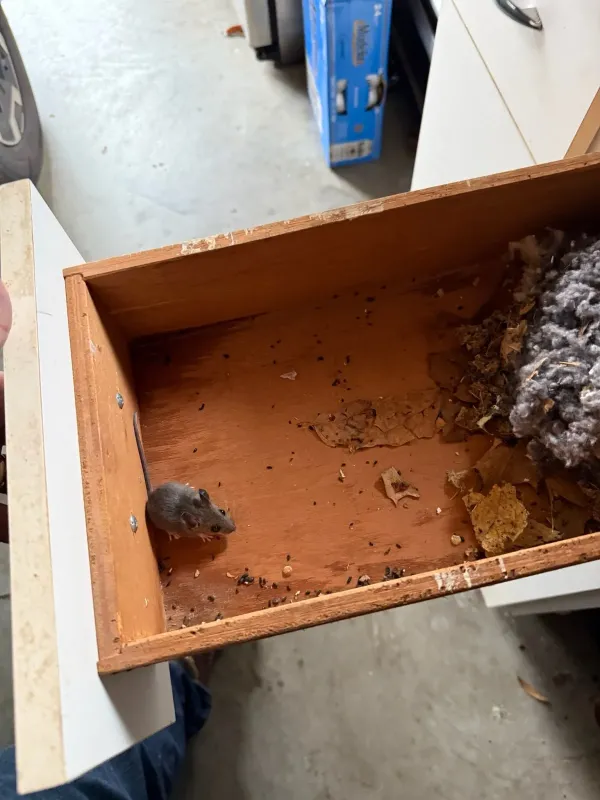
The house mouse (Mus musculus) is a small rodent belonging to the Muridae family. It typically measures 6 to 10 cm in body length with a tail of similar size.
The species is characterized by light brown to greyish-brown fur and a long, scaly, sparsely haired tail. They have prominent ears and a pointed snout.
Highly intelligent and agile, house mice are excellent climbers and can squeeze through openings as small as a pencil, allowing them easy access to buildings.
The biological cycle is marked by rapid maturation; females can reproduce at as young as 6 weeks old, enabling massive population growth in short periods.
They are primarily nocturnal and highly adaptable to various environments, ranging from dense urban settings to agricultural warehouses and open fields.
What it damages
House mice cause significant economic losses in agriculture by infesting grain stores, seed storage areas, and livestock feed facilities.
Their feeding habits cause not only direct grain consumption but also extensive spoilage of stored products through contamination with excrement, hair, and urine.
In the field, mice may target newly sown seeds, which can lead to reduced plant density and uneven crop emergence, particularly for cereal crops.
They are known to destroy infrastructure by gnawing on electrical insulation, which poses a serious fire risk in farm sheds and storage barns.
Additionally, they damage structural materials, bags, and packaging, creating entry points for moisture and insects that further degrade the quality of crops.
When it appears
While house mice are active year-round, their movement is largely driven by seasonal environmental changes and food availability.
As outdoor temperatures drop in autumn, house mice migrate into barns, grain bins, and houses to seek shelter and stable food sources for winter.
During the winter months, their activity is concentrated in indoor environments where they rely heavily on stored grain for survival and reproduction.
Spring signals a shift as part of the population moves back into fields and hedgerows, where they take advantage of the newly available vegetation.
However, inside climate-controlled warehouses, house mice maintain year-round activity and reproduction, independent of external weather conditions.
Signs of infestation
The presence of droppings, which are small, rod-shaped, and dark, is the most common indicator of a house mouse infestation in storage areas.
Chewed edges on bags, food containers, and wooden structures are clear physical evidence of active gnawing by the rodents.
A strong, pungent musky odor is often present in infested areas, especially in confined spaces or where the population density is high.
Small grease marks or smudge trails along walls and pipes occur as mice repeatedly follow the same paths between nests and food sources.
Audible scratching and squeaking sounds within walls, floors, or under shelving units are indicators of an established colony in the vicinity.
Control measures
Successful management of house mouse populations relies on a combination of exclusionary measures, sanitation, and population reduction.
- Exclusion: Seal all holes and cracks in foundations and walls using steel wool or metal mesh to block access.
- Sanitation: Remove food waste and ensure that stored grain and feed are kept in rodent-proof containers.
- Rodenticides: Use anticoagulant-based baits placed in secure tamper-resistant bait stations.
- Trapping: Deploy snap traps or live traps in high-traffic areas along walls where activity is detected.
- Monitoring: Regularly inspect storage facilities to detect early signs of rodent activity before a full-scale infestation.
Always prioritize safety when handling rodenticides, ensuring they are kept away from children, livestock, and non-target wildlife.
If an infestation becomes widespread, coordinate with professional pest control services to implement a systematic baiting program.
Maintaining a clean, clutter-free environment around buildings significantly reduces the availability of hiding spots, making the area less attractive to mice.
Content graph
Connections · House mouse
Most often together:
Marketplace
Products · 2

Biology
Taxonomy
- Latin name
- Mus musculus
- Order
- Rodents
- Family
- Muridae
- EPPO code
- MUSXMU
Community
Discussion
No discussions yet — be the first.