
Mycophila mushroom gnat
Mycophila
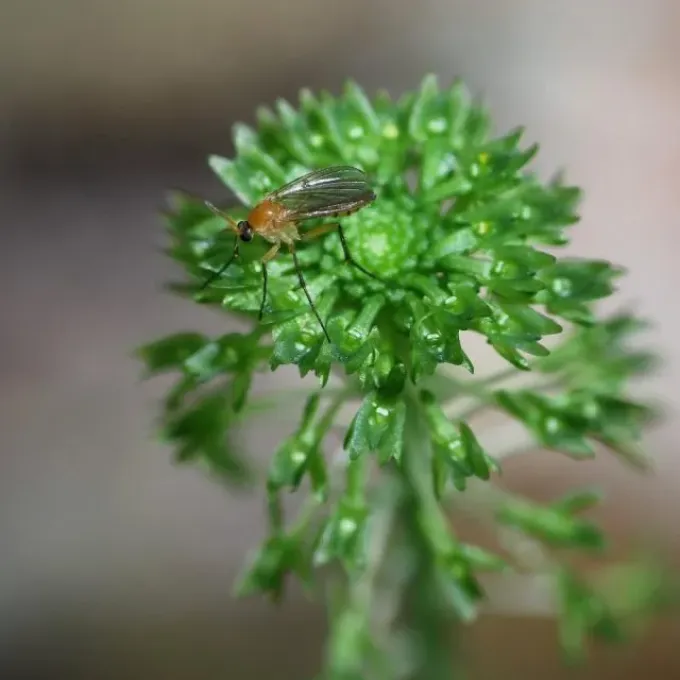
Description
How to identify
The mushroom gnat Mycophila is a genus of insects belonging to the family Cecidomyiidae (gall midges), order Diptera. These small pests are notoriously difficult to control in commercial mushroom production.
Adults are tiny, delicate flies with long legs and thin antennae. They are typically short-lived and do not feed, focusing entirely on reproduction in the mushroom substrate.
The larvae are translucent, legless, and very small, often measuring only a few millimeters. They are typically white or yellowish, making them difficult to detect against the mushroom mycelium.
A distinctive feature of Mycophila is their ability to reproduce through paedogenesis. This means the larvae can produce offspring while still in their larval stage, leading to extremely fast population explosions.
Field identification is usually performed using yellow sticky traps placed near the growing benches to catch adults as they emerge from the substrate.
What it damages
The primary hosts for Mycophila are various cultivated fungi, including white button mushrooms, oyster mushrooms, and other species grown in compost-based substrates.
The larvae feed primarily on the mycelium. By tunneling through and consuming the fungal hyphae, they disrupt nutrient flow, leading to weakened colonies and significantly reduced crop yields.
Direct damage occurs when larvae bore into the fruit bodies (mushrooms). They create narrow, winding tunnels in both the stipe and the cap, rendering the mushrooms unmarketable.
Larval activity also promotes secondary infections. The damage provides an entry point for bacteria and other pathogens, leading to rapid decay and foul odors in the growing room.
In high-density infestations, the entire mycelial bed can be destroyed, resulting in total loss of the harvest and requiring the complete sterilization of the facility.
When it appears
Mycophila gnats are primarily pests of indoor mushroom facilities. Because they thrive in the controlled climate of growing rooms, they can be a year-round threat.
Their life cycle is highly dependent on environmental conditions, with temperatures between +18°C and +25°C being ideal for rapid reproduction and larval growth.
High moisture levels in the substrate and high relative humidity in the air are crucial for their development, often coinciding with the active fruiting phases of the mushroom crop.
The insects can persist in a facility by surviving in small amounts of leftover compost or on dirty equipment, allowing them to initiate new outbreaks in subsequent batches.
The dispersal of the gnat within a farm occurs via the movement of adult gnats or through the accidental transfer of contaminated substrate, soil, or tools.
Signs of infestation
The first indicator of an infestation is the observation of tiny, dark-colored flies hovering near the growing medium or accumulating on light sources or sticky traps.
Inspect the substrate for thin, patchy areas of mycelium. When larvae are present, the mycelial network appears disrupted, unhealthy, and often feels loose or powdery.
Upon close inspection of harvested mushrooms, one might find small entry holes on the underside of the caps or within the stalks, signaling internal tunneling.
A musty or putrid smell from the substrate is a common sign of advanced infestations, indicating that larvae have caused decay and secondary bacterial colonization.
Visible presence of translucent larvae moving on the surface of the mushroom pins is a sign of a severe outbreak that requires urgent management actions.
Control measures
Effective management begins with stringent farm hygiene. Cleaning and disinfecting all surfaces, growing benches, and equipment between every production cycle is non-negotiable.
Pasteurization of the mushroom substrate is essential. Proper heat treatment ensures that all life stages of the gnat are destroyed before the mushroom spawn is introduced.
Using yellow sticky traps is a recommended monitoring technique to detect early activity. This helps in timing the application of biological or chemical controls.
Biocontrol agents, such as entomopathogenic nematodes or specific bacteria, are preferred for their effectiveness and safety regarding the mushroom product.
- Screening ventilation systems to exclude adult gnats
- Maintaining proper environmental sanitation
- Regular inspection of the spawning process
- Correct disposal of waste substrate away from the facility
Taxonomy
- Latin name
- Mycophila
- Order
- Diptera (flies)
- Family
- Cecidomyiidae
- EPPO code
- MYCPSP
Discussion
No discussions yet — be the first.