

Pest · Hymenoptera · affects Ornamental crops, Potato, Wild cabbage
Especially harmful
Ants
Formicidae
Description
How to identify
Ants (Formicidae) belong to the order Hymenoptera. They are social insects living in highly structured colonies divided into castes, including queens, workers, and males.
They are easily identified by a distinct pedicel (a narrow waist) between the thorax and abdomen. Their body size varies depending on the specific species, typically ranging from 2 to 10 mm.
Ant colonies are usually established in soil, decaying wood, or under rocks. They maintain complex systems of galleries and chambers for brood rearing and food storage.
Their life cycle consists of complete metamorphosis: egg, larva, pupa, and adult. This development enables the colony to rapidly expand its numbers under favorable conditions.
Identifying the specific species is essential for agronomists, as different ant species vary in their nesting behavior and their tendency to farm honeydew-producing insects.
What it damages
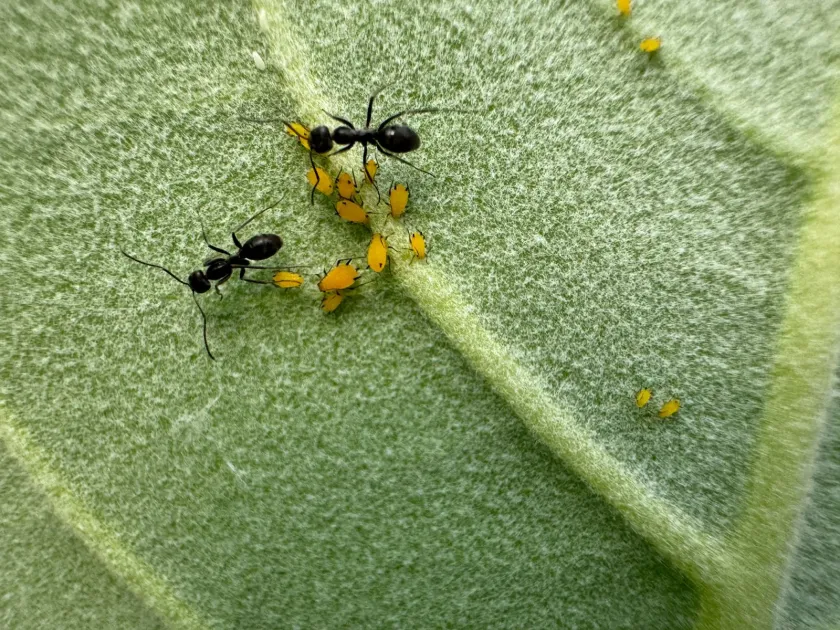
Ants cause significant indirect damage by actively protecting aphid colonies from natural predators such as ladybugs and lacewings, facilitating the spread of pests.
By nesting in the root zone, ants can damage the delicate root systems of young seedlings, leading to nutrient deprivation, stunted growth, or plant mortality.
They often feed on ripe fruits, especially berries like strawberries and raspberries, causing visible mechanical damage and promoting fungal growth due to fruit rot.
Furthermore, ants act as vectors for various plant pathogens, carrying spores on their bodies from infected areas to healthy plants throughout the agricultural field.
The constant maintenance of tunnels and galleries in the soil alters its physical structure and acidity, which can negatively impact the development of vegetable crops.
When it appears
Ant activity typically begins in early spring when soil temperatures reach +5 to +8 degrees Celsius, signaling workers to emerge and search for food.
The peak activity period occurs during late spring and early summer, coinciding with the rapid growth of the colony and the increase in aphid populations.
In mid-summer, the colony produces reproductive individuals, leading to the swarming of winged ants, which colonize new habitats and expand their territory.
As autumn temperatures drop below +10 degrees Celsius, ant activity on the surface decreases as the colony prepares for the approaching winter.
During the winter, ants remain in a state of diapause deep within the soil profile, where temperatures are stable enough to ensure colony survival.
Signs of infestation
A primary indicator of ant infestation is the constant traffic of workers along tree trunks, stems, and plant stalks as they patrol aphid "pastures."
The presence of small soil mounds or entrance holes in the root zone is a clear sign that a nest has been established in the immediate vicinity of a plant.
Curled leaves at the tips of shoots, combined with the presence of sticky honeydew, are reliable signs of aphid infestation managed by ants.
Visible mechanical damage to ripening fruit, such as holes in strawberries or raspberries, confirms that ants are utilizing the crop as a source of sugar.
Persistent loose soil around the base of the plant or the exposure of primary roots is a common sign of soil structure disturbance caused by ant tunneling.
Control measures
Sticky bands applied to tree trunks provide a physical barrier that prevents ants from accessing the crown, effectively isolating aphids from their protectors.
Regular cultivation and hoeing of the soil disrupt tunnels and nests, causing significant stress to the colony and encouraging them to abandon the site.
Targeted use of insecticides, particularly granular baits or gels, is highly effective as the workers carry the toxicant back to the nest, eliminating the queen.
Natural repellents like garlic extract, wood ash, or soap solutions can be used as temporary deterrents to keep ants away from sensitive vegetable patches.
The most sustainable control method is managing the aphid population; by removing the primary source of food (honeydew), you make the environment unattractive to ants.
Content graph
Connections · Ants
Most often together:
Marketplace
Products · 1
Biology
Taxonomy
- Latin name
- Formicidae
- Order
- Hymenoptera
- Family
- Formicidae
- EPPO code
- 1FORMF
Community
Discussion
No discussions yet — be the first.