
Root-feeding beetle
Monotoma picipes
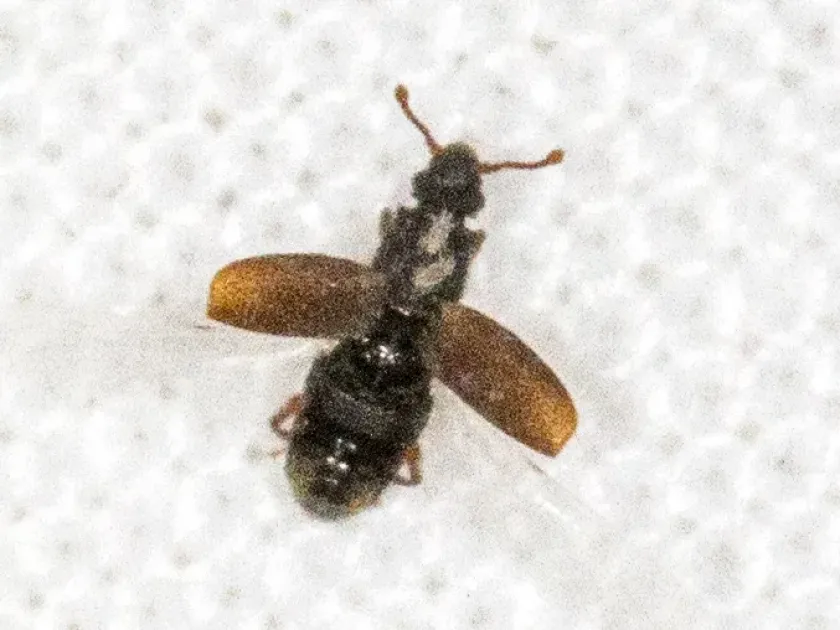
Description
How to identify
Monotoma picipes is a small beetle belonging to the family Monotomidae, within the order Coleoptera.
The adult insect measures approximately 2–3 mm in length, characterized by an elongated body shape and a dark brown to black coloration.
The head is relatively large with well-developed eyes, and the pronotum features distinct lateral indentations, which are specific identification marks.
Larvae lead a cryptic lifestyle; they are highly mobile and prefer moist environments rich in decaying organic matter.
This species is a cosmopolitan pest frequently found in human-altered landscapes, warehouses, compost piles, and open fields.
What it damages
Monotoma picipes primarily harms vegetable crops, especially those cultivated in greenhouses or stored in warehouses.
The pest is often found in decaying plant residues, where it damages root vegetables such as carrots, beets, and potatoes.
By penetrating vegetable tissues, both adults and larvae facilitate the spread of fungal and bacterial rots, accelerating harvest spoilage.
The species can also damage seedlings by feeding on tender stem tissues just above the soil surface during high-humidity conditions.
In field environments, the insect usually feeds on decomposing organic matter but may shift to living plant tissues if food sources are limited.
When it appears
The activity of this insect depends directly on temperature regimes and moisture levels in the soil or storage facility.
Adults exhibit peak activity during the spring and summer months when weather conditions remain consistently warm.
Under storage conditions, the pest's life cycle can continue year-round if favorable microclimatic parameters are maintained.
Mass reproduction often coincides with rainy periods or excessive irrigation, which triggers the decay of organic residues.
Overwintering occurs primarily in the adult stage within the soil, under plant debris, or in cracks of storage structures.
Signs of infestation
A primary sign of infestation is the presence of small tunnels and surface abrasions on the skin of roots and tubers.
Upon visual inspection of affected areas, the beetles themselves may be spotted, although they tend to hide quickly when disturbed.
Secondary infection hotspots, such as mold or soft rot on vegetables, often indicate initial damage caused by these pests.
In greenhouses, the wilting of seedlings without apparent root-feeding damage is a strong indicator of Monotoma activity.
A specific smell of decaying organic material in storage areas often suggests conditions conducive to the presence of this beetle.
Control measures
The most critical control measure is strict adherence to agronomic practices focused on the timely removal and disposal of crop residues.
Regular ventilation of storage facilities and maintaining low humidity levels are essential to prevent pest proliferation.
In open fields, deep autumn plowing is effective in destroying overwintering stages of the insect.
When chemical intervention is required, contact-action insecticides approved for use on vegetable crops should be utilized.
- Ensure optimal soil drainage to prevent decay.
- Use high-quality, pest-free planting stock.
- Conduct regular disinfection of storage containers and crates.
Taxonomy
- Latin name
- Monotoma picipes
- Order
- Coleoptera (beetles)
- Family
- Monotomidae
- EPPO code
- MNTOPI
Discussion
No discussions yet — be the first.