
Monotoma
Monotoma
Description
How to identify
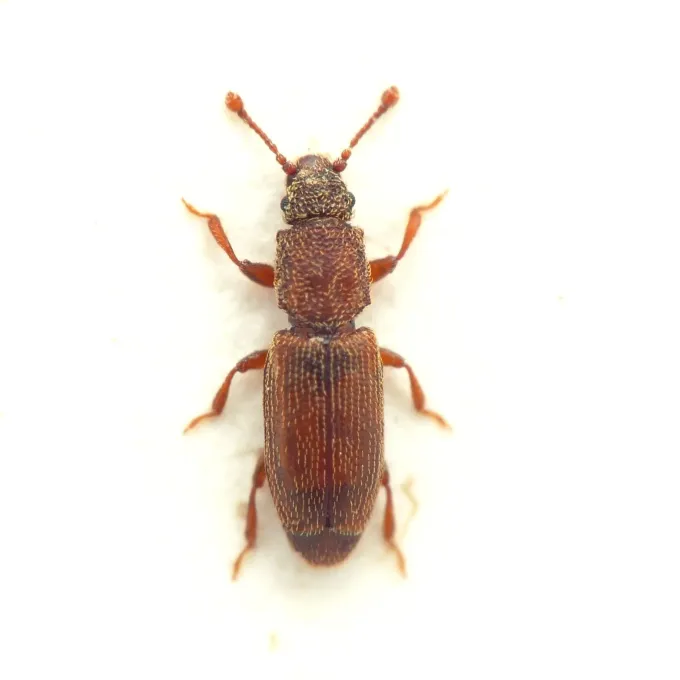
The genus Monotoma belongs to the family Monotomidae (order Coleoptera). These are small, slender beetles, typically measuring between 2 and 3 mm in length, known for their distinct elongated body shape.
A key feature for identification is the pronotum, which often displays a unique sculpture with small depressions or pits. Their color ranges from reddish-brown to dark brown, and they possess relatively hard wing covers.
The larvae are small, whitish, and cryptic in their habits. They are rarely seen by non-specialists as they develop deep within moist, decaying organic material where they feed on fungi.
Adult beetles have functional wings and are capable of flight, allowing them to disperse throughout warehouse facilities when conditions are favorable.
The genus includes numerous species globally, frequently found in habitats where moisture promotes the growth of micro-fungi, which is their primary food source.
What it damages
Monotoma is primarily classified as a secondary pest or a storage-associated insect. It typically infests grain products that have already been compromised by moisture, improper storage, or fungal decay.
They do not usually attack clean, dry, and healthy grain. Instead, their presence is a reliable indicator that the grain mass has reached a moisture content high enough to support mold growth.
Damage is mostly indirect, as the beetles promote the spread of fungal spores and bacteria within the grain pile, significantly accelerating the degradation of stored products.
While they do not consume large volumes of grain themselves, their presence compromises the overall quality, reduces the commercial value, and creates conditions for other pests to colonize.
- Wheat, barley, and other cereal grains.
- Oilseeds stored under humid conditions.
- Grain dust and milling by-products in facilities.
When it appears
Monotoma remains active year-round provided that storage facilities maintain stable temperatures and humidity levels. They do not have a strict dormant season in indoor environments.
Activity peaks during warmer months, especially in unheated warehouses where the internal temperature rises, significantly shortening the developmental cycle of the beetles.
The lifecycle is highly dependent on environmental moisture. In cases of roof leaks or condensation inside storage bins, populations can explode rapidly due to the proliferation of mold.
Adult beetles become highly mobile when temperatures exceed 20°C, actively migrating through ventilation systems and structural cracks in search of new moisture-rich food sources.
Winter dormancy occurs only in cold storage conditions where temperatures drop below the metabolic thresholds required for growth and reproduction.
Signs of infestation
The most common sign of a Monotoma infestation is the visual detection of small beetles on the surface of stored grain or inside inspection samples.
A persistent, musty, or moldy odor emanating from the grain pile is a strong indicator of fungal activity, which almost always accompanies the presence of these insects.
Examination of the grain reveals discolored, damp seeds and accumulation of fine powder, excrement, and debris, suggesting that the grain has been sitting in moist conditions for an extended period.
Traps, such as sticky cards or specialized insect monitoring devices, are effective for identifying early stages of infestation before the beetle population becomes widespread.
If professional grading reveals mold-damaged kernels in combination with these beetles, it confirms that the storage system requires an urgent overhaul of moisture management.
Control measures
The primary control measure for Monotoma is strict moisture management. Keeping grain dry (typically below 13-14% moisture) prevents mold growth, effectively eliminating the pest's food source.
Sanitation is crucial; regularly cleaning the facility, including removing dust, grain spills, and debris from under flooring and behind machinery, prevents population buildup.
Active aeration of the grain mass is recommended to maintain temperature uniformity and remove excess moisture pockets that might trigger beetle reproduction.
If an infestation is confirmed, fumigation using registered products (such as phosphine gas) may be necessary, provided that all safety regulations and dosage guidelines are followed.
Preventive strategies include proper drying before storage, structural sealing of warehouses, and regular monitoring to detect moisture-related issues before beetles can establish themselves.
Taxonomy
- Latin name
- Monotoma
- Order
- Coleoptera (beetles)
- Family
- Monotomidae
- EPPO code
- MNTOSP
Discussion
No discussions yet — be the first.