
Flat cereal buprestid
Monardis plana
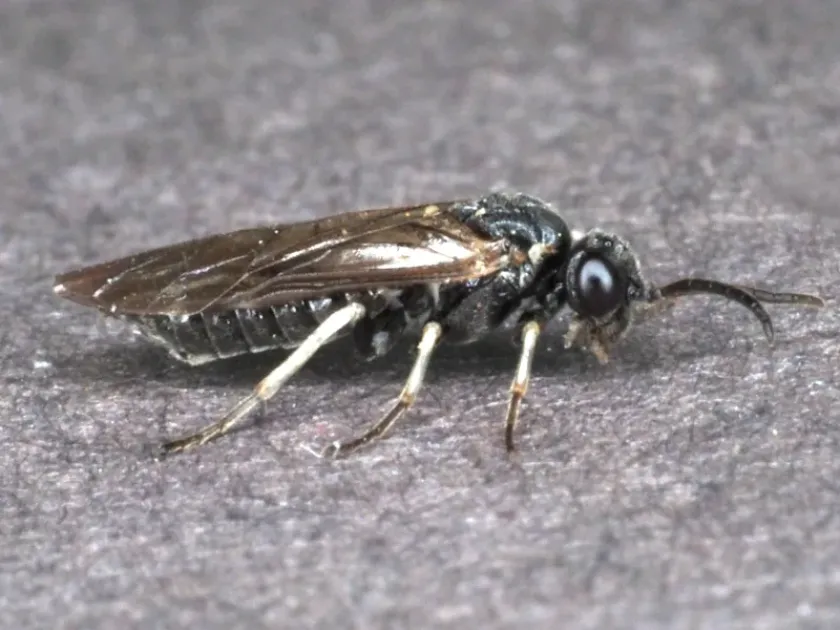
Description
How to identify
The flat cereal buprestid (Monardis plana) belongs to the Buprestidae family within the order Coleoptera. This small beetle is characterized by its flattened body shape, which allows it to thrive in the tight spaces found within cereal stems and sheaths.
Adult beetles typically exhibit a metallic appearance, ranging from dark bronze to greenish-black. The surface of the elytra is finely sculpted. The larvae are legless and possess a distinctively enlarged prothoracic segment, typical for members of this family.
The life cycle of this species undergoes complete metamorphosis: egg, larva, pupa, and adult. The insect's biology is tightly coupled with the phenology of various grasses, where they spend most of their developmental stages protected within the plant tissue.
The species usually overwinters as late-stage larvae inside the stalks or near the root zone of host plants. This survival strategy provides the necessary shelter against adverse winter temperatures and desiccation.
Pupation occurs in spring or early summer. Upon emergence, the adult beetles engage in supplemental feeding on foliage before mating and laying eggs on suitable host plants to ensure the survival of the next generation.
What it damages
The primary hosts for this pest include various grass species. In agricultural settings, it frequently infests cereal crops such as wheat and barley, causing localized economic damage when population densities are high.
The larvae are internal feeders. They bore into the stems of the host plants, consuming the pith and damaging the vascular bundles responsible for transporting water and nutrients, which effectively cripples the plant's development.
Adult beetles inflict damage by consuming the leaf epidermis and parenchyma. This creates characteristic feeding holes or ragged edges on the leaves, which reduces the plant's photosynthetic capacity during critical growth stages.
Damage to the stem by the larvae often leads to the condition known as "whitehead," where the ear fails to fill with grain or dries out prematurely, resulting in significant yield loss and poor grain quality.
Extensive larval tunneling weakens the structural integrity of the plant stem. Consequently, fields suffering from heavy infestations are prone to lodging, which complicates harvesting and further reduces yield efficiency.
Signs of infestation
The initial signs of an infestation include visible damage to the leaves, appearing as small "windows" or holes created by adult beetles feeding during the day when temperatures are favorable.
A major indicator during the heading phase is the appearance of premature, bleached, or withered ears. These "whiteheads" signify that the larval feeding has interrupted nutrient transport within the stem.
Upon closer inspection of the stem base, one may detect small entry holes created by the larvae. These holes may be accompanied by minor necrotic tissue discoloration or slight stem swelling at the site of entry.
Overall plant stunting or localized yellowing of individual shoots can indicate that larvae are actively feeding inside the stem or root collar, depriving the shoot of necessary moisture.
If an affected stem is cut longitudinally, one will find larval galleries filled with frass, the distinctive excrement of the larvae, along with the presence of the cream-colored larvae themselves.
Control measures
Crop rotation is the cornerstone of managing this pest. Avoiding consecutive plantings of susceptible cereal crops in the same field disrupts the lifecycle of the beetle and prevents population buildup.
Sanitation practices, such as deep plowing of fields after harvest, are essential to bury plant residues. This action effectively kills larvae and pupae residing within the stalks before they can emerge in the following season.
Effective weed control is vital, as various wild grasses act as secondary hosts for Monardis plana, providing a refuge for the pest during periods when primary crops are not present.
When the economic threshold is exceeded, targeted application of insecticides during the adult emergence window can effectively reduce population levels, though this should be timed to minimize impact on beneficial insects.
- Utilize high-vigor seeds to promote fast crop establishment.
- Monitor field margins to identify early signs of localized outbreaks.
- Adopt integrated pest management (IPM) practices to maintain ecological balance.
Taxonomy
- Latin name
- Monardis plana
- Order
- Hymenoptera
- Family
- Tenthredinidae
- EPPO code
- MONDPL
Discussion
No discussions yet — be the first.