
Mompha subbistrigella
Mompha subbistrigella
Description
How to identify
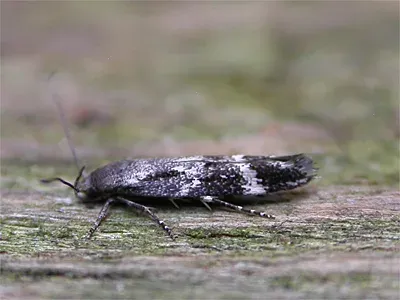
Mompha subbistrigella is a species of moth belonging to the family Momphidae, order Lepidoptera. It is a small insect with a wingspan ranging from 10 to 14 mm.
The forewings have a brownish-buff coloration with dark, mottled markings, which provides excellent camouflage against plant debris and stems.
As nocturnal insects, these moths are primarily active at night, making them difficult to spot during daylight hours without proper surveying techniques.
The life cycle involves complete metamorphosis, including egg, larva, pupa, and adult stages, with the larval stage being the most detrimental to plant tissues.
These moths are widely distributed in areas where their host plants, specifically species of the genus Epilobium, are present.
What it damages
The larvae of Mompha subbistrigella are known to feed on plants in the Onagraceae family, particularly the willowherb (Epilobium).
The caterpillars primarily target the generative parts of the plant, including flower buds, developing blossoms, and seed capsules.
Feeding within these organs leads to the premature abortion of buds and significant destruction of the potential seed harvest.
The damage caused by these larvae can lead to secondary infections, as the weakened plant tissues become more susceptible to fungal and bacterial pathogens.
In cases of heavy infestation, the entire reproductive capacity of the host plant can be severely hampered, causing economic losses for herbal producers.
When it appears
The flight period for adult moths typically starts in late spring and continues through the summer months, aligning with the host plant's blooming phase.
Females lay eggs on or near the flower buds, ensuring that the emerging larvae have immediate access to their food source.
The larval development takes place during the peak growing season, which allows the caterpillars to thrive on fresh plant tissue.
Pupation generally occurs at the end of the summer or early autumn, with the insect overwintering as a pupa in the soil or plant debris.
Environmental conditions such as temperature and humidity significantly influence the timing of emergence and the number of annual generations.
Signs of infestation
One of the most characteristic signs of infestation is the presence of delicate silken webbing spun by larvae around the flower buds.
- Flower buds that wither or turn brown prematurely without opening.
- Visible excrement pellets on the exterior of the flower buds or seed pods.
- Premature fruit drop of infested seed capsules.
- Small entry or exit holes found on the surface of buds and seed pods.
- Stunted growth or deformation of the flower clusters caused by larval feeding.
Control measures
Sanitation practices such as clearing and destroying infested plant material at the end of the season are crucial for reducing the overwintering population.
Cultivation of the soil during the autumn can help disturb and destroy pupation sites, thereby decreasing the number of emerging adults next spring.
In cases of significant damage, targeted application of contact or systemic insecticides during the early larval stage can effectively manage the pest.
Biological control options, including the use of entomopathogenic bacteria such as Bacillus thuringiensis, provide a safer alternative for plant protection.
Continuous monitoring using light traps or pheromone traps can help detect the arrival of the pest and enable timely protective interventions.
Taxonomy
- Latin name
- Mompha subbistrigella
- Order
- Lepidoptera (butterflies)
- Family
- Momphidae
- EPPO code
- MOMPSU
Discussion
No discussions yet — be the first.