
Mompha idaei
Mompha idaei
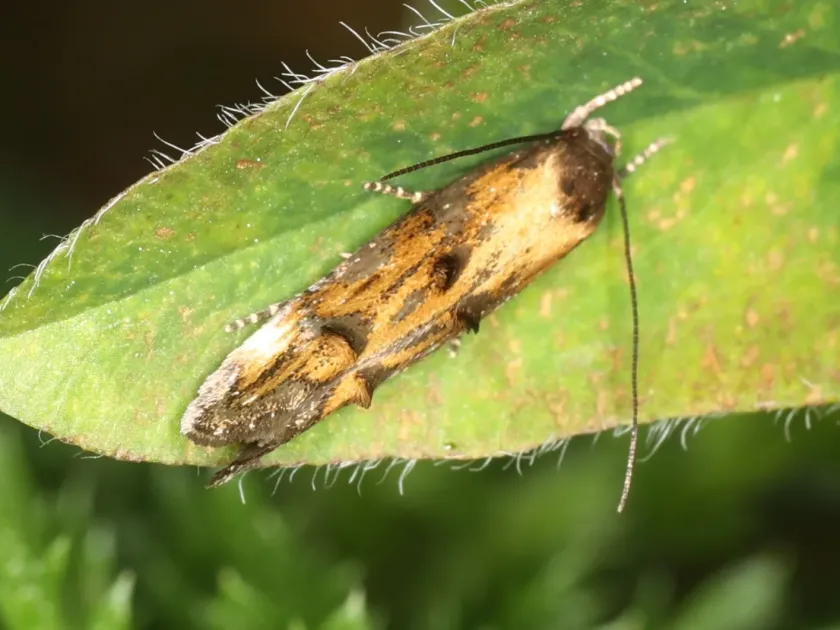
Description
How to identify
Mompha idaei is a species of moth belonging to the family Momphidae (narrow-winged moths) within the order Lepidoptera. This small insect is known for its narrow, elongated wings, which give the family its common name.
The adult moths are typically cryptic in coloration, blending into the stems and foliage of their host plants. This makes them difficult to spot during routine field inspections unless specific monitoring methods are used.
The life cycle follows a complete metamorphosis: egg, larva (caterpillar), pupa, and adult. The larval stage is the one responsible for the damage caused to host vegetation.
Determining the presence of this specific species requires careful observation, as many Momphidae moths are morphologically similar and share similar habitat preferences.
Specialists identify the species by examining the unique patterns of plant damage and, when necessary, performing microscopic analysis of adult specimens.
What it damages
The primary host plant for Mompha idaei is the willowherb (Chamaenerion angustifolium). This moth can cause significant issues in areas where willowherb is grown for medicinal or commercial use.
Larvae feed primarily on the young leaves, terminal buds, and reproductive organs of the plant. This feeding behavior restricts the growth of the shoots and leads to plant deformity.
By consuming the terminal buds, the moth halts the vertical growth of the stem. This significantly impacts the biomass yield of the plants, which is crucial for herbal production.
Feeding sites often become entry points for secondary pathogens, such as fungal infections. These diseases can further weaken the plant and reduce the quality of the harvested material.
Heavy infestations can lead to a substantial loss of photosynthetic capacity, resulting in stunted plants that are less resistant to environmental stressors.
When it appears
The activity of the moth begins in late spring or early summer, following the emergence of larvae from their overwintering sites as temperatures rise.
Larval activity is most intense during the early stages of summer when willowherb shoots are growing rapidly. This is the period when plants are most susceptible to significant damage.
Depending on the climatic zone, the species may produce one or more generations per year. Warmer regions often facilitate a longer period of pest activity.
The pupal stage typically overwinter in the soil or within protected debris at the base of the host plants, providing a buffer against freezing winter temperatures.
The emergence of adults often coincides with the flowering phase of the willowherb, complicating pest control efforts due to the risk of impacting non-target pollinator species.
Signs of infestation
The most common sign of an infestation is the drooping or distortion of the terminal shoots. Larvae often spin silk to tie leaves together, creating small, sheltered nests.
The presence of frass (larval excrement) within these tied-leaf structures is a definitive indicator of an active infestation by Mompha idaei.
Early signs include small windows or leaf mines created by young larvae as they feed on the internal tissues of the leaf before migrating to the buds.
Severe infestations often show yellowing and premature dropping of foliage, as well as a noticeable lack of flowers in patches where the moth has been active.
Visible webs around the growing tips are a strong indicator that larvae are present and feeding on the developing parts of the plant.
Control measures
Cultural control measures include the thorough cleanup and removal of plant debris after the harvest season to destroy the overwintering pupae.
Deep cultivation of the soil between rows in late autumn helps disturb the pupation sites and significantly reduces the survival rate of the moth population.
Biological control options involve the use of entomopathogenic bacteria such as Bacillus thuringiensis, which target the larvae while sparing beneficial insects.
Chemical intervention should be reserved for high-infestation scenarios and applied before flowering to protect pollinators and minimize chemical residues.
- Implementing pheromone traps for population monitoring.
- Manual removal and destruction of infested terminal shoots.
- Promoting biodiversity to encourage natural predators and parasitoids.
- Rotating crops or isolating willowherb patches to break the life cycle.
Taxonomy
- Latin name
- Mompha idaei
- Order
- Lepidoptera (butterflies)
- Family
- Momphidae
- EPPO code
- MOMPID
Discussion
No discussions yet — be the first.