
Mompha
Mompha
Description
How to identify
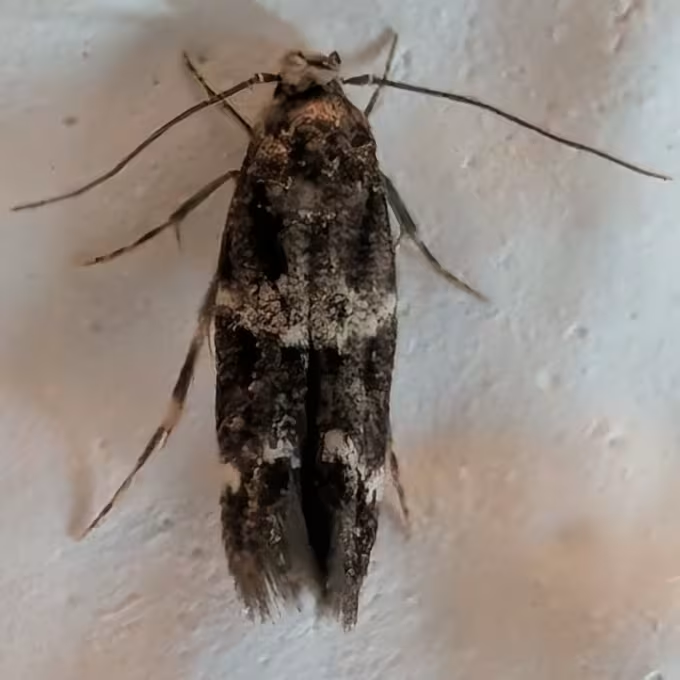
The genus Mompha belongs to the family Momphidae within the order Lepidoptera. These are small moths characterized by narrow, pointed wings.
Adults typically feature cryptic coloration, ranging from shades of grey to brown, which provides excellent camouflage against tree bark or vegetation.
The larvae are internal feeders, living as leaf miners, stem borers, or gall makers within their host plants.
The life cycle undergoes complete metamorphosis, including egg, larva, pupa, and adult stages, with many species overwintering as adults.
Taxonomically, the genus is diverse, and species identification often relies on microscopic examination of internal genital structures.
What it damages
The primary hosts for most Mompha species are plants of the Epilobium (willowherb) genus.
Larvae consume internal plant tissues, causing significant structural damage to stems, flower buds, and developing seeds.
Gall-forming species cause the host plant to produce abnormal tissue growths, which serve as both food and shelter for the developing larvae.
Feeding activity disrupts nutrient transport and hormonal regulation, often leading to stunted growth and reduced reproductive success.
In ornamental or medicinal plant cultivation, infestation can lead to aesthetic degradation and total loss of seed yield.
Signs of infestation
Swelling or gall formation on stems is a definitive sign of infestation by certain gall-inducing Mompha species.
Small exit holes on buds or stems, accompanied by visible frass (larval droppings), indicate active internal feeding.
Wilting of terminal shoots or deformed inflorescences often points to internal borer activity affecting the plant's vascular system.
Finding silken threads or webs connecting leaves or flower heads may indicate the presence of larvae preparing to pupate.
An overall lack of vigor in the crop, despite adequate water and soil nutrients, suggests the presence of hidden pests.
Control measures
Sanitation is the first line of defense; infested plant parts should be pruned and destroyed to prevent the next generation's emergence.
Monitoring for adult flight periods helps in timing control measures effectively before egg-laying occurs.
Systemic insecticides are generally required to target the larvae residing inside stems or galls, as contact sprays have limited efficacy.
Promoting local biodiversity can encourage natural predators, such as parasitic wasps, which help regulate Mompha populations.
Physical barriers, such as fine-mesh netting, may be used on small-scale plots to prevent moths from reaching the host plants.
Taxonomy
- Latin name
- Mompha
- Order
- Lepidoptera (butterflies)
- Family
- Momphidae
- EPPO code
- MOMPSP
Discussion
No discussions yet — be the first.