
Black keeled slug
Milax nigricans
Description
How to identify
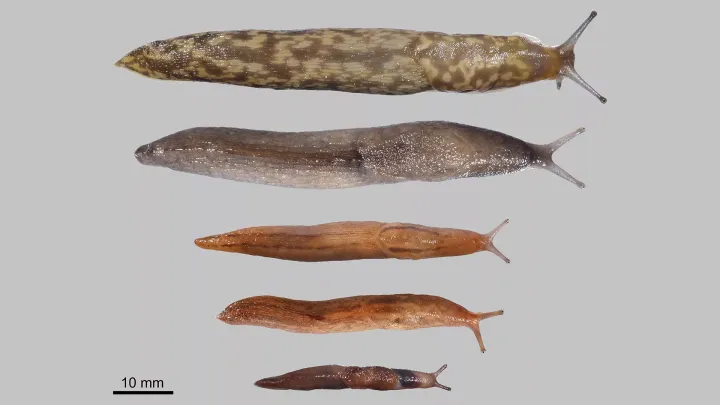
The Black keeled slug (Milax nigricans) is a species of land slug belonging to the family Milacidae. These mollusks are relatively small, usually reaching a length of about 5 to 7 centimeters when fully mature.
The body is characterized by a dark grey to black coloration. A key identification feature is a prominent longitudinal keel that runs along the posterior part of the back, which is typical for the genus Milax.
These slugs are primarily nocturnal and spend most of their time hidden in soil cracks, under stones, or beneath dense vegetation. They produce a thick, protective mucus to prevent dehydration.
The mantle shield covers approximately one-third of their body length. The breathing pore (pneumostome) is located on the right side of the mantle, a feature used to distinguish them from other slug families.
Reproduction involves laying eggs in moist soil crevices. The life cycle is temperature-dependent, and under favorable conditions, the slugs can reach maturity relatively quickly, ensuring the population's survival.
What it damages
The Black keeled slug is a polyphagous pest, meaning it feeds on a wide variety of plant species. They are particularly troublesome in vegetable gardens, ornamental flower beds, and commercial fields.
Root vegetables such as potatoes, carrots, and beets are severely affected. Because of their fossorial (burrowing) nature, they often feed on the underground parts of plants, making their damage invisible until harvest.
Leafy crops like lettuce, spinach, and cabbage are also primary targets. The slugs create large, irregular holes in leaves, which can lead to total crop loss if the infestation is severe.
Damage to tissues often opens a pathway for secondary fungal and bacterial infections. This not only destroys the plant but also significantly reduces the marketability and shelf life of the harvested produce.
Beyond vegetables, young seedlings of various crops are highly vulnerable. In wet seasons, these slugs can devastate entire fields of emerging sprouts overnight.
When it appears
The activity of the Black keeled slug is heavily dependent on moisture and temperature. They are most active during the cooler, wetter months of spring and autumn.
During hot summer days, these slugs retreat deep into the soil to maintain their internal moisture levels. While their surface activity decreases, they remain active underground, continuing to damage roots.
The peak of their harmful impact occurs during periods of heavy rainfall, which provides the necessary humidity for their surface movement and feeding patterns.
They overwinter in the soil, often utilizing pre-existing burrows or protected cavities to survive freezing temperatures. Their survival rate is significantly higher in soils with good moisture retention.
In controlled environments such as greenhouses or polytunnels, where moisture and temperature are kept constant, these slugs can be a year-round pest problem.
Signs of infestation
One of the most obvious signs of a Black keeled slug presence is the appearance of silvery, dried mucus trails on leaves, stems, or the soil surface, left behind as they move.
Crops pulled from the ground often reveal deep, gouged cavities or irregular holes in the roots or tubers. These signs indicate that the slugs have been feeding while the produce was developing underground.
Leaves exhibit significant damage with irregular, jagged edges or large holes. When infestation levels are high, the entire leaf lamina may be consumed, leaving only the primary veins behind.
Physical inspection during the evening or night, especially after rain or irrigation, usually reveals the slugs feeding. They are often found tucked near the base of the stem or under the lowest leaves.
The presence of small, dark, granular fecal pellets in the soil around the base of affected plants is another strong indicator of their recent feeding activity.
Control measures
Managing the Black keeled slug requires an integrated approach. Deep cultivation of the soil during early spring and autumn helps expose eggs to drying out and predators.
Maintaining a tidy garden by removing weeds and plant debris is crucial, as it eliminates the humid hiding spots that slugs favor during the day.
Chemical control using metaldehyde-based pellets is effective for large infestations. These baits should be applied in small quantities around vulnerable plants, ensuring they are kept away from edible parts.
Biological control agents, particularly parasitic nematodes like Phasmarhabditis hermaphrodita, can be applied to the soil. These nematodes infect and kill the slugs without harming non-target organisms.
For smaller areas, manual collection during the night or using simple barriers (such as copper tape or abrasive materials like wood ash) can provide effective protection for valuable crops.
Taxonomy
- Latin name
- Milax nigricans
- Order
- Molluscs
- Family
- Milacidae
- EPPO code
- MILXNI
Discussion
No discussions yet — be the first.