
Beech gall midge
Mikiola fagi
Description
How to identify
The beech gall midge (Mikiola fagi) is a species of gall midge in the family Cecidomyiidae. It is a small fly that is rarely noticed by observers due to its short lifespan and size.
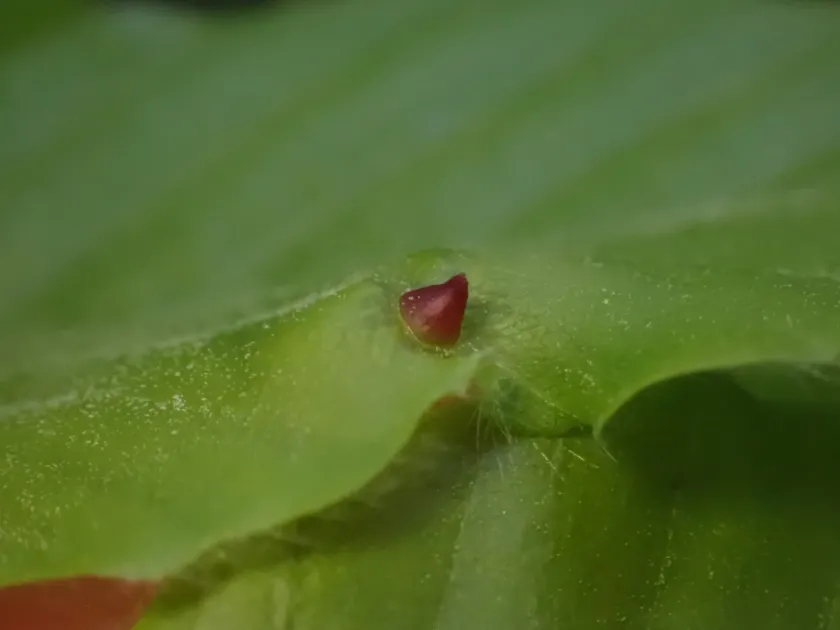
The most visible stage of this pest is the larva, which induces the formation of distinct galls on beech leaves. These galls are smooth, hard, and egg-shaped, resembling tiny beech nuts.
The color of these structures ranges from pale green to deep red, providing a significant visual diagnostic feature for those inspecting their trees.
A single larva develops inside each gall, feeding on the inner tissues while being protected by the thick, lignified walls of the structure.
Once the development is complete, the adult midge emerges through a small circular hole in the top of the gall, often leaving an empty shell behind.
What it damages
The primary host for this insect is the European beech (Fagus sylvatica). Infestations manifest as numerous leaf galls scattered across the foliage.
While usually not fatal, heavy infestations can cause premature leaf yellowing and drop, which reduces the overall photosynthetic capacity of the tree.
Young trees in nurseries are most affected, as the presence of many galls can cause leaf deformation and stunt the seasonal growth of the shoots.
The aesthetic value of trees is significantly compromised during heavy outbreaks, making this a common concern for garden and park management.
The damage caused by the midge also weakens the tree's physiological status, potentially making it more susceptible to secondary environmental stresses.
When it appears
The lifecycle of the beech gall midge is strictly synchronized with the sprouting period of the beech tree in the spring.
Adults emerge as soon as the buds begin to open, and females lay their eggs on the surfaces of young, developing leaves.
Throughout the summer, the larva remains enclosed within the growing gall, developing alongside the leaf tissue.
The winter is spent as a mature larva inside the hardened gall, which typically falls to the ground along with the autumn leaf drop.
Pupation occurs in the following spring, right before the adult flies emerge to start the cycle again, resulting in one generation per year.
Signs of infestation
The first sign of an infestation is the appearance of small, raised bumps on the upper surface of young leaves in early summer.
On the underside of the leaf, one can observe a slight depression corresponding to the gall formation on the opposite side.
As the season progresses, the galls become more rigid and pronounced, and if the infestation is severe, the leaves may curl or look malformed.
During the autumn, the presence of these hard, brown, nut-like structures on fallen leaves confirms that the tree was affected by the midge.
Empty galls featuring small exit holes at their peak serve as clear evidence that the lifecycle was completed successfully by the pest.
Control measures
The most effective cultural method to reduce midge population is the thorough removal and disposal of fallen leaves during the autumn and winter.
By collecting and composting or burning the leaf litter, you remove the larvae before they can pupate and emerge as adults in the spring.
In ornamental garden settings or nurseries, if the damage is excessive, contact or systemic insecticides may be used during the initial leaf-bud burst.
Promoting tree health through adequate irrigation and balanced nutrition helps the trees cope with the stress caused by the gall midge.
Encouraging the presence of natural predators, such as parasitic wasps, is a viable biological control strategy to keep the population in check.
Taxonomy
- Latin name
- Mikiola fagi
- Order
- Diptera (flies)
- Family
- Cecidomyiidae
- EPPO code
- MIKIFA
Discussion
No discussions yet — be the first.