

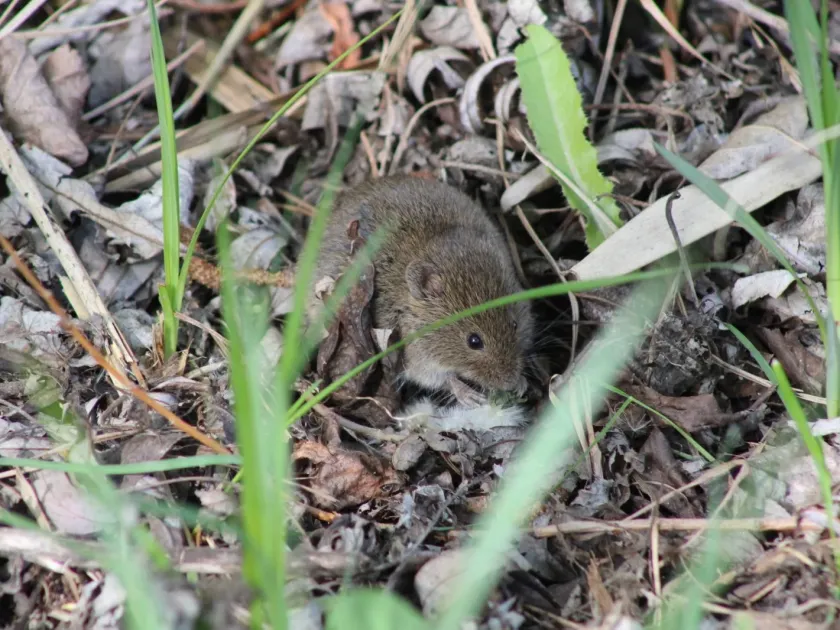
Description
How to identify
The Common vole (Microtus arvalis) belongs to the order Rodentia, family Cricetidae. It is a small rodent, typically reaching a body length of up to 12 cm with a short, stubby tail.
These animals are active year-round, never hibernating, and construct intricate underground tunnel systems containing nesting chambers and food storage areas.
The species possesses an incredible reproductive rate; a single female can produce up to seven litters per season, which often results in sudden and massive population spikes.
Visually, they are distinguished by a blunt snout, small ears largely hidden by dense, brownish-gray fur, and dark beady eyes adapted for low-light activity.
They prefer open habitats with lush vegetation, which provides both a continuous food supply and the necessary cover from avian and terrestrial predators.
What it damages
As a generalist herbivore, the Common vole infests a wide range of crops, including winter cereals, perennial grasses, sugar beets, and various vegetables.
In orchards and plantations, they cause severe damage during winter by gnawing the bark off young saplings, often girdling the trunk and causing tree death.
By clipping the stems of cereal crops, they cause lodging, which not only lowers overall yield but also creates significant difficulties for mechanized harvesting.
Root damage is a major concern, as they often consume the roots of crops, leaving the plant vulnerable to moisture stress and opportunistic secondary pathogens.
Seed production fields are particularly susceptible, as voles feed on developing reproductive parts, directly destroying the potential harvest of the season.
When it appears
Activity remains high throughout the entire growing season, beginning in early spring when the first green shoots provide a surge of nutritious food.
Autumn is a critical period for damage, as voles prepare for the winter months by feeding intensively and expanding their tunnel networks near winter crop plantings.
During winter, if snow cover is sufficient, they remain highly active under the snow layer, continuing to reproduce and feed on plant stems and tree bark.
Climatic factors, such as mild winters and dry springs, are primary drivers that allow populations to reach epidemic densities within a single calendar year.
Peak infestation often coincides with the ripening phase of cereals, when high concentrations of voles converge on fertile fields to feed on the maturing grains.
Signs of infestation
The most prominent sign of infestation is the presence of numerous entry holes into tunnels, often accompanied by a network of well-worn runways through the grass.
Freshly excavated soil mounds near burrow entrances serve as a clear indicator of recent activity and an expanding underground tunnel system within the field.
Evidence of feeding is visible as ragged, clipped edges on young leaves and stems, which often look as if they have been cut with small, sharp scissors.
Droppings found concentrated near burrow entrances or along feeding trails indicate high population density and frequent traffic in specific zones of the field.
Visible bark stripping near the base of tree trunks is a definitive indicator of vole presence and necessitates immediate protective action to save the tree.
Control measures
Deep autumn plowing is the most effective agronomic control method, as it physically destroys burrow systems, removes food sources, and exposes voles to predators.
Biological control methods include the use of specialized bacterial formulations that target rodent populations while minimizing harm to the surrounding environment.
Chemical control involving anti-coagulant rodenticides should be applied directly into burrows to ensure efficacy and prevent secondary poisoning of non-target wildlife.
Promoting natural predation by installing raptor perches helps maintain a biological balance, potentially reducing the need for chemical intervention in fields.
Maintaining clean field borders by removing weeds and harvest residue reduces the availability of hiding spots, making the habitat less hospitable for colonization.
Content graph
Connections · Common vole
Most often together:
Marketplace
Products · 1
Biology
Taxonomy
- Latin name
- Microtus arvalis
- Order
- Rodents
- Family
- Muridae
- EPPO code
- MICRAR
Community
Discussion
No discussions yet — be the first.