
Frysian cereal aphid
Metopolophium frisicum
Description
How to identify
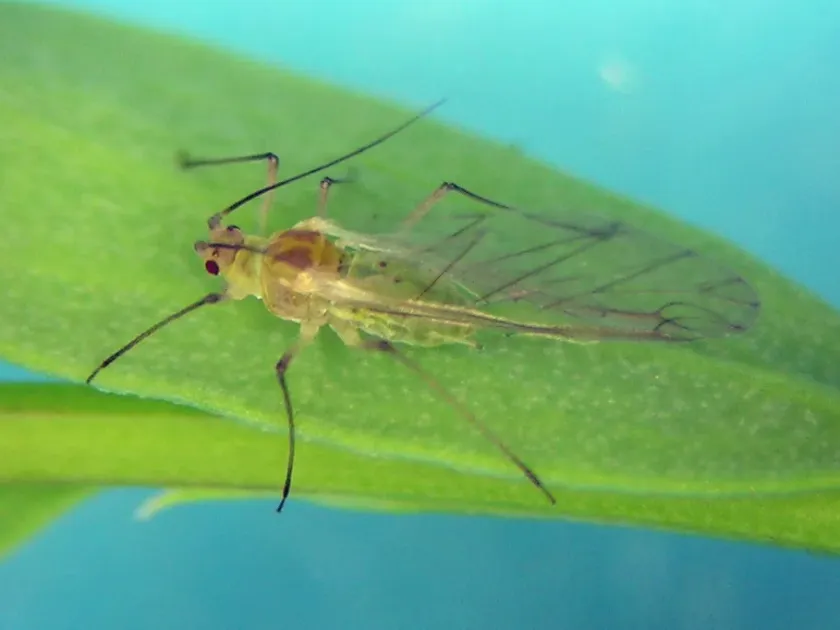
The Frysian cereal aphid (scientific name: Metopolophium frisicum) is a specialized insect pest belonging to the Aphididae family. It specifically targets various cereal crops, making it a significant concern for large-scale agricultural production.
Adult aphids possess an elongated, slender body, typically light green or yellowish-green, which blends seamlessly with the host plant's foliage. They are small, usually measuring between 2 and 3 mm in length.
The mouthparts consist of a stylet designed for piercing plant cells and extracting sap. While they have moderate-sized cornicles, these are best observed under magnification to distinguish them from other cereal aphid species.
The life cycle involves both winged and wingless forms, with the winged adults facilitating colonization of new host plants. Their biological development is highly dependent on ambient temperatures and environmental conditions.
Accurate identification is essential, as the presence of Metopolophium frisicum in a field can easily be confused with more common cereal aphid species without proper entomological analysis.
What it damages
This aphid species feeds on various Poaceae members, including wheat, barley, and oats. The damage is primarily caused by the direct extraction of plant sap, which saps the energy from developing stems and leaves.
Feeding sites often show signs of chlorosis, where the plant tissue loses its green pigment due to the removal of nutrients and the potential injection of toxins during the feeding process.
Beyond physical damage, the Frysian cereal aphid acts as a potential vector for several plant viruses. These infections can cause severe systemic health issues in crops, leading to significant yield losses.
The cumulative effect of a heavy infestation is a reduction in photosynthetic capacity, which directly results in stunted plant growth and poor development of the grain-bearing ears.
Economic losses are compounded by the decrease in grain quality, as stressed plants produce smaller, shriveled kernels that fail to meet standard milling or feed requirements.
When it appears
The biological cycle begins in early spring, as nymphs emerge from overwintering eggs found on perennial grasses or cereal stubble. Once the temperature reaches a favorable threshold, they begin feeding on seedlings.
Populations tend to explode during the stem elongation and heading phases of cereal growth. During these stages, the plants are most vulnerable to sap-sucking insects, which exploit the abundance of nutrients.
Reproduction occurs mainly through parthenogenesis, enabling a rapid increase in the number of aphids. A single colony can expand into thousands of individuals within just a few weeks under optimal weather.
As the season progresses toward autumn, the aphids shift toward the production of sexual forms. These individuals are responsible for laying the eggs that will survive the winter cold.
Environmental monitoring is crucial for timing interventions, as the growth rate of Metopolophium frisicum can be significantly throttled by heavy rainfall or extreme summer heat.
Signs of infestation
The most common indicator of infestation is the curling of leaf tips, which often harbor large numbers of aphids. Leaves may also show a faded, chlorotic color instead of a healthy dark green.
Infested plants are often coated in a sticky substance known as honeydew. This sugary secretion is a byproduct of the aphid's diet and serves as a medium for the growth of unsightly sooty mold.
Close inspection of the underside of leaves usually reveals dense clusters of aphids. White, shed exuviae (skins) are often scattered on the leaves, marking recent molting activity.
Stunted growth is a hallmark of significant infestation levels. When comparing healthy plants to those attacked by aphids, the difference in height and tiller density becomes clearly visible.
In severe cases, the grain ear itself may fail to emerge correctly from the boot leaf, remaining trapped or deformed, which is a definitive sign of severe plant stress and nutrient deficiency.
Control measures
Integrated Pest Management (IPM) is the most effective approach. This includes mechanical control through deep tillage and the removal of alternate hosts, such as wild grasses, from field edges.
Promoting natural biological control agents is critical. Encouraging populations of lady beetles, lacewings, and parasitic wasps can significantly suppress aphid numbers without the need for chemical intervention.
Chemical control should be reserved for instances where the population density exceeds the established economic threshold. Systemic insecticides are preferred to provide long-term protection.
Care must be taken to choose products that have a lower impact on beneficial insects. Rotation of chemical classes is also necessary to prevent the development of insecticide resistance in the population.
Field scouting should be done consistently throughout the vegetative growth period to catch potential outbreaks early, ensuring that control measures are implemented precisely when needed.
Taxonomy
- Latin name
- Metopolophium frisicum
- Order
- Hemiptera (bugs, aphids, leafhoppers)
- Family
- Aphididae
- EPPO code
- METOFR
Discussion
No discussions yet — be the first.