
Pale cereal aphid
Metopolophium albidium
Description
How to identify
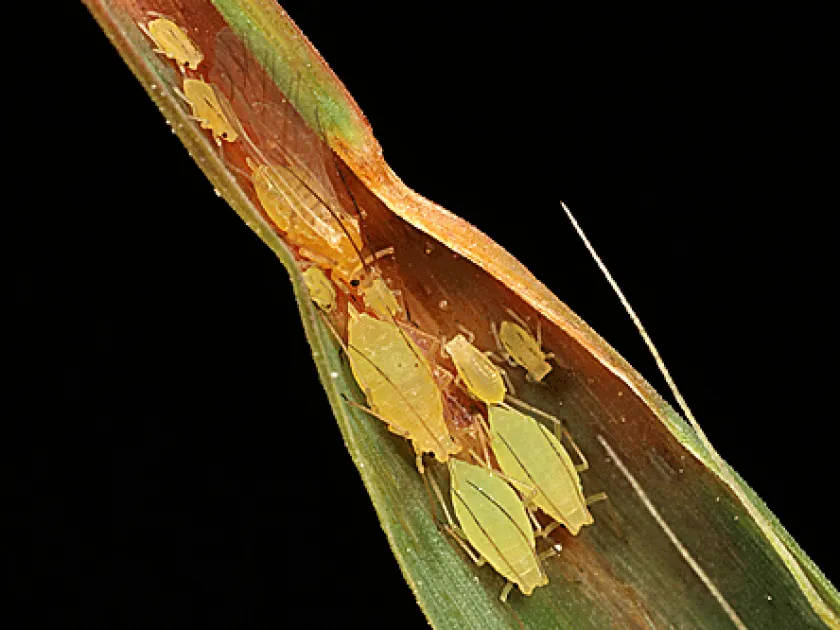
The pale cereal aphid (Metopolophium albidum) is a member of the family Aphididae, order Hemiptera. It is characterized by a pale green to yellowish-green body color.
Adult aphids reach approximately 2.5–3 mm in length. A defining taxonomic feature is the presence of a distinct dark longitudinal stripe along the dorsal side of the abdomen, which aids in identification.
The antennae are typically longer than the body. The legs and cornicles (siphunculi) are generally pale, often featuring darker tips, contributing to the insect's overall light appearance.
This species is well-adapted to cereal ecosystems, capable of reproducing both parthenogenetically during the growing season and sexually during the autumn.
Winged forms (alates) facilitate migration and colonization of new fields, while wingless forms (apterae) drive the exponential growth of local aphid colonies on host plants.
What it damages
The pale cereal aphid primarily infests various small-grain cereals, including wheat, barley, oats, and rye. It also frequently survives on wild grasses.
Feeding by piercing and sucking plant sap results in nutrient depletion and metabolic disruption, which weakens the overall health of the cereal crop.
High infestation levels, especially during the boot and heading stages, lead to severe yield losses as the aphids target flag leaves and developing grain heads.
Damage symptoms include leaf curling, discoloration, and stunted plant growth, which directly negatively impact grain weight and overall grain quality.
Furthermore, these aphids can serve as vectors for various plant viruses, posing an additional risk of widespread disease transmission throughout the field.
When it appears
The seasonal cycle begins in early spring as temperatures rise, with the first colonies appearing on winter crops as they resume active growth.
Peak population density is typically observed between late spring and early summer, corresponding with the active tillering and heading phases of cereals.
While extremely high temperatures in summer may temporarily reduce aphid activity, the population often persists in cooler microclimates or irrigated fields.
In autumn, sexual morphs appear to lay eggs on winter cereals or cereal volunteers, ensuring the population's survival through the cold season.
Overwintering as eggs provides a strong foundation for the next spring's generation, making early-season monitoring crucial for effective management.
Signs of infestation
The presence of pale cereal aphids is first indicated by the curling of leaves and the accumulation of honeydew on the leaf surfaces.
Honeydew, a sticky excretion produced by the aphids, creates an ideal environment for the growth of sooty mold, which appears as a black coating on plants.
The accumulation of sooty mold blocks sunlight, further reducing the photosynthetic capacity of the plants and leading to weakened crops.
Stunted growth, yellowing (chlorosis) of the lower leaves, and poor grain development in the ears are classic signs of a significant infestation.
- Curling and chlorosis of leaves.
- Visible sticky honeydew on foliage.
- Black sooty mold growth on stems and leaves.
- Stunted development of grain ears.
Control measures
Integrated pest management begins with cultural practices, such as removing volunteer cereals and controlling weeds, which serve as reservoirs for the aphids.
Enhancing natural biological control by conserving predator populations—such as ladybirds, lacewings, and hoverflies—is essential for long-term suppression.
When the economic threshold is reached, the application of systemic or contact insecticides is recommended to protect the crop during critical growth phases.
It is vital to rotate different chemical classes to prevent the development of insecticide resistance, ensuring that control measures remain effective over time.
Regular field scouting throughout the growing season allows for early detection and targeted interventions, which helps minimize chemical usage and protects beneficial insects.
Taxonomy
- Latin name
- Metopolophium albidium
- Order
- Hemiptera (bugs, aphids, leafhoppers)
- Family
- Aphididae
- EPPO code
- METOAL
Discussion
No discussions yet — be the first.