

Anti-Clisht k.s.
China Communications Import and Export Corporation
Insecticides
0
0
·
44
6 offers
20.3 €per 1 l
Buy
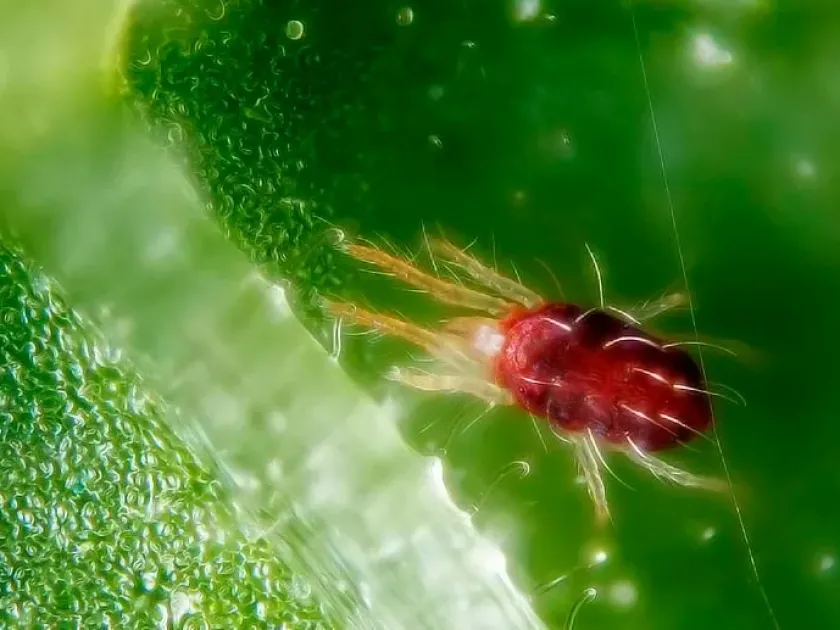
The European red mite (scientific name: Panonychus ulmi) belongs to the Tetranychidae family. It is a major pest of pome and stone fruit trees. Adult females are microscopic, oval-shaped, and deep red or dark brown in color, with long white bristles arising from white tubercles on their backs.
Males are generally smaller, more active, and lighter in color with a tapered posterior. The eggs are bright red, spherical, and feature a characteristic stalk at the top, which helps anchor them securely to the bark of twigs and branches.
The life cycle includes the egg, larva, protonymph, deutonymph, and adult stages. The mites overwinter as eggs on the bark of host trees. Depending on the climate, there can be several generations produced during a single growing season.
The development speed is highly dependent on ambient temperature. Hot and dry weather accelerates the life cycle, leading to rapid population explosions that can overwhelm trees if not monitored regularly.
The pest is distributed globally in temperate regions and is considered a serious economic threat to orchards, particularly where heavy pesticide use has eliminated natural predator populations.
Both larvae and adults feed by piercing the leaf epidermis and extracting cell contents. Preferred hosts include apple, pear, plum, peach, cherry, and almond trees, causing significant physiological stress.
Feeding damage reduces the chlorophyll content in leaves, leading to chlorosis, which manifests as a dull, bronzed, or stippled appearance. This reduces the photosynthetic capacity of the tree, directly impacting yield.
Reduced photosynthesis weakens the tree's health, leading to lower fruit quality, reduced sugar accumulation, and poor flower bud formation for the following year's crop.
Severe infestations can cause premature defoliation, particularly in late summer. This loss of foliage exposes the fruit to sunscald and prevents the tree from storing enough nutrients to survive winter, leading to potential frost damage.
In addition to foliage damage, heavy infestations can result in stunted fruit growth, making the produce commercially non-viable for fresh markets.
The first signs of infestation are small, pale spots on the upper leaf surface, commonly referred to as stippling. These spots eventually merge, giving the foliage a brownish or bronze, mottled look.
By using a hand lens or magnifying glass, growers can observe the mites on the undersides of the leaves. Eggs will be visible near the midribs or on the bark of one-year-old wood during the dormant season.
Premature leaf drop is a classic late-stage indicator. When the infestation is severe, a gentle shake of a branch may result in significant leaf fall, signaling a critical breach of the economic threshold.
Reduced vigor and poor annual growth are indicators of cumulative damage over multiple seasons. Trees may appear stressed despite adequate irrigation and fertilization due to the hidden damage caused by mite feeding.
Unlike other mite species, the European red mite produces minimal webbing, so the absence of webbing should not be interpreted as a sign that the tree is mite-free.
Effective management relies on Integrated Pest Management (IPM). Reducing the use of broad-spectrum insecticides is crucial to allow populations of natural predators, such as predatory mites (Phytoseiidae), to thrive.
Dormant-season applications of horticultural or paraffinic oils are highly effective at smothering the overwintering eggs, significantly reducing the initial pest density before the growing season begins.
During the growing season, if monitoring indicates that population levels exceed the economic threshold, targeted acaricides should be used. It is vital to rotate different chemical classes to prevent resistance development.
Biological control, such as the introduction or preservation of predatory mites, provides a sustainable solution in many commercial orchards, keeping populations of Panonychus ulmi below damaging levels.

No discussions yet — be the first.