
Ring nematode
Mesocriconema
Description
How to identify
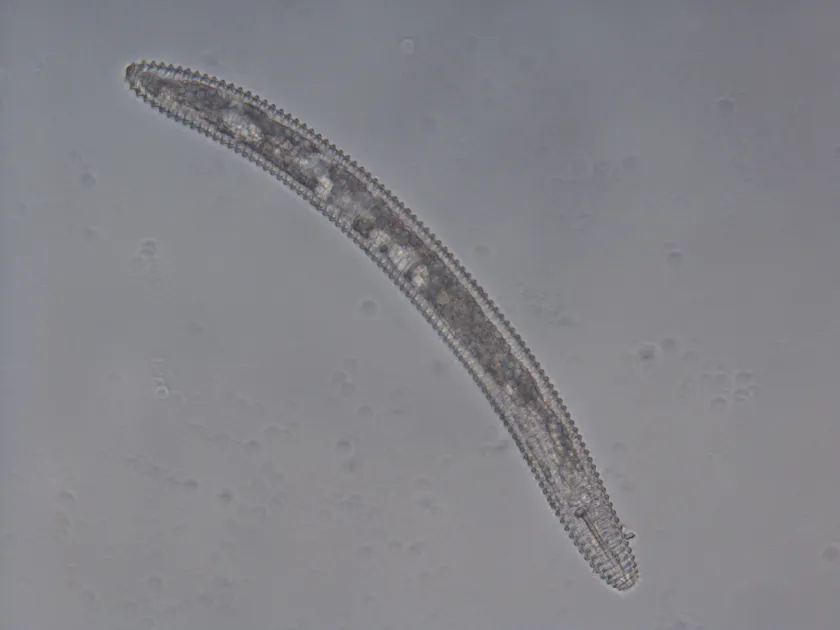
The ring nematode (genus Mesocriconema) belongs to the Nematoda phylum, Rhabditida order, and Criconematidae family. They are easily recognized by the prominent, thick transverse rings (annulations) on their cuticle, which give them a ringed appearance.
These microscopic roundworms possess a robust and relatively long stylet, which they use to pierce the cortical cells of plant roots to feed on the intracellular contents.
They are strictly ectoparasitic, meaning they remain outside the root tissues while feeding, usually clustering around the root tips or along the root surface in the soil rhizosphere.
Their life cycle includes egg, several juvenile stages, and the adult stage. Development is highly dependent on soil temperature, moisture levels, and the presence of suitable host plant roots.
Because they are soil-borne, their distribution within an orchard or field is often patchy, reflecting their slow migration and specific preference for perennial root zones.
What it damages
Ring nematodes attack a wide variety of plants, including stone fruits, apples, grapes, various berries, and ornamental trees, significantly impairing their vitality.
By constantly wounding root cells during feeding, they disrupt the plant's ability to uptake water and essential minerals, leading to overall physiological stress.
Beyond direct damage, Mesocriconema species are known to act as vectors for certain soil-borne viruses, which can lead to rapid decline and reduced longevity of orchards.
In nurseries, the presence of these nematodes is particularly detrimental, as it causes stunted growth in young saplings, making them less marketable and vulnerable to secondary infections.
The combination of nematode feeding and secondary attack by soil fungi, such as Pythium or Fusarium, often accelerates root decay and plant mortality.
Signs of infestation
Symptoms of infestation are non-specific and often resemble nutritional deficiencies or moisture stress, making field diagnosis without lab testing difficult.
Affected plants exhibit stunted shoot growth, general chlorosis of leaves, and a significant reduction in fruit size or quality compared to healthy neighboring plants.
Root systems of infested plants often show sparse root hair development, localized browning or necrosis, and in some cases, a thickening or malformation of the root tips.
Plants may show temporary wilting during peak transpiration hours, even when soil moisture appears adequate, due to the compromised integrity of the root system.
If you observe uneven growth patches in a field where soil conditions are otherwise uniform, it is a strong indicator of nematode population buildup.
Control measures
Management of ring nematodes focuses primarily on prevention and the use of integrated pest management (IPM) practices to maintain populations below economic thresholds.
The most reliable control method is planting certified, nematode-free stock into soil that has been tested and cleared of high population densities prior to planting.
Cultural practices like maintaining optimal irrigation and fertility help plants withstand the damage caused by nematodes, though these methods do not eradicate the pest.
Soil fumigation prior to orchard establishment is a standard professional practice in regions with high ring nematode pressure to ensure early root system development.
Regular soil and root sampling for diagnostic purposes is crucial for identifying early infestations and implementing targeted management actions before the pest spreads across the entire site.
Taxonomy
- Latin name
- Mesocriconema
- Order
- Nematodes
- Family
- Criconematidae
- EPPO code
- MCRISP
Discussion
No discussions yet — be the first.