
Ring nematode
Criconemella
Description
How to identify
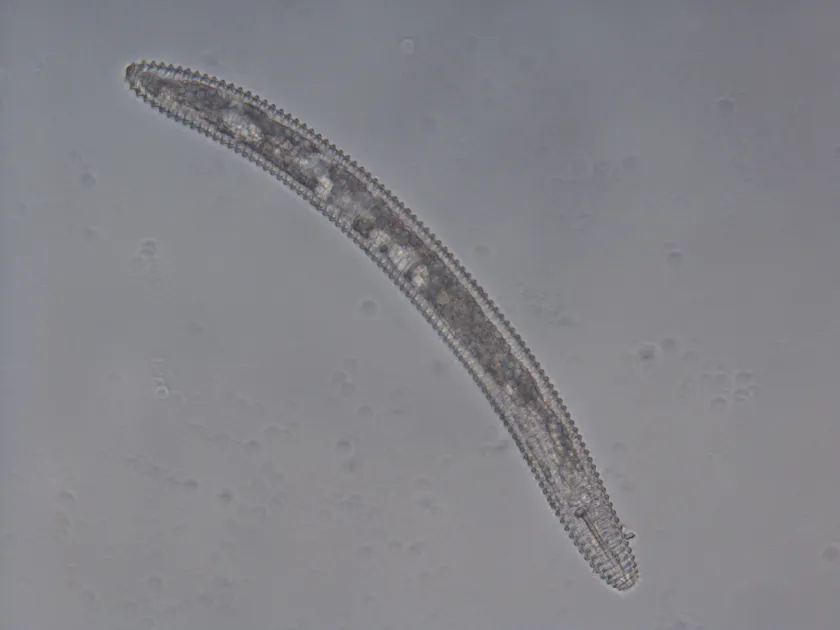
Ring nematodes, belonging to the family Criconematidae and the order Tylenchida, are distinct soil-dwelling organisms. They are easily recognized under a microscope by their thick, ring-like body cuticle, which gives them a segmented appearance.
These nematodes possess a large, robust stylet that is capable of penetrating tough plant tissues. Adult females are generally sedentary, remaining attached to plant roots for long periods to feed continuously.
Their lifecycle is closely tied to soil temperature and moisture levels. They are most active in warm, moist soils where they can move through the soil pores to find suitable host roots for feeding.
Identification in the field is rarely possible due to their microscopic size. Diagnostic laboratory analysis of soil and root samples is essential to quantify the nematode population and determine the potential for crop damage.
They are classified as ectoparasites, feeding from the exterior of the root. Despite this, their feeding causes significant cellular damage and physiological stress to the host plant.
What it damages
Ring nematodes have a wide host range, including fruit trees, berry crops, grapes, and various vegetable species. They are particularly problematic in orchards and nurseries where host plants remain in the same soil for many years.
By constantly feeding on root epidermal cells, they deprive the plant of water and essential nutrients. This systemic stress leads to stunted growth, nutrient deficiencies, and reduced overall crop yield.
Feeding wounds created by these nematodes serve as primary entry points for soil-borne pathogens, including fungi and bacteria. This complex interaction often leads to more severe root rot diseases.
In addition to direct damage, some species of ring nematodes are documented vectors for plant viruses, which can cause severe stunting and discoloration across entire plantations.
On perennial crops, the accumulation of nematode populations over years leads to a phenomenon known as "replant disease," where new seedlings fail to establish effectively in infested soils.
Signs of infestation
The most common visual sign is the presence of uneven plant growth in the field, often appearing as patches of stunted, chlorotic plants amidst a healthier canopy.
During the peak of the growing season, infested plants show signs of acute water stress. Even with adequate irrigation, the roots cannot uptake water efficiently, causing wilting during midday.
Root system examination typically reveals a sparse, poorly developed root mass. In advanced stages of infestation, roots show necrotic lesions and a noticeable lack of healthy feeder rootlets.
Plants may show symptoms similar to nitrogen or micronutrient deficiency despite sufficient soil fertility, as the root system is unable to process and absorb the available nutrients.
An accurate diagnosis requires soil sampling and professional laboratory analysis to distinguish ring nematode damage from other biotic or abiotic soil factors.
Control measures
Integrated Pest Management (IPM) is crucial for controlling ring nematodes. Prevention, starting with clean, nematode-free nursery stock, is the most effective long-term strategy.
Cultural practices, such as soil solarization or the use of cover crops with nematicidal properties (e.g., certain mustard varieties), can help reduce population levels before planting.
In high-value perennial crops, pre-plant soil fumigation is often necessary to reduce the initial nematode density and allow young trees to establish a strong, healthy root system.
Chemical control using nematicides is available but should be used judiciously. Applications must be timed to target the most vulnerable stages of the nematode lifecycle while minimizing environmental impact.
- Regular soil testing to monitor population density.
- Use of resistant or tolerant rootstocks in orchard plantings.
- Proper disposal of infested crop debris and root systems.
Taxonomy
- Latin name
- Criconemella
- Order
- Nematodes
- Family
- Criconematidae
- EPPO code
- CRIMSP
Discussion
No discussions yet — be the first.