
Red-rimmed melania
Melanoides tuberculata
Description
How to identify
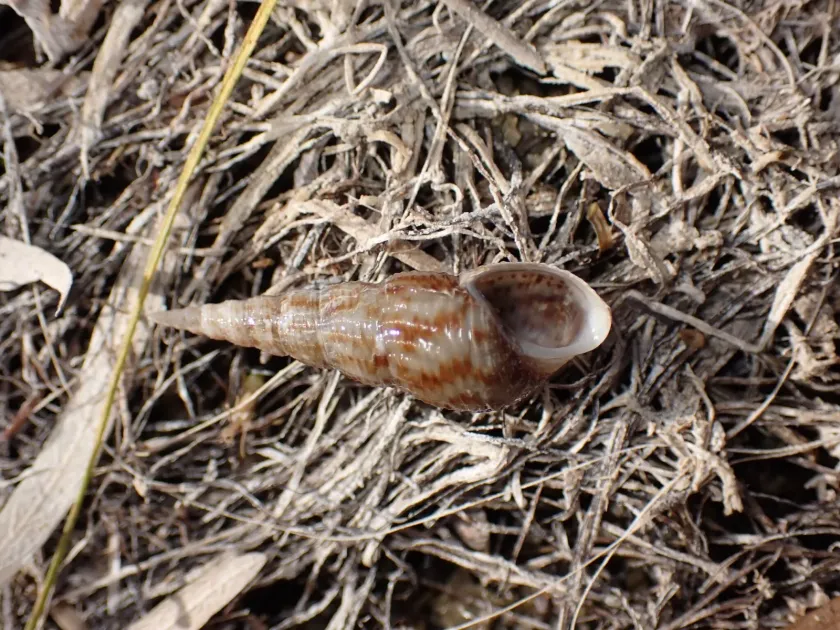
The red-rimmed melania is a freshwater gastropod mollusk from the Thiaridae family. Its shell is elongated, conical in shape, and typically exhibits a patterned texture of ridges and grooves in brownish-gray shades.
This species belongs to the order Sorbeoconcha. Adult individuals usually grow to a length of 2–3.5 cm. A key feature is the presence of a hard, calcified operculum that allows the snail to seal its shell and survive harsh environmental conditions.
The biology of the species is notable for being an obligate parthenogenetic snail. Populations consist almost entirely of females capable of self-reproduction, which allows for extremely rapid colonization of new environments.
The snail is primarily nocturnal and burrowing. During the day, they prefer to hide deep within the substrate or soil, which makes early detection of an infestation quite challenging.
In greenhouses and hydroponic systems, melania snails thrive at water temperatures ranging from 18 to 30 degrees Celsius, rapidly spreading throughout the system.
What it damages
The primary damage occurs in hydroponic systems and greenhouses with moist growing media. While they primarily feed on organic waste, they will graze on tender plant roots when food sources are scarce.
Root damage leads to stunted plant growth, reduced nutrient uptake capacity, and creates entry points for various fungal and bacterial infections to enter the plant tissue.
On a larger scale, the snails can clog filters, clog drainage pipes, and interfere with water circulation pumps, disrupting the overall functionality of the hydroponic setup.
Accumulation of snail waste within the substrate alters the pH levels and mineral balance of the nutrient solution, which can negatively impact overall plant health.
Indirect damage occurs as the snails act as vectors, carrying pathogenic spore organisms on their shells and bodies between different plant pots or growth containers.
When it appears
Since the red-rimmed melania is an invasive and thermophilic species, it remains active throughout the year as long as stable temperatures and moisture are maintained.
In closed indoor environments or automated indoor farms, there is no distinct seasonality. Population growth continues unabated, slowing down only if water temperatures drop significantly below 10 degrees.
Population surges often coincide with periods of increased organic fertilization or the buildup of decaying plant matter in the substrate, which serves as the snails' primary food source.
Introduction into new zones usually occurs through the transfer of contaminated substrates, infected plant materials, or shared tools used in garden maintenance.
The life cycle from birth to sexual maturity is remarkably short, enabling a single individual to populate an entire water system or substrate area in a very short amount of time.
Signs of infestation
The first sign of an infestation is the presence of characteristic conical shells on the surface of the substrate during early morning hours or at night.
Visible trails, tunnels, and disrupted patterns in the loose substrate or clay pebbles indicate active burrowing by the mollusk population.
Visual inspection of the root zone may reveal signs of grazing damage, such as small lesions or scrapes, as well as slimy residue left on the roots.
Sudden and unexplained fluctuations in the pH level of the hydroponic solution are often a diagnostic indicator of a massive snail population's metabolic activity.
General plant decline, unexpected wilting, or a lack of vigor in young seedlings despite proper irrigation and nutrient management are significant red flags.
Control measures
The most effective strategy involves complete sterilization of the substrate and containers using thermal treatment or appropriate chemical sanitizing agents.
Mechanical removal during nighttime hours using food-based bait traps can significantly reduce the population density, though it rarely eradicates the infestation completely.
Regular maintenance of filtration systems and the removal of accumulated organic detritus deprives the snails of their primary food source, limiting their population growth.
Biological control using specific predators is difficult to implement in enclosed hydroponic settings, making strict quarantine the most reliable defense measure.
- Thoroughly inspect all incoming plant materials for signs of snails.
- Implement a strict quarantine period for any new plants introduced to the system.
- Utilize only sterile growth media when starting new hydroponic setups.
- Perform regular and careful monitoring of the root zone to catch infestations early.
Taxonomy
- Latin name
- Melanoides tuberculata
- Order
- Molluscs
- Family
- Thiaridae
- EPPO code
- MENOTU
Discussion
No discussions yet — be the first.