
Melanoides
Melanoides
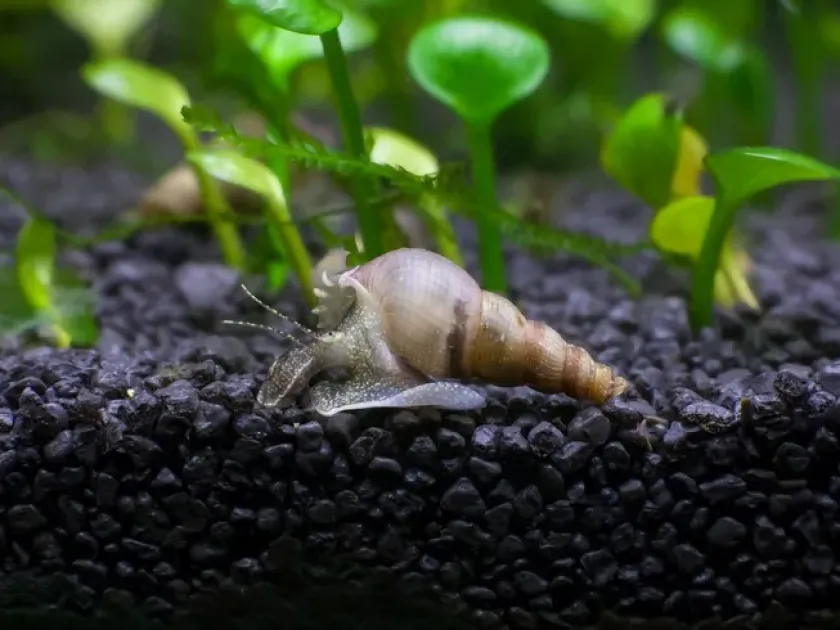
Description
How to identify
Melanoides, specifically Melanoides tuberculata, is a freshwater snail species belonging to the Thiaridae family. They are easily recognized by their elongated, spiral-shaped, conical shells.
These snails spend most of their time burrowed deep within the substrate, which they constantly sift through as they scavenge for food particles.
They are highly adaptable to various water conditions, ranging from slightly acidic to alkaline environments, which contributes to their status as a global pest.
The reproductive strategy of this species involves parthenogenesis, allowing a single individual to establish a massive colony in a very short time frame.
Due to their nocturnal behavior, they are often overlooked until their population density reaches a critical level, making them difficult to eradicate.
What it damages
The primary concern with Melanoides is the constant disturbance of the substrate, which damages the delicate root hair systems of aquarium plants.
As they burrow, they contribute to the compaction or uneven distribution of the soil, which can lead to anaerobic zones that rot plant roots.
When food sources are scarce, these snails can switch to consuming tender plant tissues, resulting in holes and stunted development of vegetation.
The accumulation of waste from a dense population alters water chemistry, increasing organic load and promoting the growth of undesirable algae.
In hydroponic setups, the presence of snails can obstruct plumbing and irrigation emitters, potentially disrupting the steady flow of nutrient solutions.
Signs of infestation
A sudden rise in the number of snails visible on the glass or substrate surface during nighttime hours is a major indicator of an infestation.
Plants showing signs of leaf yellowing, root exposure, or sudden detachment from the substrate often indicate excessive snail activity around the base.
The presence of fine debris or excrement pellets on top of the substrate indicates a high population density actively feeding and moving.
Cloudy or foul-smelling water, despite regular maintenance, is often linked to the high metabolic output of a massive snail population.
Physical damage to the root zone, often seen during plant maintenance when stems come out of the substrate too easily, is a classic sign of snail interference.
Control measures
Manual removal using bait traps is highly effective; placing vegetables like zucchini or cucumber inside the container at night attracts the snails for easy removal.
Introducing natural predators, such as loaches or other molluscivorous fish, can significantly suppress the snail population within a balanced ecosystem.
Regular maintenance, including thorough substrate siphoning, helps to remove egg clusters and younger snails before they can reproduce.
Total substrate replacement or chemical molluscicides may be considered as a last resort, though they must be used carefully to ensure plant safety.
Preventive measures like disinfecting new plants with specialized solutions before introduction are essential to avoid future infestation of your system.
Taxonomy
- Latin name
- Melanoides
- Order
- Molluscs
- Family
- Thiaridae
- EPPO code
- MENOSP
Discussion
No discussions yet — be the first.