
Green oak bush-cricket
Meconema thalassinum
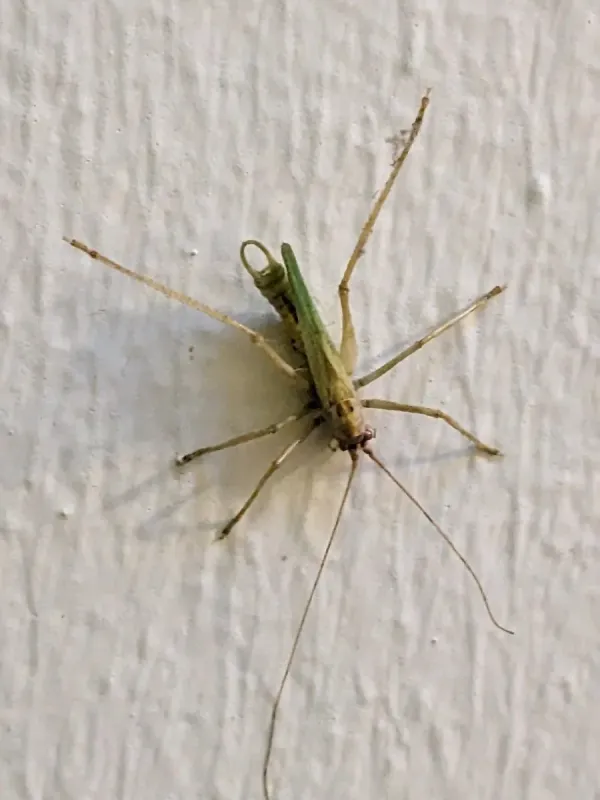
Description
How to identify
The green oak bush-cricket (Meconema thalassinum) is a small insect belonging to the Tettigoniidae family, characterized by its vibrant green color which provides excellent camouflage.
Adult insects typically measure between 15 and 20 mm in length and possess long antennae, which are significantly longer than their own bodies.
Unlike many other bush-crickets, this species lacks stridulatory organs, meaning it does not produce the typical buzzing sounds associated with the Tettigoniidae family.
The life cycle follows a pattern of incomplete metamorphosis, where the insects transition from eggs, which overwinter on tree bark, to nymphs and finally into adults.
Identification is best achieved by inspecting tree canopies, as they spend most of their time in foliage, making them quite difficult to spot during the day.
What it damages
While primarily predatory, feeding on aphids and other small pests, the green oak bush-cricket can switch to a herbivorous diet when prey becomes scarce.
The insect causes damage to fruit trees such as apple and pear, as well as various ornamental trees, by chewing on young, tender leaves and developing buds.
In cases of high infestation, the loss of leaf tissue can reduce the photosynthetic capacity of the plants, potentially hindering growth in young saplings.
Although it is often considered a minor pest or even a beneficial predator, its impact can become economically significant in specific horticultural environments.
Visible damage includes jagged edges on leaves and small holes that can weaken the overall structure of the leaf, sometimes leading to early leaf drop.
When it appears
Nymphs typically emerge from overwintered eggs in late spring, coinciding with the warming of temperatures and the flush of new growth on trees.
The active feeding phase of the nymphs continues through early to mid-summer, as the insects grow and prepare for their final molt into adulthood.
Adults are most active during the late summer months, specifically August and September, when they are frequently found moving within the upper canopy.
As the weather begins to cool in autumn, the insects focus on mating and searching for suitable sites to deposit their eggs for the next generation.
Understanding this seasonal timing allows for targeted monitoring of the orchard to detect the presence of nymphs or adults before they cause extensive damage.
Signs of infestation
The most common sign of infestation is the presence of irregular bite marks on leaves, which appear as jagged edges or small holes scattered across the leaf blade.
Observation of frass on leaves or branches directly beneath the insects' feeding sites provides a reliable indicator of their current activity in the canopy.
Nighttime inspection with a flashlight often reveals the insects, as they are more active foragers after the sun goes down and ambient temperatures drop.
Severe infestations might lead to visible thinning of the canopy foliage, particularly in young or sensitive plant varieties being cultivated in nurseries.
The presence of eggs, though small and difficult to see, can sometimes be detected in the crevices of bark during dormant season maintenance work.
Control measures
Effective management focuses on biological control by encouraging the presence of natural predators, such as birds, spiders, and larger predatory insects.
Maintaining a balanced ecosystem in the orchard significantly reduces the likelihood of the green oak bush-cricket reaching a population density that causes damage.
If intervention is necessary, the use of biological insecticides is preferred to maintain the safety of the orchard environment and preserve beneficial insect populations.
- Install bird boxes to attract insectivorous birds to the orchard.
- Monitor canopy health during the peak summer months.
- Clean tree trunks to reduce potential egg-laying sites.
Taxonomy
- Latin name
- Meconema thalassinum
- Order
- Orthoptera (locusts)
- Family
- Meconematidae
- EPPO code
- MECNTH
Discussion
No discussions yet — be the first.