
Meconema
Meconema
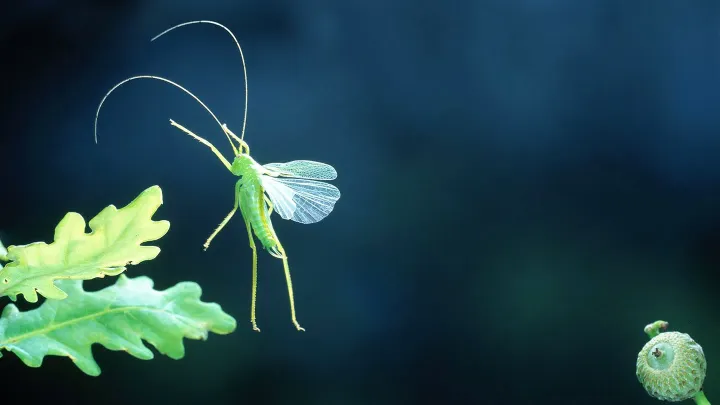
Description
How to identify
Meconema (scientific name Meconema thalassinum) is a species of tree-dwelling bush cricket belonging to the family Tettigoniidae. Unlike many other grasshoppers, this species is specifically adapted to an arboreal lifestyle within tree canopies.
The adult Meconema is characterized by its slender, bright green body, which provides excellent camouflage among leaves. They typically grow to a length of 15 to 20 millimeters, making them difficult to spot.
A unique physiological feature of this species is the absence of stridulatory organs, meaning the males do not produce the typical chirping sounds associated with other bush crickets. This silence makes their presence in the garden largely undetected.
These insects possess well-developed wings and long, powerful legs, allowing them to move efficiently between branches. They are primarily nocturnal, spending their daylight hours resting on the undersides of leaves.
Nymphs resemble smaller, wingless versions of adults. They undergo a series of molts throughout the spring and summer before reaching maturity, gradually adapting to life in the canopy.
What it damages
Meconema primarily feeds on the foliage of deciduous trees and shrubs. Common host plants include oak, linden, maple, and a variety of fruit trees often found in residential orchards and gardens.
The damage is caused by the crickets chewing on the edges of leaves. While individual damage might be negligible, a high population density can lead to significant defoliation, affecting the plant's aesthetic and vitality.
Beyond the leaves, these insects may nibble on young buds and succulent shoots. This activity can hinder the growth rate of young saplings or ornamental trees, particularly when the feeding pressure is high.
It is important to note that Meconema is omnivorous. In addition to plant matter, they often consume aphids and other smaller insects, which technically gives them a dual role as both a potential pest and a beneficial predator.
Severe economic damage is relatively rare but can occur during outbreak years. In such cases, the combined effect of tissue loss and potential stress can weaken the resilience of host plants against environmental pressures.
When it appears
The lifecycle of Meconema is univoltine, meaning it completes one generation per year. The winter season is passed at the egg stage, which are typically laid in the crevices of bark or wood.
Hatching occurs in late spring, generally around May, coinciding with the flush of new foliage. This timing ensures that nymphs have immediate access to food sources as they begin their development.
The growth period spans through the summer months. By July and August, the population reaches its peak as the insects transition into the adult stage, becoming more active and voracious in their feeding habits.
As autumn arrives, the adults reach reproductive maturity, mate, and deposit eggs for the following year. The onset of cold weather leads to the natural die-off of the adult generation.
Understanding this seasonal progression allows gardeners to monitor their plants more effectively. Identifying the presence of nymphs early in the season is key to managing potential populations without heavy intervention.
Signs of infestation
The most prominent sign of Meconema activity is the presence of ragged, chewed leaf edges. Unlike caterpillars that may consume entire sections of leaves, these crickets often leave characteristic, irregular notches.
Because these insects are nocturnal, they are rarely seen during the day, making foliage damage the primary indicator of their presence. The damage is often most visible on the periphery of the tree crown.
If an infestation is suspected, a flashlight survey at night can reveal the adults resting on branches or foliage. Their green color and stillness make them masters of disguise during the day.
In cases of severe infestation, small dark pellets of frass (insect excrement) may be visible on the leaves beneath the affected branches, indicating ongoing feeding activity.
- Notched or tattered leaf margins.
- Presence of small dark droppings on foliage.
- Reduced crown density by the end of the summer.
- Chewed tips of new, soft shoots.
Control measures
Effective control of Meconema is largely based on good garden hygiene and integrated pest management practices. Keeping trees healthy and conducting regular pruning reduces suitable egg-laying sites.
Encouraging biodiversity by attracting insectivorous birds to the garden is the most sustainable way to keep Meconema populations in check, as birds are their primary natural predators.
If intervention is required, opt for biological controls such as microbial insecticides. These targeted options are designed to protect beneficial insects while effectively reducing the cricket population.
The use of broad-spectrum chemical pesticides is discouraged, as these often kill beneficial predators like spiders and predatory bugs that naturally keep crickets and other garden pests under control.
Manual removal of insects during nighttime inspections can be an effective way to manage population numbers on small, ornamental trees, provided the infestation is not yet widespread.
Taxonomy
- Latin name
- Meconema
- Order
- Orthoptera (locusts)
- Family
- Meconematidae
- EPPO code
- MECNSP
Discussion
No discussions yet — be the first.