
Hessian fly
Mayetiola
Description
How to identify
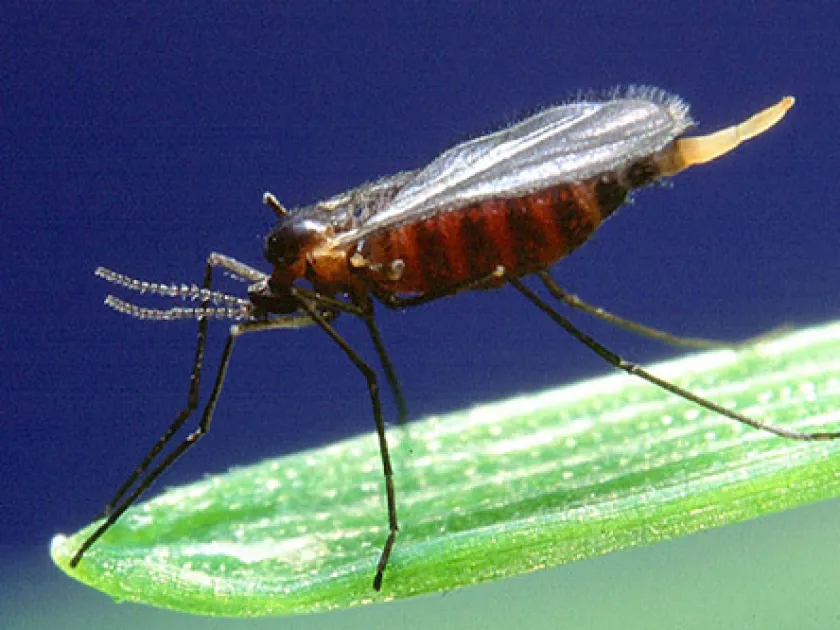
The Hessian fly (Mayetiola destructor) is a small dipteran insect belonging to the Cecidomyiidae family. Adults are delicate, gnat-like flies with dark bodies and long legs, measuring about 2.5–3.5 mm in length.
The life cycle progresses through eggs, larvae, pupae, and adults. The larvae are small, legless, and white or yellowish, reaching a length of approximately 4 mm when fully mature.
A distinctive feature of this species is the pupal stage, where the larva creates a protective, brown, seed-like structure known as a "flaxseed." This casing protects the insect from environmental stress.
Depending on climatic conditions, the Hessian fly can produce several generations per year. The duration of each cycle depends heavily on temperature and host plant availability.
Adults are short-lived, with the primary objective of mating and laying hundreds of eggs on the upper surface of cereal leaves, ensuring the infestation of the host plant.
What it damages
The primary hosts of the Hessian fly include wheat, barley, and rye. Oats are typically less affected, though high pest populations can still lead to significant agricultural losses.
Larvae cause damage by feeding on plant sap. They settle between the leaf sheath and the stem, injecting enzymes that prevent the plant from circulating nutrients effectively.
The damage often results in stunted plant growth, reduced tillering, and an overall loss of plant vigor. Infested stems become weak and are prone to lodging before harvest.
Severe infestations in early growth stages can kill seedlings entirely. Later stage attacks cause the grain heads to fill poorly, leading to significantly lower yields and reduced test weight.
Economic damage is substantial, as infested crops are often difficult to harvest due to lodging, causing direct losses in both grain quantity and quality for the farmer.
When it appears
The spring flight of adult Hessian flies usually occurs during the jointing stage of wheat, triggered by warmer spring temperatures, typically above 12–14 degrees Celsius.
The late summer and early autumn generations are particularly critical, as they target the newly emerged winter cereal crops, setting the stage for infestation during the cold months.
Environmental factors such as high humidity encourage the development of larvae, while extreme heat and drought may cause the population to enter a resting stage, known as diapause.
The pest overwinters as pupae inside the protective "flaxseed" structures located on crop stubble, volunteer wheat, or wild grasses, waiting for favorable conditions to emerge.
Producers must monitor temperatures and plant development closely to predict the emergence windows, which are essential for timing any necessary insecticide applications.
Signs of infestation
Infested plants are often shorter and darker green than healthy ones. They may appear to have excessive tillering, which is actually a symptom of the plant's inability to develop primary stems.
A key visual indicator is the presence of the brown, seed-like puparia tucked under the leaf sheaths, which can be seen by gently peeling back the leaves near the base of the plant.
Fields with significant infestations may show patches of stunted or lodged plants, which are often mistakenly attributed to wind damage or nutrient deficiencies.
- Stunted and thickened primary leaves.
- Dark blue-green coloration of infested leaves.
- Weak, brittle stems that break off easily.
- Presence of puparia (flaxseed stage) on the stems.
Scouting should focus on the base of the stems, especially near the nodes, where larvae and pupae congregate to extract nutrients from the plant vascular system.
Control measures
Integrated pest management (IPM) is the most effective approach, starting with the use of resistant wheat varieties and crop rotation to break the pest's life cycle.
Cultural control involves the destruction of volunteer wheat and thorough stubble management. Tillage practices that bury crop residue help reduce the survival rate of overwintering pupae.
Adjusting planting dates is a classic strategy; planting winter wheat after the "fly-free date" minimizes the risk of the autumn generation eggs being laid on young seedlings.
Seed treatments with systemic insecticides provide essential early-season protection, safeguarding the plant during its most vulnerable stage of development.
When monitoring indicates that pest numbers exceed economic thresholds, foliar insecticide applications may be required to protect the crop during peak flight periods.
Taxonomy
- Latin name
- Mayetiola
- Order
- Diptera (flies)
- Family
- Cecidomyiidae
- EPPO code
- MAYESP
Discussion
No discussions yet — be the first.