
Matsucoccus
Matsucoccus
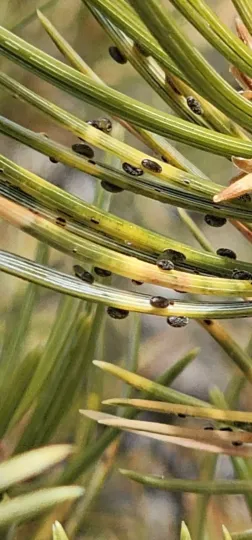
Description
How to identify
Matsucoccus is a genus of insects in the family Margarodidae (giant scale insects) within the order Hemiptera. These are highly specialized sap-sucking pests adapted to coniferous hosts.
Adult females are often wingless and sedentary, protected by waxy secretions, making them extremely difficult to detect on the bark of trees.
In contrast, males possess functional wings and are mobile, which enables them to actively seek out females during the mating season.
The body is covered in a characteristic white waxy fluff, which serves as a defensive shield against environmental factors and chemical applications.
Accurate species identification often requires professional laboratory analysis of larval morphology and the structure of wax-secreting pores.
What it damages
The primary hosts of Matsucoccus include various species of pine, ranging from native European pines to specific ornamental varieties.
The pest feeds on the bark of young shoots, trunks, and twig junctions, extracting nutrients directly from the tree's cambium and phloem layers.
Young saplings and trees already weakened by drought, poor soil quality, or fungal pathogens are significantly more susceptible to severe infestations.
Chronic feeding leads to a depletion of the tree's energy reserves, predisposing the plant to secondary infestations by bark beetles and borers.
In cases of widespread outbreaks, Matsucoccus can cause rapid decline and mortality across large forest stands and urban landscaping areas.
When it appears
The lifecycle of Matsucoccus is intricately linked to the tree's phenology and local climatic conditions throughout the year.
Overwintering typically occurs during the first or second larval stage, with insects hiding within bark crevices or at the base of needle fascicles.
Activity resumes in early spring as temperatures rise, signaling the larvae to begin intensive feeding on the host's vascular tissues.
The peak mating and oviposition period usually occurs during late spring or early summer, depending on the specific region and species.
Depending on environmental conditions, these insects may complete one or two generations annually, necessitating ongoing monitoring programs.
Signs of infestation
The most visible symptom of infestation is the appearance of white, cotton-like masses of waxy filaments on the bark and twigs.
Needles on infested branches often turn yellow, lose turgor pressure, and drop prematurely, resulting in a sparse and unhealthy canopy appearance.
Close inspection of the bark reveals resin flow and small entry points caused by the insects' stylets during the feeding process.
Progressive dieback of the terminal shoots and branches is common as the internal vascular transport system is compromised by the feeding activity.
- white cottony wax deposits on the bark;
- premature needle yellowing and shedding;
- visible resin oozing at feeding sites;
- dieback of terminal branches;
- reduced annual growth and vigor.
Control measures
The cornerstone of Matsucoccus management is proactive monitoring to detect and isolate pest populations before they reach epidemic levels.
Sanitation, including the removal and destruction of heavily infested limbs or entire trees, remains the most effective control method.
In high-value ornamental or park settings, systemic insecticides applied during the active larval stage can provide successful suppression.
Encouraging the presence of natural predators, such as coccinellid beetles, plays a vital role in biological control programs.
Maintaining tree vigor through proper irrigation, fertilization, and careful soil management is essential to bolster natural resistance.
Taxonomy
- Latin name
- Matsucoccus
- Order
- Hemiptera (bugs, aphids, leafhoppers)
- Family
- Matsucoccidae
- EPPO code
- MATSSP
Discussion
No discussions yet — be the first.