
Cockchafer
Maia
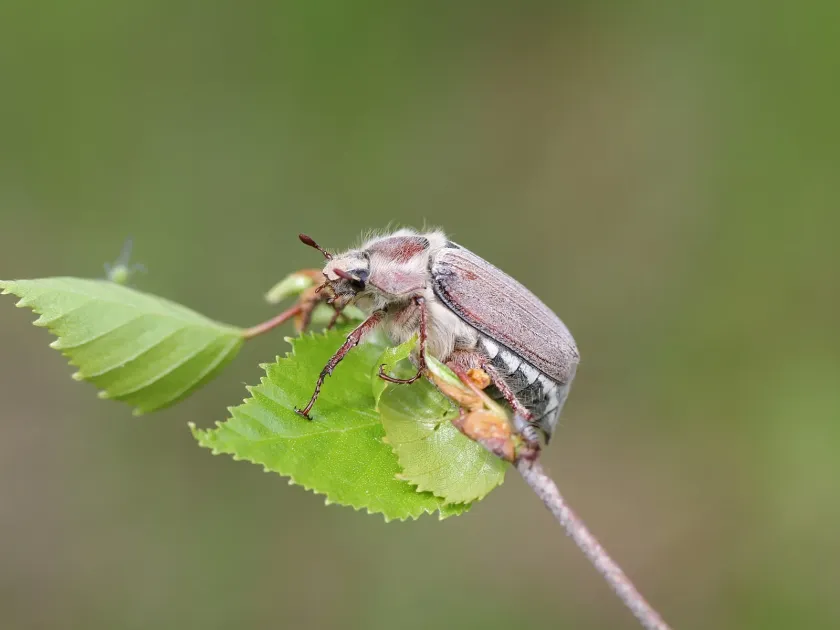
Description
How to identify
The cockchafer, or May bug, belongs to the Scarabaeidae family. The adult beetle is a robust insect, 20–30 mm long, featuring a hard brown or black shell and distinct white triangular spots on the sides of its abdomen.
The antennae of the male are characterized by a large club consisting of seven plates, while the female possesses a much smaller club. These sensory organs are essential for navigation and mate detection during the flying season.
The larval stage, commonly known as the white grub, is the most destructive phase. It is a C-shaped, creamy-white larva with a yellow-brown head and three pairs of well-developed thoracic legs, often growing up to 60 mm long.
The lifecycle of this pest is lengthy, typically ranging from three to five years. The majority of this time is spent entirely underground, where the larvae feed on organic matter and living roots of various plant species.
Adults emerge from the soil in spring, coinciding with the budding and flowering of garden trees. They are primarily nocturnal, spending their nights feeding on foliage before returning to the soil or hiding during the day.
What it damages
The primary damage is caused by the larvae, which reside in the soil. They are highly polyphagous, consuming the roots of strawberries, potatoes, carrots, and the root systems of young trees and shrubs.
By severing the main roots, larvae cause sudden wilting and death in young plants. In larger crops, they create tunnels in tubers and root vegetables, making the produce unsellable and susceptible to secondary infections.
Adult beetles inflict damage by consuming leaves, flowers, and buds of deciduous trees. In cases of severe infestation, entire branches or crowns can be defoliated, weakening the plant's overall vigor.
Nursery stock is particularly vulnerable to cockchafer grubs. A single larva can kill a young sapling by damaging the root collar, leading to significant economic losses for commercial growers.
- Strawberries and small fruits
- Root vegetables (potatoes, carrots)
- Young fruit and ornamental trees
- Turf and grassy areas
When it appears
The adult flight occurs during spring, usually in May. During this time, they swarm to mate and feed on leaves, creating an opportunity for localized management and population monitoring.
Eggs are deposited by females in loose, slightly moist soil. The larvae emerge after a few weeks and begin their initial feeding phase on humus and fine root hairs in the upper soil layers.
As the larvae grow, they descend deeper into the soil profile during autumn to overwinter. Their vertical movement is dictated by soil temperature, as they seek deeper layers to avoid freezing during winter.
Peak feeding activity occurs during the summer months when soil temperatures are optimal for the larvae's metabolism. This is the period when damage to host plants becomes most evident above ground.
Pupation takes place in an earthen cell deep in the soil, usually in late summer. The adults remain in the ground until the following spring, when they emerge to repeat the reproductive cycle.
Signs of infestation
The most reliable sign of a cockchafer grub infestation is the sudden yellowing and wilting of plants in the garden. These plants are often easily pulled from the ground because their roots have been chewed off.
During soil cultivation, gardeners or farmers may find large, white larvae tucked in the soil. High numbers of these grubs are a clear indicator of the need for immediate soil treatment.
Damage to foliage on fruit trees, characterized by ragged leaf edges, confirms the presence of adult beetles in the area. In the evening, the buzzing sound of flying beetles around trees is a common audible cue.
Tunnels or hollow cavities in harvested root crops like potatoes are definitive evidence of larval feeding activity that occurred during the growing season.
Visible emergence holes in the soil, approximately 1–2 cm in diameter, indicate where adults have exited the soil following their hibernation period.
Control measures
Agrotechnical methods, such as deep autumn plowing, help expose larvae to surface predators like birds or to lethal winter temperatures. Regular cultivation during spring can also disrupt egg-laying sites.
Chemical control involving soil-applied insecticides is effective for high-value crops. Products containing imidacloprid or similar active ingredients provide a protective barrier around the root zone.
Biological control has gained traction through the use of entomopathogenic fungi or nematodes. These natural organisms target the larvae in the soil without harming beneficial insects or the surrounding ecosystem.
Installing light traps or using pheromone lures helps reduce the number of adult beetles. By capturing adults before they mate, the total population density for the next season can be significantly lowered.
Planting repellent crops like white mustard (Sinapis alba) or lupines can deter larvae. These plants create an environment that is unfavorable for the development of white grubs, acting as a natural barrier in garden plots.
Taxonomy
- Latin name
- Maia
- Family
- Maiidae
- EPPO code
- MAIASP
Discussion
No discussions yet — be the first.