
Long-nosed spider crab
Macropodia longirostris
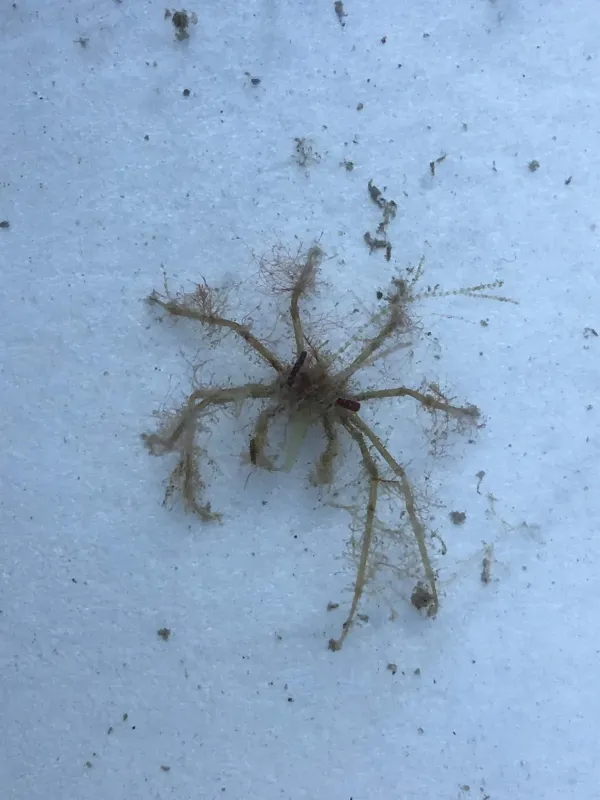
Description
How to identify
Macropodia longirostris, commonly known as the long-nosed spider crab, is a small decapod crustacean belonging to the Inachidae family.
The species is easily recognized by its pear-shaped body and extraordinarily long, slender legs, which provide an excellent camouflage mechanism.
These crabs have a body color that matches the surrounding marine vegetation, ranging from reddish-brown to a pale yellowish hue.
A distinctive feature is the elongated rostrum situated between the eyestalks, which serves as a key diagnostic trait for biological identification.
They are typical benthic organisms that prefer rocky or seaweed-covered sea floors, where they hold on to substrates with their sharp dactyls.
What it damages
While not a pest in the traditional agricultural sense, Macropodia longirostris can cause damage within marine aquaculture facilities.
They often colonize nets and cages used for shellfish farming, which can impede water flow and disrupt the optimal environment for growth.
Their sharp claws may cause structural damage to protective netting, leading to increased maintenance costs and potential loss of stock.
Competition for local resources and space can indirectly affect the productivity of cultivated mollusk species in coastal areas.
The accumulation of these crabs on equipment creates a management challenge, as they need to be regularly cleared to prevent fouling.
When it appears
The presence and activity of this species are highly seasonal, dictated by water temperature and the availability of shelter.
During the spring and summer months, the crabs exhibit peak activity and reproductive behavior, frequently migrating to shallower coastal waters.
As water temperatures drop in the autumn and winter, the crabs move toward deeper, more stable environments to survive the cold.
Farm operators monitor these cycles to predict when the pressure on infrastructure will be at its highest, allowing for proactive intervention.
Peak presence often coincides with the seasonal blooms of macroalgae, which provide the crabs with ideal camouflage and access to nutrients.
Signs of infestation
The signs of infestation include the physical presence of crabs on underwater cages, mooring lines, or harvesting nets during routine inspections.
Damage to the mesh integrity of aquaculture equipment often indicates high concentrations of these spider crabs in the immediate vicinity.
If cultivated shellfish show signs of tissue damage or shell erosion, it may suggest that crabs are predating on the stock due to limited food sources.
Underwater camera systems are effective tools for detecting these organisms before they cause significant mechanical damage to farm installations.
A high capture rate in test traps or by-catch in nearby fishing gear is a reliable indicator of local population density increase.
Control measures
Effective control measures focus on physical exclusion and the regular maintenance of all submerged farming equipment.
The use of anti-fouling coatings on nets and support structures makes it difficult for the crabs to maintain a grip and populate the equipment.
Mechanical cleaning systems, such as high-pressure washing or specialized brushing, are used to clear crabs from cages and nets periodically.
Barrier systems or fine-mesh screens can be installed to physically block the access of these crustaceans to protected areas of the facility.
Integrated management plans, which include monitoring and targeted removal, help to balance the need for infrastructure protection with marine conservation.
Taxonomy
- Latin name
- Macropodia longirostris
- Family
- Maiidae
- EPPO code
- MPODLO
Discussion
No discussions yet — be the first.