
Chrysanthemum aphid
Macrosiphoniella trimaculata
Description
How to identify
The chrysanthemum aphid, scientifically known as Macrosiphoniella trimaculata, is a specialized hemipteran pest belonging to the Aphididae family.
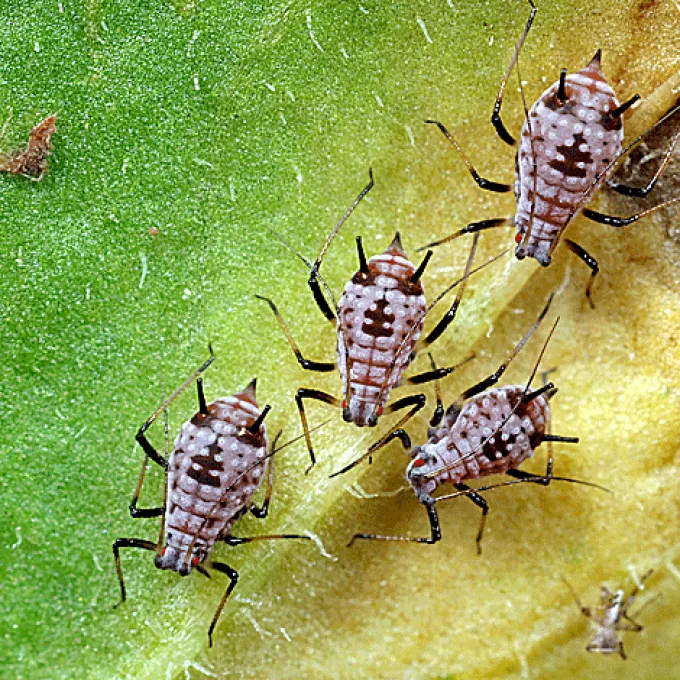
This species is highly host-specific, primarily targeting chrysanthemum plants. Adult aphids are typically elongated with a color range from light green to brown, often displaying distinct dark spots.
The life cycle involves complex generations, including wingless parthenogenetic females during the summer months, allowing for rapid colonization.
Winged forms appear when the colony density becomes too high, enabling the aphids to migrate to adjacent healthy plants and start new infestations.
The reproduction rate is extremely high, as nymphs mature rapidly and begin reproducing within a few days under optimal temperature conditions.
What it damages
Chrysanthemums are the primary targets, with aphids clustering on apical buds, tender stems, and the undersides of younger leaves.
As they feed, they extract nutrient-rich sap, which causes the stems to weaken, growth to stunt, and the overall plant vitality to decline significantly.
The infestation prevents the proper development of flower buds, leading to malformed or aborted blossoms that destroy the plant's aesthetic appeal.
Like many aphids, this species can act as a vector for various plant viruses, posing a hidden danger to the health of the entire collection.
Secondary damage occurs through the accumulation of honeydew, which promotes the growth of sooty mold, blocking light and reducing photosynthetic efficiency.
When it appears
In temperate climates, the activity starts in spring as temperatures rise, usually coinciding with the onset of vigorous vegetative growth in chrysanthemums.
Summer months provide the most favorable environment for explosive population growth, with frequent cycles of reproduction leading to large colonies.
Autumn triggers the production of sexual forms that lay overwintering eggs, ensuring the species survives the colder dormant months of the year.
In greenhouses or indoor plant environments, the cycle can continue year-round, as constant temperatures prevent the formation of winter eggs.
Heavy rains or significant shifts in humidity may briefly disrupt the feeding cycle, but the resilience of the aphid ensures a quick recovery of its numbers.
Signs of infestation
The earliest signs of infestation are curled, yellowing, or distorted young leaves located at the growing tips of the chrysanthemum stems.
Sticky residue on the surface of the plant, known as honeydew, is a classic sign that an aphid colony has established itself on the plant.
The presence of sooty mold, a black fungus growing on honeydew, is an indicator of long-standing infestation that requires immediate attention.
Failure of flower buds to open or the premature dropping of buds are clear warnings of heavy aphid feeding activity in the flower heads.
- Distorted and curled new foliage.
- Sticky honeydew coating on leaves and stems.
- Development of black sooty mold fungus.
- Stunted flower development or bud abortion.
- Noticeable ant activity tending the aphids.
Control measures
Regular monitoring of plant tips and the undersides of leaves is crucial for detecting the initial presence of aphids before they spread.
Physical removal or washing the plant with a gentle soap solution can be effective for small garden patches to reduce the immediate aphid population.
Systemic insecticides should be applied when the infestation reaches an economic threshold, ensuring that the chemical reaches the aphids within the tissues.
Managing the ant population in the garden is essential, as ants act as protectors of the aphids, preventing natural predators from accessing the colony.
Biological control, such as introducing lady beetles or lacewings, is a sustainable way to keep aphid populations in check without the use of harsh chemicals.
Taxonomy
- Latin name
- Macrosiphoniella trimaculata
- Order
- Hemiptera (bugs, aphids, leafhoppers)
- Family
- Aphididae
- EPPO code
- MACRTR
Discussion
No discussions yet — be the first.