
Tansy aphid
Macrosiphoniella tanacetaria
Description
How to identify
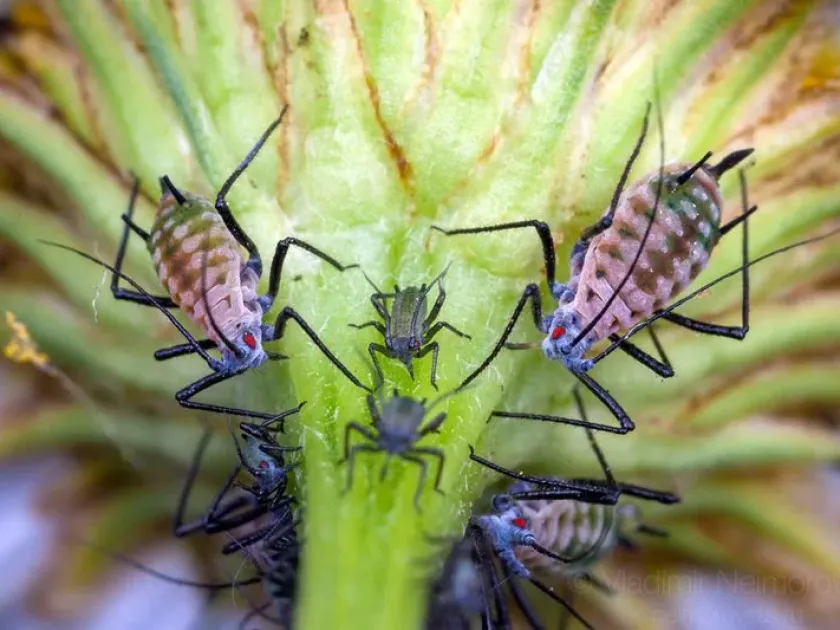
The tansy aphid (Macrosiphoniella tanacetaria) is a small insect belonging to the family Aphididae, order Hemiptera. It is a common specialist pest on various Asteraceae species.
Adult aphids measure between 2 and 3 mm in length. Their coloration ranges from dull green to dark brown, often covered with a faint waxy dust.
A diagnostic feature of this species is its notably long antennae, which often exceed the length of its body, and its relatively dark siphunculi.
The life cycle involves both asexual (parthenogenetic) and sexual reproduction. Throughout the growing season, multiple generations overlap, leading to rapid colony build-up.
They overwinter as eggs, typically placed on the base of stems or buds, where they hatch early in the spring to start new colonies.
What it damages
The primary host is Tanacetum vulgare (tansy), although the pest can also inhabit related wild or cultivated Asteraceae plants.
Aphids cluster on succulent parts of the plant, including young shoots, flower stalks, and the underside of leaves, extracting vital plant sap.
Damage to the plant includes stunted shoot growth, leaf curling, and overall reduction in the medicinal quality of the harvested biomass.
Heavy infestations can cause significant loss of floral buds and general stress, making the plants more susceptible to secondary environmental pressures.
The feeding process leads to the excretion of honeydew, which further harms the plant by promoting the growth of sooty mold on the foliage.
Signs of infestation
Curled and distorted young leaves at the tips of shoots are the most prominent symptoms of an ongoing tansy aphid infestation.
The presence of honeydew often results in a shiny, sticky residue on the leaves, which subsequently turns black due to colonizing sooty mold fungi.
Reduced vigor and poor development of flower clusters are common indicators that the plant is under continuous pressure from the aphid colony.
Ant activity around the stalks is a strong warning sign, as ants farm the aphids to collect the sugary honeydew they secrete.
Inspection of the underside of leaves or the inflorescences will reveal the presence of aphids in various life stages, including winged migrants.
Control measures
Effective management requires a strategy focused on early detection and the integration of cultural and biological control methods.
For ornamental or small-scale medicinal gardens, physical removal of infested shoot tips is often sufficient to keep populations in check.
Biological control using indigenous predators such as lady beetles, lacewings, and hoverflies should be encouraged by avoiding broad-spectrum insecticides.
Chemical intervention should be considered a last resort and timed according to economic thresholds to minimize environmental impact.
- Regular monitoring of plant tops and inflorescences.
- Removing weeds that can serve as alternative host plants.
- Using horticultural oils or insecticidal soaps for targeted suppression.
Taxonomy
- Latin name
- Macrosiphoniella tanacetaria
- Order
- Hemiptera (bugs, aphids, leafhoppers)
- Family
- Aphididae
- EPPO code
- MACRTA
Discussion
No discussions yet — be the first.