
Chrysanthemum aphid
Macrosiphoniella sanborni
Description
How to identify
The chrysanthemum aphid (Macrosiphoniella sanborni) is a specialized insect belonging to the family Aphididae, known for feeding exclusively on chrysanthemum plants.
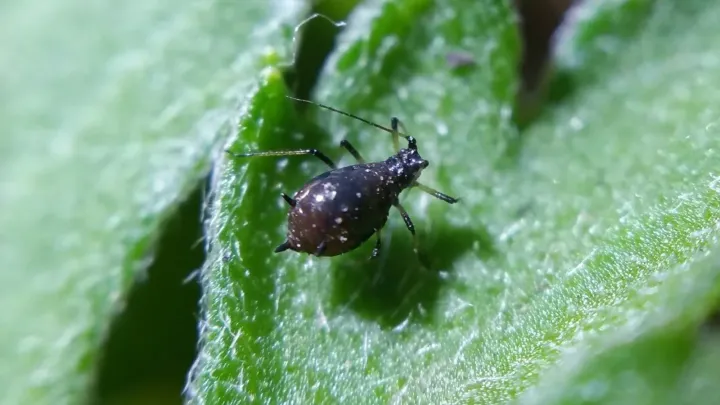
Adults are small, shiny, dark brown or black insects, usually measuring between 2 to 2.5 millimeters in length.
They are characterized by their long black antennae and dark legs, which distinguish them from many other aphid species found in gardens.
The life cycle involves parthenogenetic reproduction, allowing populations to expand rapidly during the growing season without the need for mating.
In greenhouses, this pest is particularly problematic as it can thrive continuously throughout the year if the environment remains warm and favorable.
What it damages
The aphid feeds primarily on the tender tissues of chrysanthemum plants, specifically focusing on the new leaf growth and developing flower buds.
By extracting plant sap, the aphids cause severe stunting, leaf curling, and overall reduction in the plant's vigor and health.
They produce large amounts of honeydew, a sticky substance that promotes the growth of sooty mold, which can block photosynthesis on the leaves.
Beyond direct feeding damage, they act as potential vectors for various plant viruses, further complicating the management of infected crops.
If left untreated, heavy infestations can lead to the death of flower buds, resulting in the complete loss of floral beauty and commercial quality.
When it appears
In outdoor garden settings, the chrysanthemum aphid begins its activity as temperatures rise in late spring and early summer.
Population growth peaks during mid-to-late summer when the environmental conditions perfectly align with the insect's reproductive needs.
Greenhouse environments support the pest year-round, making it a constant threat to indoor floral production cycles.
As autumn approaches, colonies may persist until lower temperatures finally slow down their metabolic and reproductive rates.
Proper monitoring throughout the entire growing season is essential to prevent these pests from reaching outbreak levels on sensitive plant varieties.
Signs of infestation
One of the earliest indicators of an infestation is the visible curling or distortion of the terminal leaves at the top of the stem.
Close inspection of the plant often reveals dense clusters of dark-colored insects gathering around the growing tips and developing buds.
The presence of a sticky, glistening residue (honeydew) on the foliage is a primary diagnostic feature of an active aphid colony.
Ant activity around chrysanthemum stems is often a strong hint, as ants are frequently attracted to the sweet secretions produced by the aphids.
The failure of flower buds to open or their premature browning suggests that the aphids have significantly drained the plant's resources.
Control measures
Integrated pest management starts with cultural practices, such as maintaining plant health and removing debris where aphids might overwinter.
Biological controls are highly effective, including the introduction of natural predators like ladybugs, lacewings, and parasitic wasps.
For severe infestations, systemic insecticides are often necessary, as they are absorbed by the plant and kill aphids through contact and ingestion.
- Apply systemic treatments precisely during the early stages of bud formation.
- Use insecticidal soaps as a gentler alternative for localized, light infestations.
- Ensure uniform spray coverage, focusing on the undersides of leaves where aphids hide.
Regular monitoring combined with timely intervention will successfully keep chrysanthemum aphid populations below the economic threshold.
Taxonomy
- Latin name
- Macrosiphoniella sanborni
- Order
- Hemiptera (bugs, aphids, leafhoppers)
- Family
- Aphididae
- EPPO code
- MACRCH
Discussion
No discussions yet — be the first.