
Mugwort aphid
Macrosiphoniella artemisiae
Description
How to identify
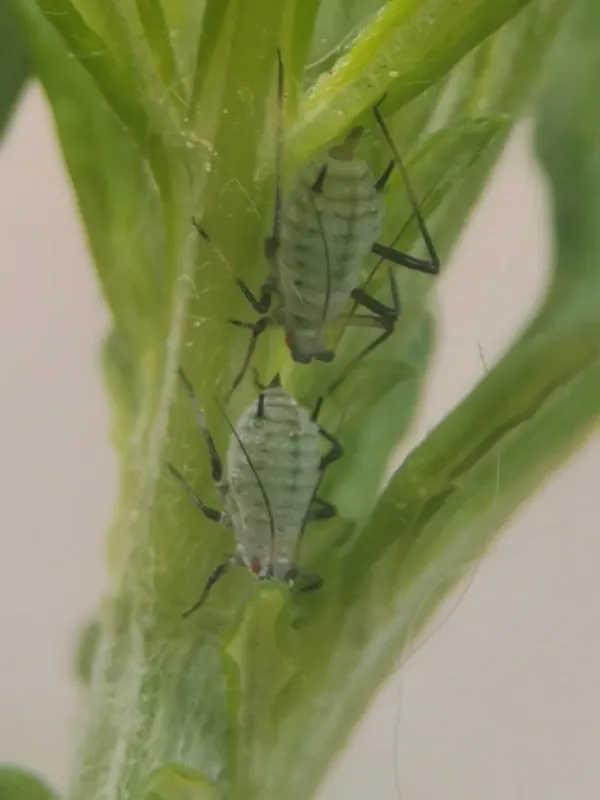
The mugwort aphid, Macrosiphoniella artemisiae, belongs to the Aphididae family and is a specialized pest primarily found on species of the Artemisia genus. These insects are easily identifiable by their specific body structure and host plant affinity.
Adult aphids typically measure 2–3 mm in length. Their coloration ranges from light green to reddish-brown, and they are characterized by long, dark siphunculi (cornicles) on their abdomen, which is a key diagnostic feature for this species.
The species reproduces parthenogenetically during the active season, allowing for rapid population growth. They typically colonize the young, tender parts of plants, such as shoot tips and the undersides of leaves.
Nymphs are smaller versions of the adults and progress through several instars before reaching maturity. They leave behind white shed skins (exuviae) as they grow, which are often visible on the plant surface.
Overwintering occurs in the egg stage. Females lay eggs on the stems of host plants in late autumn, which remain dormant until the following spring when the founder nymphs emerge.
What it damages
The primary damage is caused by the aphids piercing plant tissues and extracting nutrient-rich sap. This weakens the plant significantly, leading to reduced growth rates and poor overall health.
Feeding often results in the curling and distortion of leaves, as well as the twisting of young stems. This deformation is detrimental, especially for ornamental varieties where appearance is a priority.
Aphids excrete a substance known as honeydew, which accumulates on leaves. This sticky residue serves as a substrate for sooty mold fungus, which blocks photosynthesis and makes the plant look dirty and unattractive.
The loss of sap and the impact of sooty mold can lead to premature leaf drop and stunted development. In severe cases, the plant may fail to bloom or suffer from dieback of terminal shoots.
Additionally, Macrosiphoniella artemisiae can act as a vector for various plant viruses. By moving from plant to plant, aphids can transmit pathogens that cause systemic diseases, leading to mottled foliage and necrosis.
When it appears
The life cycle begins in early spring when the overwintering eggs hatch. Development is closely tied to temperature; warmer conditions facilitate faster generation turnover.
The peak of aphid activity is generally observed during late spring and early summer when plants are in a rapid growth phase. The abundance of soft, succulent shoots provides an ideal food source.
During the peak of summer, if environmental conditions are hot and dry, the population size may stabilize or decline, but with adequate plant hydration, colonies can persist throughout the entire season.
Winged forms are produced during times of overcrowding or host plant deterioration. These winged aphids migrate to colonize new plants, allowing the infestation to spread across the field or garden.
As autumn approaches, the aphid population switches to sexual reproduction, producing both males and females. These insects mate and deposit the eggs that will survive the winter cold.
Signs of infestation
The most immediate sign of an infestation is the curling and yellowing of the youngest leaves at the tips of the shoots. If you notice these symptoms, a closer inspection of the undersides of the leaves is required.
Small, dense clusters of aphids will be visible upon inspection. Their presence is often accompanied by an increase in ant activity on the plant, as ants are attracted to the honeydew the aphids produce.
A sticky, shiny coating on the leaves is a clear indication that the aphids have been feeding for some time. This substance often leads to the development of black, powdery sooty mold.
Stunted plant growth and shorter internodes are key indicators of a long-term infestation. Plants may appear significantly smaller and less vigorous compared to healthy, non-infested neighbors.
If you see white, papery shed skins on the leaves, this is a strong confirmation that the aphids are actively growing and feeding on the plant, signaling an urgent need for intervention.
Control measures
Integrated pest management starts with cultural practices. Keeping the area free of weeds and ensuring that plants are not overcrowded helps to maintain good airflow and reduce the likelihood of heavy infestations.
Encouraging natural predators such as ladybirds, lacewings, and hoverflies is highly effective. These beneficial insects can often keep aphid populations below the economic damage threshold.
For chemical control, systemic insecticides are the most effective choice as they are absorbed by the plant and kill aphids that are hidden within curled leaves. Always apply these in the late afternoon to protect pollinators.
Biological control using soaps, horticultural oils, or microbial agents like entomopathogenic fungi provides a safer alternative for gardens and areas where chemical residue must be kept to a minimum.
- Monitor plants weekly for signs of curling leaves.
- Use a strong jet of water to physically dislodge aphids.
- Destroy ant colonies that are protecting the aphid population.
- Apply neem oil or insecticidal soap as a preventative measure.
Taxonomy
- Latin name
- Macrosiphoniella artemisiae
- Order
- Hemiptera (bugs, aphids, leafhoppers)
- Family
- Aphididae
- EPPO code
- MACRAR
Discussion
No discussions yet — be the first.