
Wormwood aphid
Macrosiphoniella absinthii
Description
How to identify
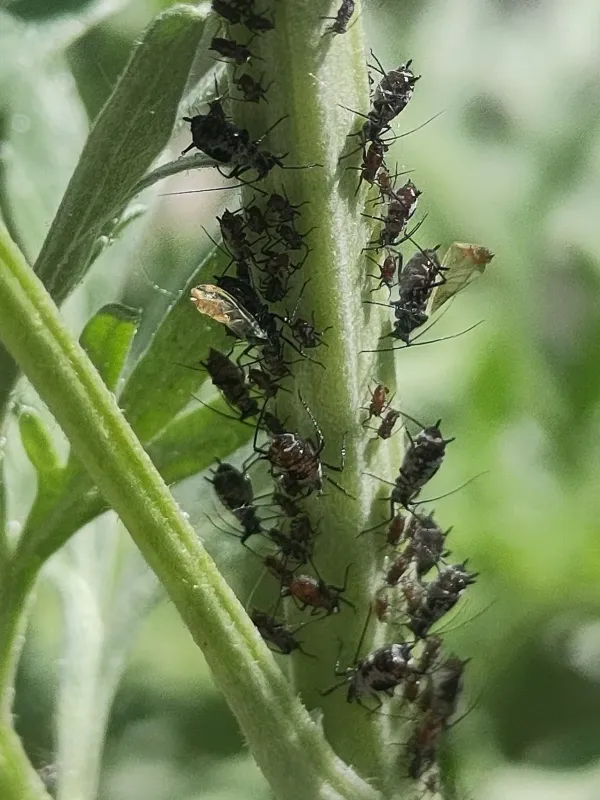
The wormwood aphid, known scientifically as Macrosiphoniella absinthii, is a specialist insect species within the family Aphididae. It is characterized by its slender, elongated body which typically presents in shades of light green to yellow-green.
These aphids are relatively large compared to other aphid species and possess distinct, long, dark cornicles at the end of their abdomen. They are frequently found clustered on the apical parts of their host plants.
What it damages
This pest is strictly associated with plants of the genus Artemisia. It feeds exclusively on the phloem sap of the plant, which results in significant metabolic stress for the host.
Severe infestations lead to stunted growth and reduced vigor of the plant. In commercial production of herbal extracts, the activity of these aphids can significantly lower the quality and yield of the essential oils and active compounds produced by the wormwood.
When it appears
The life cycle of the wormwood aphid is closely synchronized with the growth of the host plant. They overwinter in the egg stage on the stems of the wormwood plant.
As temperatures rise in the spring, the nymphs hatch and begin to establish colonies. Throughout the summer, they undergo rapid reproduction, with multiple generations overlapping during the period of peak vegetation.
Signs of infestation
The most evident sign of infestation is the curling and distortion of young leaves at the growing tips of the stems. If a plant appears yellowed or stunted, it is essential to inspect the undersides of the leaves for aphid colonies.
- Sticky honeydew residue on leaves.
- Presence of black sooty mold fungus.
- Wilted and deformed flowers or buds.
Control measures
Effective management begins with regular monitoring and early detection. If small colonies are identified, manual removal or pruning of the affected parts can suffice to prevent a wider outbreak.
For larger infestations, biological controls such as predatory ladybugs and lacewing larvae are highly effective natural enemies. Horticultural oils and insecticidal soaps can be applied as a safer alternative to synthetic pesticides in home gardens or small plots.
Taxonomy
- Latin name
- Macrosiphoniella absinthii
- Order
- Hemiptera (bugs, aphids, leafhoppers)
- Family
- Aphididae
- EPPO code
- MACRAB
Discussion
No discussions yet — be the first.