
Macroposthonia ornata
Macroposthonia ornata
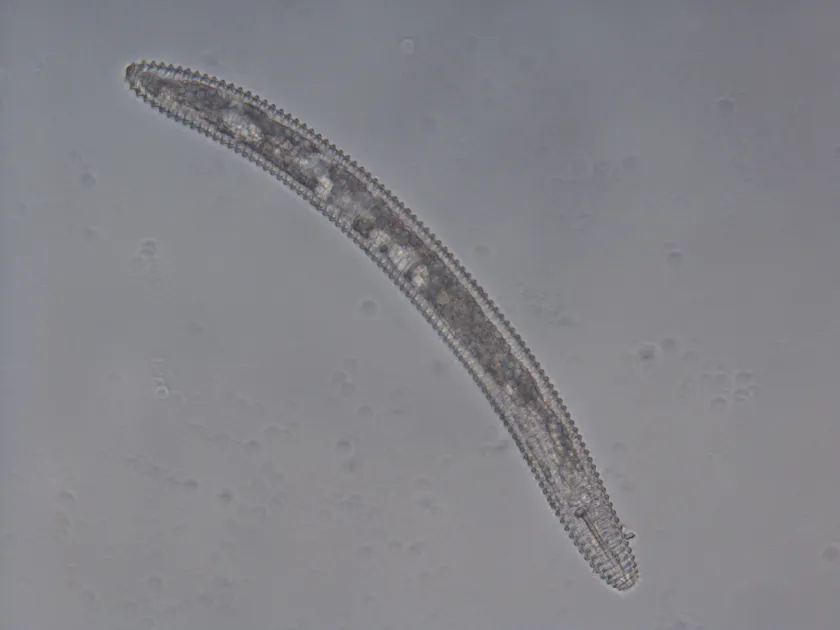
Description
How to identify
Macroposthonia ornata is a type of ectoparasitic ring nematode belonging to the family Criconematidae.
These nematodes are characterized by a stout body with prominent cuticular annulations, which aid in their movement through soil particles.
They possess a long, robust stylet used specifically for piercing plant root cells to feed on the cytoplasm within.
Identifying this species requires specialized laboratory extraction techniques followed by microscopic examination to analyze morphological features.
They are generally found in the rhizosphere of various plants, where they rely on soil moisture to maintain their metabolic activities.
What it damages
This pest attacks a wide array of host plants, ranging from horticultural crops and fruit trees to various ornamental species.
The primary damage occurs on the root tips, which can lead to stunted growth and reduced vigor in the infested host plants.
By feeding on the roots, the nematodes induce physiological stress and create entry points for secondary soil-borne fungal or bacterial pathogens.
Heavy infestations lead to a reduction in the root surface area, significantly impairing the plant's ability to absorb water and essential nutrients.
In perennial crops, long-term exposure to these nematodes can lead to a gradual decline in productivity and shortened lifespan of the plants.
When it appears
The activity of Macroposthonia ornata is strongly influenced by soil temperature and moisture, which determine their seasonal cycle.
Peak population densities usually occur during the warm growing season when root exudates are most abundant, stimulating nematode feeding.
During extreme dry conditions or cold winter months, the nematodes may enter a period of reduced activity or dormancy in the soil profile.
The life cycle continues as long as there is an available host and appropriate environmental conditions for reproduction and larval development.
Survival through adverse conditions is achieved by staying within the soil matrix, where they can wait for favorable moisture levels to return.
Signs of infestation
Above-ground symptoms of an infestation are often non-specific, frequently mimicking nutrient deficiencies or general moisture stress.
Affected plants often display stunted growth, sparse foliage, and a general lack of resilience during periods of environmental stress.
When roots are examined, one may find discolored, necrotic lesions on the fine rootlets and an overall poor development of the root system.
In severe cases, the plant may show premature yellowing of leaves and wilt during the hottest parts of the day due to poor water uptake.
- Stunted growth compared to healthy plants.
- Chlorosis and loss of leaf vigor.
- Root necrosis and lack of fine root hairs.
- Reduced overall yield and crop quality.
Control measures
Integrated pest management (IPM) is the most effective approach for controlling this nematode in agricultural and garden settings.
Starting with clean, certified planting material is crucial to ensure the nematode is not introduced into new or uninfested areas.
Crop rotation using non-host or antagonistic cover crops can help suppress soil populations and reduce the pressure of this pest.
Soil solarization or the application of nematicides may be necessary in cases where population densities reach economically damaging levels.
Monitoring the soil quality and keeping plants well-nourished helps them withstand the stress caused by low-level nematode feeding.
Taxonomy
- Latin name
- Macroposthonia ornata
- Order
- Nematodes
- Family
- Criconematidae
- EPPO code
- CRINOR
Discussion
No discussions yet — be the first.