
Ring nematode
Macroposthonia
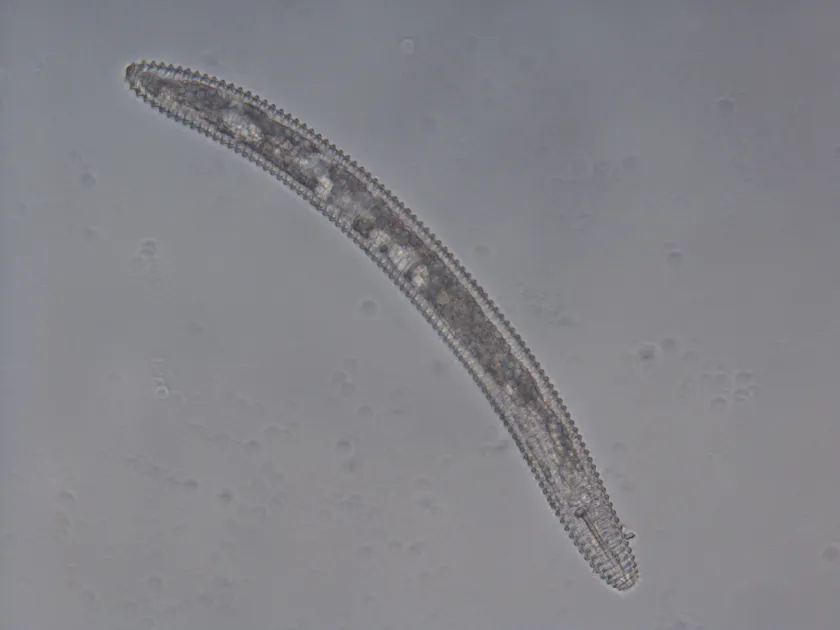
Description
How to identify
Ring nematodes, belonging to the family Criconematidae, are specialized ectoparasites that spend their entire life cycle in the soil surrounding plant roots.
They are characterized by a stout body with prominent cuticular rings, which gives them a segmented appearance and restricts their movement through soil pores.
These nematodes possess a long and strong stylet, which they use to pierce the cortical cells of roots to feed on plant nutrients.
They are most prevalent in coarse-textured, sandy soils, which allow them easier movement compared to heavy clay substrates.
Identifying Macroposthonia species requires microscopic examination due to the morphological similarities between different genera within the Criconematidae family.
What it damages
Ring nematodes cause significant damage to various fruit trees, including peaches, apples, and cherries, often leading to slow decline or replant failure.
They frequently infest grapevines and strawberry plantings, causing severe root injury that manifests as stunted growth and reduced crop yields.
The feeding process creates necrotic lesions on the roots, which compromise the plant's ability to uptake water and essential minerals from the soil.
By weakening the root system, ring nematodes facilitate the entry of secondary soil-borne pathogens, such as fungi and bacteria, leading to root rot.
In high-density populations, these pests can cause the total collapse of root hair systems, especially in young nursery stock or newly planted orchards.
Signs of infestation
Infested plants typically exhibit signs of nutrient deficiency, such as leaf chlorosis, thinning of the canopy, and reduced shoot elongation.
The root system may appear stunted, darkened, or necrotic, with a noticeable lack of fine, lateral feeder roots necessary for plant survival.
During hot and dry periods, infested plants show rapid wilting due to the impaired root system's inability to keep up with transpiration demands.
Symptoms often appear in patchy patterns throughout the field, corresponding to the distribution of nematode colonies in the soil profile.
Verification of the presence of ring nematodes requires collecting composite soil samples from the root zone and performing a laboratory extraction.
Control measures
The most effective management strategy involves using certified nematode-free nursery stock to prevent the introduction of the pest into new areas.
Crop rotation with non-host plants or cover crops that release nematicidal compounds can significantly suppress nematode population levels.
Soil solarization, a process of covering soil with plastic to raise temperatures, is a non-chemical method for reducing nematode numbers in smaller areas.
Maintaining high organic matter content in the soil promotes the activity of beneficial soil organisms that naturally suppress nematode populations.
When necessary, synthetic nematicides may be applied, though their use is strictly regulated and should be integrated with other cultural practices.
Taxonomy
- Latin name
- Macroposthonia
- Order
- Nematodes
- Family
- Criconematidae
- EPPO code
- MACISP
Discussion
No discussions yet — be the first.